Journal
Pesticides in natural products: staying grounded and reading lab tests
Pesticides in natural products appear in honey, pollen and even organic farms. Review the data, a calm health philosophy and how we test our mushrooms.
TCM therapist · Doctor of Acupuncture (WFAS) · author of a book on functional mushrooms
9 min read

Contents
- What did recent lab tests find in honey, pollen and propolis?
- What does EFSA monitoring reveal about everyday food?
- Why are residues hard to avoid, and how do we stay free of paranoia?
- Why does raw material origin matter for functional mushrooms?
- How do we keep Aloha Fungi supplements tested and clean?
- What will our farmer-level batch traceability system look like?
- How can you choose a clean supplement beyond front-of-pack claims?
- FAQ
- Is it possible to avoid pesticide exposure in food completely?
- Does a "natural" or "small-apiary" label guarantee zero pesticides?
- Where can I view current laboratory reports for Aloha Fungi supplements?
- How does batch testing differ from full farmer-level traceability?
Pesticides in natural products are not a rare exception, but a feature of the agricultural system we live in today. Trace residues show up in honey, bee pollen, everyday groceries and even organic crops. Rather than slipping into paranoia, it helps to understand the data, support the body's fundamentals and demand transparent lab testing.
Over years of clinical practice and building Aloha Fungi, I have heard the same line dozens of times: "I buy natural products, so I am safe." I understand that instinct. I wish the world still worked that way. Recent laboratory surveys across Europe and Poland make it clear why trusting a front label alone is no longer enough.
What did recent lab tests find in honey, pollen and propolis?
Independent surveys of Polish bee products in 2024–2026 detected pesticide residues in most honey samples as well as in bee pollen and propolis. In November 2026, Fundacja Pro-Test tested nine bee pollens at the Institute of Horticultural Research in Skierniewice across 529 pesticides and found residues in every single sample.
Individual pollen jars held between 2 and 14 different compounds, including substances no longer approved for EU agriculture such as chlorpyrifos, carbendazim, thiacloprid and thiamethoxam. Because EU law still lacks dedicated maximum residue limits (MRLs) for bee pollen as a standalone food, evaluating those results is even harder for everyday buyers.
A year earlier, Greenpeace Poland's "Great Honey Test" (samples collected in 2024, report published in 2025, also analysed at the Institute of Horticulture in Skierniewice) examined 48 honeys from small family apiaries across all 16 Polish regions. Pesticide residues appeared in 65% of samples, and every fifth jar contained thiacloprid, banned across the EU since February 2021.
A peer-reviewed Polish study published in Molecules (Światły-Błaszkiewicz et al., 2025) makes the picture even sharper. Screening bee pollen, propolis and royal jelly from one apiary in west-central Poland for over 550 compounds via QuEChERS, the researchers quantified 29 distinct pesticides, with 9 exceeding maximum residue limits set for honey.
Environmental uptake goes beyond agricultural sprays too. A PLOS ONE study (Alqarni et al., 2015) used GC-MS analysis to detect hopanes, molecular tracers of petroleum and asphalt, inside propolis produced by urban honey bees foraging near road surfaces when natural tree resins were scarce.
This pattern is global, not local. A landmark Science study (Mitchell et al., 2017) tested 198 honey samples worldwide and detected at least one neonicotinoid in 75% of all samples and 79% of European samples, with 45% carrying two or more compounds at once. Levels remained below legal human MRLs, yet the environmental footprint inside a "pure" food was unmistakable.
What does EFSA monitoring reveal about everyday food?
Annual monitoring by the European Food Safety Authority (EFSA) shows two realities at once: legal MRL compliance is high, yet residue-free food is not the majority on European plates. In the 2024 EU coordinated report covering 9,842 staple samples, 98.8% met legal limits, while only 43.1% had no quantifiable residues.
| Source and test scope | Samples and year | Key laboratory findings |
|---|---|---|
| Światły-Błaszkiewicz et al., Molecules · Polish apiary | pollen, propolis, royal jelly, 2025 | 29 distinct pesticides quantified (out of 550+ screened); 9 above MRL |
| Alqarni et al., PLOS ONE · urban honeybee propolis | propolis, 2015 | Hopanes detected: chemical tracers of asphalt and petroleum in propolis |
| Fundacja Pro-Test · bee pollen (IO Skierniewice) | 9 samples, Nov 2026 | 100% with residues (2 to 14 substances out of 529 screened) |
| Greenpeace Poland · Great Honey Test (IO Skierniewice) | 48 samples, 2024/2025 | 65% with pesticides; banned thiacloprid found in 10 of 48 jars |
| Mitchell et al., Science · global honey survey | 198 samples, 2017 | 75% with neonicotinoids (79% Europe); 45% with two or more |
| EFSA · EU pesticide residues in food report | 9,842 MTCP samples, 2024 | 98.8% within MRL; 43.1% residue-free; import controls: 3.6% non-compliant |
EFSA's data keeps the conversation grounded. A single item below the limits of Regulation (EC) No 396/2005 is legally compliant and assessed as low acute dietary risk. Still, when daily routines combine coffee, conventional bread, avocados and imported mandarins (where import controls show 3.6% MRL exceedances), those small environmental contacts add up.
Why are residues hard to avoid, and how do we stay free of paranoia?
The issue is systemic and nearly impossible to escape completely: trace pesticide residues can reach even organic farms because crop sprays drift on the wind from conventional fields kilometres away. The goal is not fearful perfectionism or living in a sterile bubble, but a calm philosophy built on strong daily habits.
It is easy to spiral into anxiety once you start reading laboratory numbers. That misses the whole point, because chronic fear weighs on the body far more than calm awareness. Nature engineered human physiology with remarkable resilience.
The human body handles everyday detoxification remarkably well when you give it the fundamentals: solid nourishment, restorative sleep and above all regular movement that makes you sweat.
Movement and sweating play a fundamental role in everyday physiology. They are not optional extras for athletes, but basic biological maintenance that desk life quietly crowds out. We will publish a dedicated deep-dive article on that topic soon inside MyCELLium™ (see what MyCELLium™ is).
Why does raw material origin matter for functional mushrooms?
Mushrooms act as biological sponges in nature, drawing compounds directly from their substrate, water and surrounding air. For functional mushrooms, cultivation region, substrate cleanliness, distance from industrial zones and grower discipline determine extract purity far more than any marketing claim printed on the front of a jar.
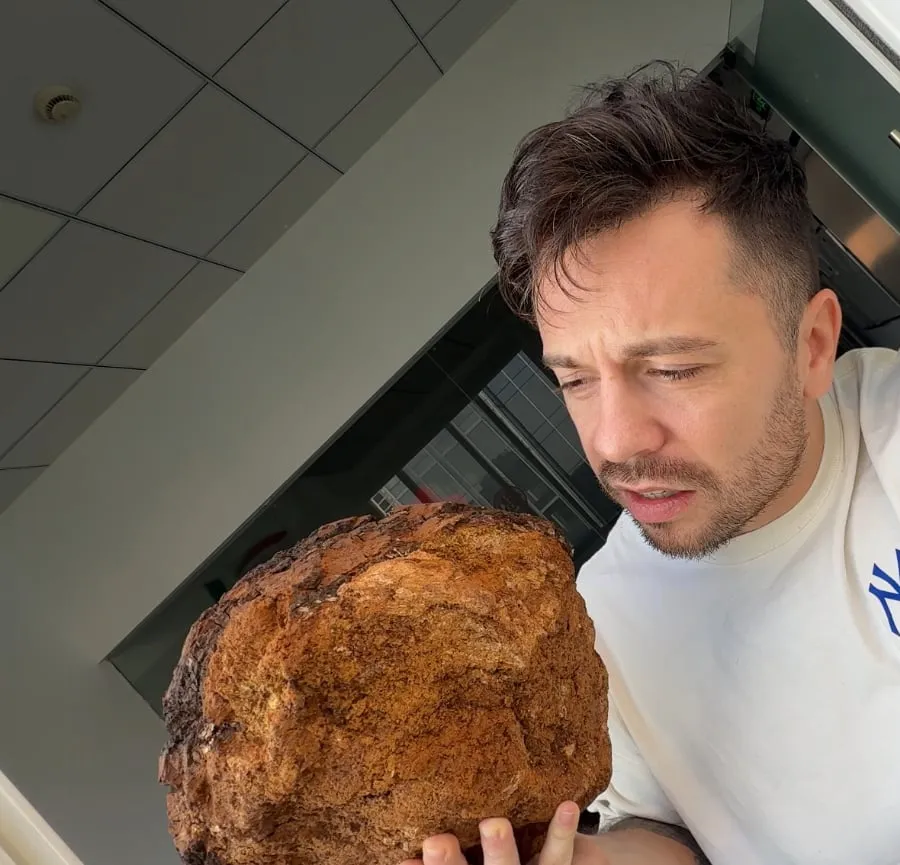
That is why a poetic story about wild forests proves nothing on its own. Material harvested near polluted zones can carry elevated heavy metals, while cheap production on unchecked grain substrate introduces both contaminant risk and starch dilution, as we unpacked in fruiting body vs mycelium.
For a practical checklist on evaluating extracts before buying, see how to read a mushroom extract label and why mushrooms from China.
How do we keep Aloha Fungi supplements tested and clean?
At Aloha Fungi we follow a simple principle: we cannot control everything drifting through the air over farmland, so we take full responsibility for every raw material we put in your hands. All of our supplements are made from 100% fruiting bodies from vetted growers, independently lab-tested and clean.
We source from non-industrial growing regions, test batches for pesticides (under Regulation (EC) 396/2005), heavy metals (under Regulation (EU) 2023/915) and microbiology, and maintain a 24-month stability standard per raw-material specification.
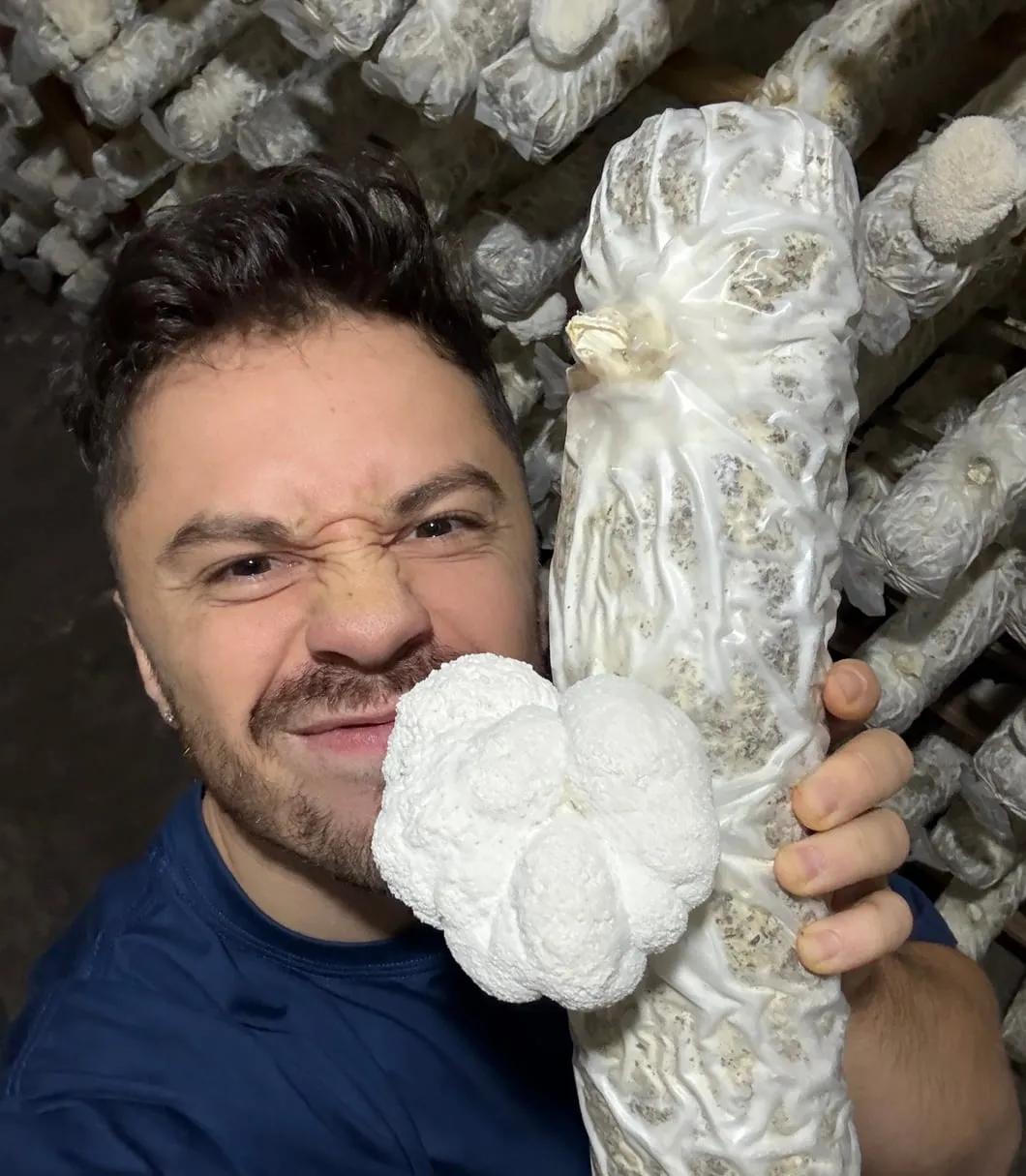
Our mountain lion's mane farm illustrates that well: our farmer developed a patented cultivation process on our own official substrate so the fruiting bodies grow large, healthy and rich in active compounds without pesticides. We will publish an interview with our farmer soon so you can see the work firsthand. Above all, remember why I started Aloha Fungi in the first place: I genuinely believe functional mushrooms are among the best natural allies for modern life, and this company began simply because mushrooms amazed me.

Rather than pasting cherry-picked numbers here, we publish and continuously update complete batch passports and independent lab reports for chaga, reishi, lion's mane and our other products in one open archive: inspect Aloha Fungi lab test reports. You can review original laboratory files before ordering, and explore our Chaga directly on the product page.
What will our farmer-level batch traceability system look like?
The full traceability system we are developing at Aloha Fungi will connect the batch code on every package directly to the raw material's full history, all the way back to the specific farmer or supplier and its laboratory documentation. Today we publish batch passports online; linking each batch to its grower is the next milestone.
I want you to know what you are buying and where it came from without guesswork or marketing slogans. Building verifiable documentation across every grower takes disciplined groundwork, so we are rolling it out step by step on real data.
How can you choose a clean supplement beyond front-of-pack claims?
Choosing a clean mushroom supplement comes down to three direct checks: which part of the fungus was used, whether an independent laboratory tested it and whether you can view the reports before ordering. When a brand hides behind the word "natural" alone, look for one that shows its paperwork openly.
- Check whether the brand publishes current independent lab reports covering pesticides, heavy metals and microbiology rather than relying on vague claims.
- Verify that the product is made from mushroom fruiting bodies rather than mycelium milled together with grain.
- Look for clear origin details and an archive of test reports updated regularly as new batches arrive.
- Keep perspective: clean supplements support a grounded routine, while sleep, real food, movement and sweating always stay at the centre.
FAQ
Is it possible to avoid pesticide exposure in food completely?
In modern agriculture it is nearly impossible, as trace crop sprays can drift on the wind even onto organic farms. Rather than falling into paranoia, focus on reducing unnecessary exposure through clean sourcing while supporting your body with sleep, good nutrition, movement and sweating.
Does a "natural" or "small-apiary" label guarantee zero pesticides?
No. Polish small-apiary honey surveys (Greenpeace, 65% of samples with residues), bee pollen tests (Fundacja Pro-Test, 100% of samples) and the 2025 Molecules study (29 pesticides in products from one apiary) show that natural origin alone is not proof. Independent laboratory testing is what verifies purity.
Where can I view current laboratory reports for Aloha Fungi supplements?
All public batch passports and independent laboratory reports are published and updated continuously at alohafungi.com/en/badania.
How does batch testing differ from full farmer-level traceability?
Batch testing verifies the purity and safety of a specific raw-material delivery. The full traceability system we are developing will extend each batch passport to show the exact farmer or supplier behind your package.
This content is for educational purposes only and does not constitute medical advice. A dietary supplement is not a substitute for a varied diet or a healthy lifestyle. If in doubt, consult a doctor or pharmacist.