MushroomsSubscription −15%
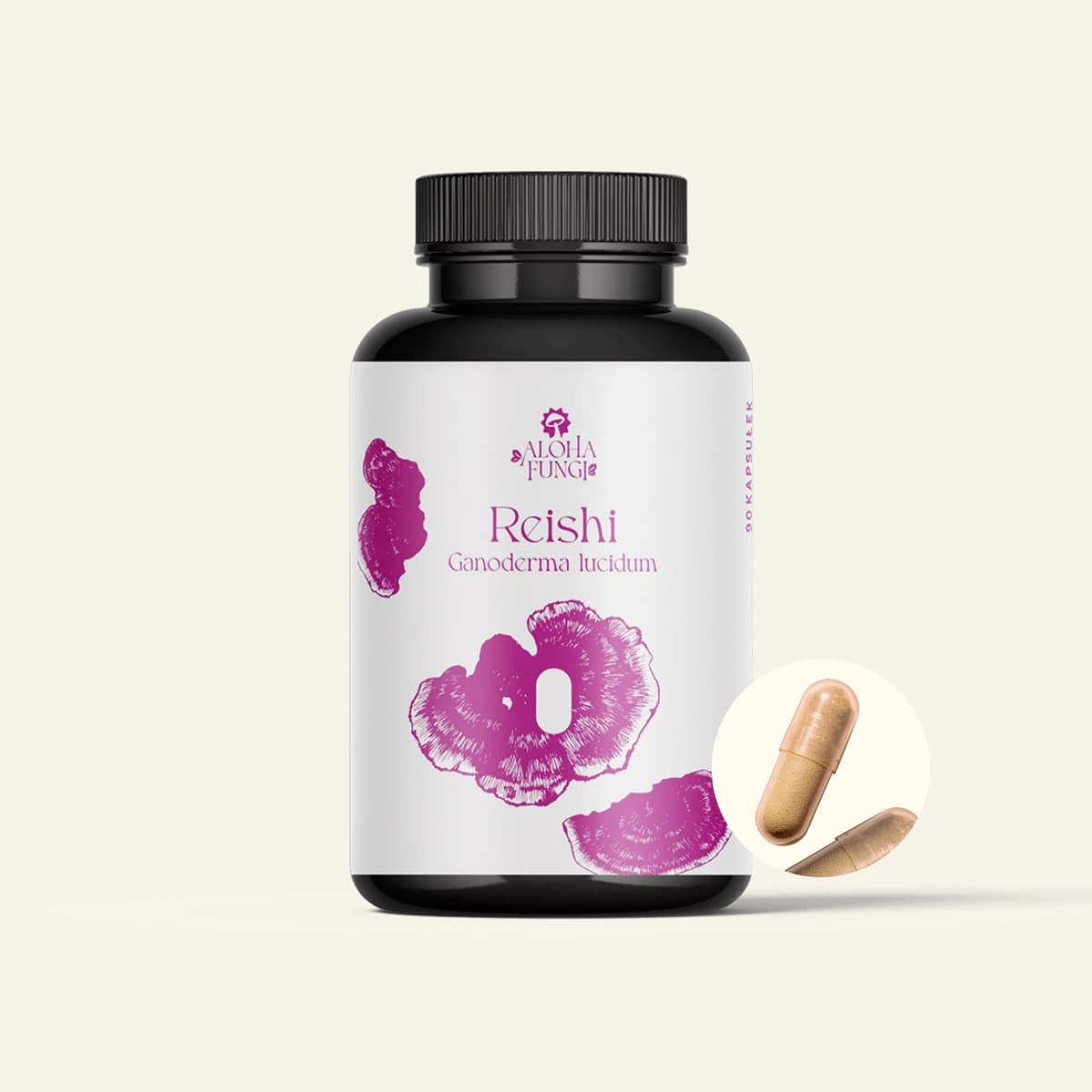
Reishi
Ganoderma lucidum
Capsules · LONGEVITY129 zł
Below you will find every available product for this species. Each tile opens the product page with the selected format and line preselected.
Version 3.1 · Updated: 12 September 2026 · Subject-matter reviewer: Mateusz Rosa, founder of Aloha Fungi, TCM therapist, Doctor of Acupuncture (WFAS).
Reishi in 60 seconds
Reishi and lingzhi are cultural names used for lacquered mushrooms in the genus Ganoderma. Ganoderma lucidum remains common in publications and commerce, but not every sample carrying this name represents the same species.
Morphological and molecular studies distinguish G. lucidum sensu stricto, originally described in Europe, from East Asian G. lingzhi. Reliable identification therefore requires supplier information and, where a species is declared, appropriate documentation.
Ganoderma fruiting bodies commonly have a firm structure and lacquered surface. Appearance helps description, but colour or a photograph alone cannot establish species identity.
Lingzhi appears in traditional Chinese sources, including the Shen Nong Ben Cao Jing, within the shang yao class. The Japanese name Reishi and Chinese name Lingzhi also function today as product-category names.
Historical descriptions of longevity, Qi and Shen belong to a traditional framework. They are not clinical evidence of an outcome after taking a modern supplement.
Research materials from the genus Ganoderma have been analysed for polysaccharides, triterpenoids, sterols, nucleosides, proteins and peptides. A compound-group name does not state its amount in a specific product.
Ganoderic acids are triterpenoids studied in Ganoderma materials. Their profile can differ between species and preparations, as comparisons of G. lucidum and G. lingzhi show.
β-glucans are polysaccharides found in many mushrooms. Research on receptors and immune cells is mainly mechanistic and does not automatically describe a clinical result from a supplement.
A fruiting body, pure mycelium, spores and mycelium grown on a substrate are different materials. When comparing products, check the raw-material name, mushroom part, carriers, extraction method, declared standardisation and documentation for the specific batch.
Cui 2012 examined a fruiting-body extract in freely moving rats and measured EEG parameters. Chu 2007 examined animals receiving pentobarbital and the involvement of a GABAergic pathway. Both publications are preclinical.
A result in a rat or mouse cannot set timing, an expected outcome or product efficacy in a human. An adequately sized, controlled human study of Reishi for sleep is lacking.
Laboratory studies describe relationships between fungal polysaccharides, receptors such as Dectin-1 and cytokine measurements. These tools generate biological hypotheses and do not confirm a defined product outcome.
Different extracts can have different compositions. A result for Ganopoly, an isolated compound or cell material should not be transferred to every Reishi extract.
Tang 2005 examined the specific Ganopoly polysaccharide extract among people diagnosed with neurasthenia. It reported fatigue, wellbeing and CGI scale results, but a single study needs independent replication and did not examine an Aloha Fungi product.
Klupp 2016 found no difference in primary or secondary endpoints for the studied preparation compared with placebo. Jafari 2025 combined different preparations and populations and rated certainty across every assessed outcome as very low.
Reishi is not a medicine for insomnia, depression, Alzheimer’s disease, diabetes or cancer. Animal sleep research does not establish clinical efficacy in humans. A single RCT of a specific extract cannot promise an outcome from every product. Reishi does not replace pharmacotherapy or medical care.
The serving, time of day and preparation come from the label of the specific variant, because different forms carry different instructions.
Questions about usage and combining with other mushrooms live on the product page, together with customer reviews. Reishi in the store: how to use, reviews, variants
Traditional accounts place Reishi in the shang yao class and associate it with Heart Qi, Shen, the Liver, Lungs and Spleen. These are historical categories within a traditional system.
This is a cultural framework, not a medical diagnosis or evidence of product efficacy. Concepts such as Qi, Shen or meridian do not correspond one to one with Western anatomy or physiology.
| Taste | bitter (苦, kǔ), slightly sweet (甘, gān) |
| Nature | neutral (平, píng) |
| Meridians | Heart, Liver, Lung, Spleen |
| Traditional description | Heart Qi, Shen, Liver Yin and Lung |
Pregnancy, breastfeeding and age below 18. Adequate clinical safety data are lacking for these groups.
Status after an organ transplant, active immunosuppression or active autoimmune disease. Do not start a supplement without approval from the treating doctor and do not change pharmacotherapy.
If you take anticoagulant or antiplatelet medicines or have a planned procedure, ask a doctor about safety and when to stop. Do not set a date from this page.
With diabetes, hypoglycaemia or medicines affecting blood glucose, discuss the supplement with a doctor or pharmacist. Do not change the medicine dose or monitoring plan.
With active liver disease or abnormal liver tests, discuss use with a doctor. LiverTox describes extremely rare single cases of acute liver injury, while noting that causality was often poorly documented.
Information on common adverse effects is limited. Small, short trials generally reported few events, but this does not rule out an individual reaction or contamination risk.
For rash, breathing difficulty, severe stomach symptoms, dark urine, jaundice or another concerning symptom, stop use and contact a doctor. Sudden breathing difficulty requires urgent medical help.
Evidence verdict
We also show what is not proven. This is a dietary supplement, not a medicine.
0
Strong evidence
confirmed composition
5
Preliminary
in vitro and animal studies
2
Not proven
no human studies
Reviewed by
Mateusz Rosa · Doctor of Acupuncture (WFAS)
Version 3.1 · Updated: 12 September 2026 · Subject-matter reviewer: Mateusz Rosa, founder of Aloha Fungi, TCM therapist, Doctor of Acupuncture (WFAS).
Based on 9 verified sources
See sources ↓| Claim | Type of evidence | Strength |
|---|---|---|
| Sleep parameters after a Reishi extract | rat and mouse models (Cui 2012, Chu 2007), without human confirmation | PRELIMINARY |
| Relationships between fungal polysaccharides, receptors and cytokines | mechanistic research without a clinical product outcome | PRELIMINARY |
| Fatigue, wellbeing and CGI scale results for Ganopoly | one RCT, 132 enrolled and 123 analysed (Tang 2005), needs replication | PRELIMINARY |
| No difference in endpoints in one metabolic study | RCT n=84 of a specific preparation (Klupp 2016) | PRELIMINARY |
| Multiple health measures across 17 RCTs | meta-analysis of 971 participants, very-low certainty (Jafari 2025) | PRELIMINARY |
| „Cures" insomnia, depression, Alzheimer’s disease, diabetes or cancer | insufficient evidence and a claim prohibited by regulation | NONE |
| „Extends life" or delivers a measured anti-ageing effect in humans | historical traditional framing without a human longevity trial | NONE |
STRONG = solid evidence · PRELIMINARY = moderate or preliminary · NONE = unsupported or prohibited by regulation.
Reishi dosage step by step: how much reishi per day per the label, when to take it, empty stomach or with food, and how long before you judge the ritual.
DER 10:1, standardization to beta-glucans via the Megazyme method, dual extraction. We break down a reishi extract label point by point, before you buy.
Reishi capsules, reishi powder, or drops. Same raw material, three formats: we compare convenience, taste and dosing so you can pick the right fit for your day.
Reishi 2026 extract ranking: fruiting body, beta-glucan percentage, named test method, batch certificate and price per gram. How to choose honestly.
Reishi may interact with blood-thinning, blood pressure and immunosuppressant medication. What to know before combining them, and why to ask your doctor first.
Ganoderma lucidum, Ling zhi, the shining lacquer bracket. We answer the most common questions about origin, naming and safety of the Reishi mushroom.
The educational content on this page does not replace medical advice. A food supplement is not a medicine and should not replace a varied diet or medical consultation. Before starting supplementation, especially with chronic conditions, pregnancy, breastfeeding or when taking medication, consult a doctor. Aloha Fungi does not claim therapeutic efficacy for any product; the research described concerns specific preparations and models. All products are food supplements notified to the Polish Chief Sanitary Inspectorate (GIS).
© 2026 Aloha Fungi™


