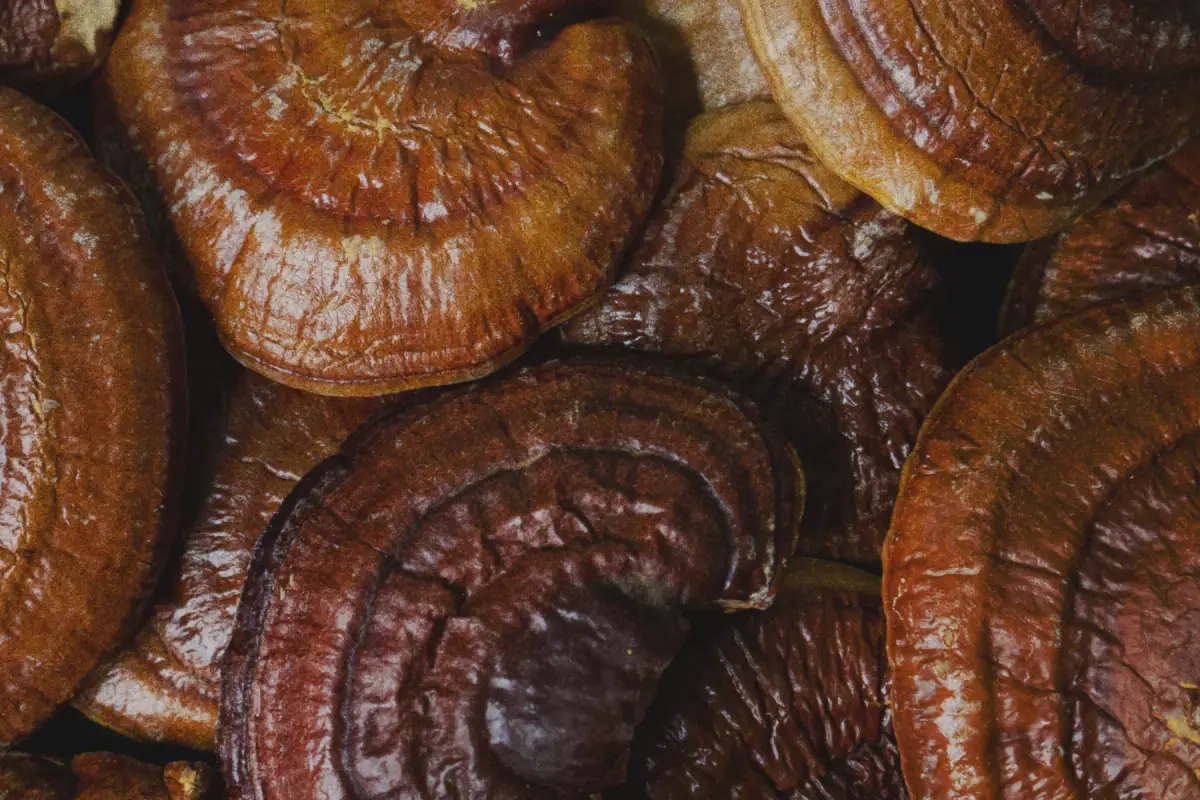
Reishi
The mushroom of immortality under the lens of science. What studies say about beta-glucans, triterpenes, safety and interactions.
In the classical Chinese pharmacopoeia, Reishi ranks among the most treasured of mushrooms, and it was called the mushroom of immortality long before anyone examined the triterpenes and ganoderic acids it contains. I particularly recommend Reishi before sleep, as a ritual of quieting down and regeneration.

Reishi in scientific research
What was studied, on how many people and with what level of evidence. This overview describes studies, not the effects of a product.
8
human studies
3
placebo-controlled RCTs
2005–2025
years of publication
Klupp N.L. et al., 2015
ACochrane systematic review with meta-analysis
5 studies, 398 people
The review collected randomised studies on the effect of Ganoderma lucidum on cardiovascular risk factors in people with type 2 diabetes. The authors noted that only 3 of 5 studies provided data suitable for statistical analysis.
PMID 25686270Jin X. et al., 2016
ACochrane systematic review with meta-analysis
5 RCTs, total number of people not reported
The review collected randomised studies on the use of Ganoderma lucidum in the context of oncological treatment. The authors noted unsatisfactory methodological quality of the primary studies, incomplete outcome reporting, no long-term survival data, and adverse events reported in only one study.
PMID 27045603Zhong L. et al., 2019
Bsystematic review with meta-analysis of RCTs
23 studies, 4246 people
The review collected randomised studies on Coriolus versicolor and Ganoderma lucidum preparations used as adjunct therapy in oncology patients. Studies were conducted almost exclusively in Asia, with heterogeneous preparations and doses.
PMID 31333449
The presence of a study is not a health claim.
© 2026 Aloha Fungi™