Journal
Which mushroom for energy and stamina? Meet Cordyceps
Which mushroom for energy? Meet Cordyceps: TCM tradition, cordycepin, adenosine, ATP and how it fits into a daily activity ritual.
TCM therapist · Doctor of Acupuncture (WFAS) · author of a book on functional mushrooms
8 min read
Contents
- A number from our shop
- What is Cordyceps? The Chinese caterpillar fungus and its origin
- Cordyceps sinensis or militaris
- Adaptogen: what the word actually means
- Why Cordyceps is linked to energy
- Cordycepin and adenosine
- ATP, the cell's energy carrier
- How and when to use Cordyceps
- Who is Cordyceps for
- Cordyceps at Aloha Fungi
- Frequently asked questions (FAQ)
- Which functional mushroom is traditionally linked to energy and stamina?
- What is the difference between Cordyceps sinensis and Cordyceps militaris?
- What is an adaptogen?
- What is cordycepin?
- When is the best time to take Cordyceps?
- Can Cordyceps be combined with other functional mushrooms?
- Is Cordyceps safe to use every day?
If you are asking which mushroom for energy and stamina to choose, the tradition of Chinese medicine (TCM) has pointed to Cordyceps for centuries, a functional mushroom counted among the "tonifying" substances and traditionally linked to vitality. Modern science describes compounds it contains such as cordycepin and adenosine, connected to the pathways of ATP production, the cell's energy carrier. This is, of course, knowledge about tradition and research, not a promise of a health effect.
This material combines classic texts of traditional Chinese medicine with the language of modern science. It was prepared by Mateusz Rosa, a TCM therapist and Doctor of Acupuncture (WFAS).
A number from our shop
36% of Aloha Fungi baskets between 24 January 2025 and 17 July 2026 contained the Cordyceps + Lion’s Mane pair (ENERGIA), according to 3,180 paid and shipped orders from the shop. Cordyceps on its own, without Lion’s Mane, appeared in 20 of those 3,180 orders, or 0.6%.
In the Aloha Fungi report of 20 July 2026, Cordyceps made up 12% of units sold across 8,053 orders from 2022-2026 (WordPress and Shoper, excluding cancelled and returned orders).
In 1,992 Aloha Fungi consultation surveys from November 2022 to June 2026, 66% of people marked a lack of energy. That is a record of what people arrived with, not a promise of an effect.
This is not a ranking of species. It is a record of what people actually ordered. The pair is on the ENERGIA product page, the fruiting body on its own on the Cordyceps page.
What is Cordyceps? The Chinese caterpillar fungus and its origin
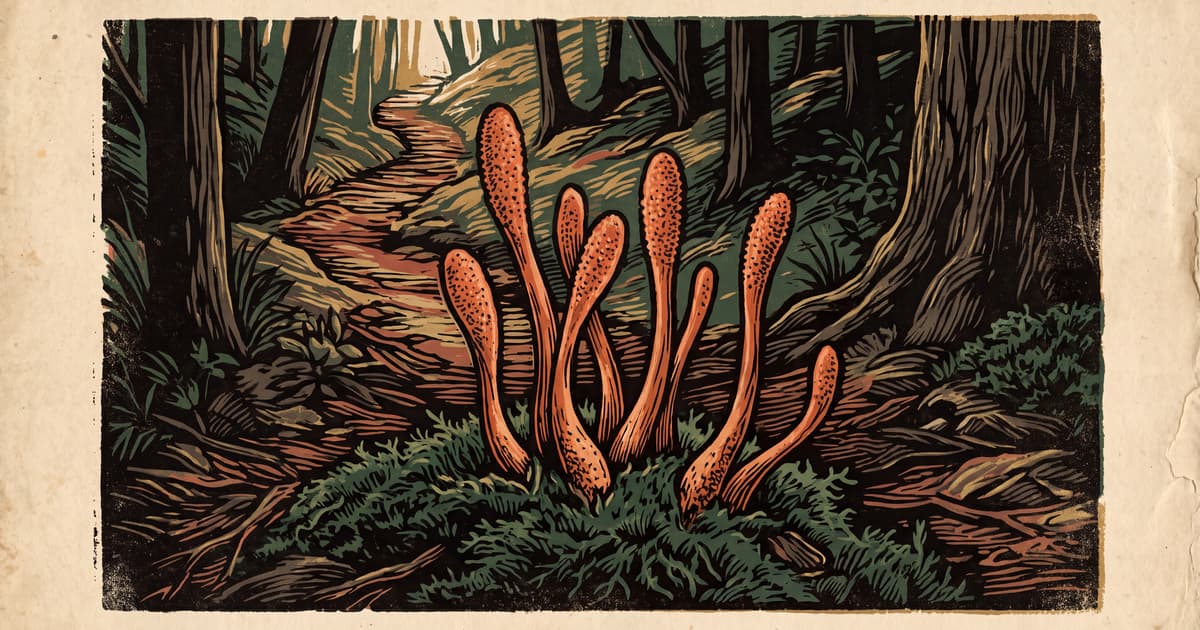
Cordyceps is one of the most recognizable functional mushrooms in the world. Its story begins high in the mountains: the wild-growing species (Ophiocordyceps sinensis) was harvested for centuries at altitudes of 3,000 to 5,000 metres in Tibet and the Himalayas, earning it the nickname "Himalayan gold" for its price and rarity.
In TCM tradition, Cordyceps was counted among the "tonifying" substances, those that in the old understanding were thought to support everyday vitality. The old texts of Chinese medicine describe it in this role, and today it appears more and more in the Western world.
Cordyceps sinensis or militaris
Today's supplement market rarely uses wild Ophiocordyceps sinensis, since pressure on wild populations led to protections and export regulations. Its place has been taken by cultivated Cordyceps militaris, grown under controlled conditions.
| Trait | Cordyceps sinensis | Cordyceps militaris |
|---|---|---|
| Origin | wild, Tibet and the Himalayas, 3,000-5,000 m | cultivated, controlled growing conditions |
| Availability | rare, expensive, protected | widely available, predictable quality |
| Impact on nature | pressure on wild ecosystems | grown without harming wild populations |
| At Aloha Fungi | not used | fruiting body extract, CS-4 strain |
At Aloha Fungi we work with the fruiting body of Cordyceps militaris (CS-4 strain), the visible part of the mushroom that old texts described, not with mycelium alone.
Adaptogen: what the word actually means
"Adaptogen" is a popular, though informal, term from the language of herbal tradition, not a term from conventional medicine. In the practice of mushroom lovers it means an ingredient woven into the rhythm of the day, alongside sleep, movement and diet, not a standalone fix. TCM tradition emphasised regularity: adaptogens were used as steady, ongoing support, not on demand before a single effort.
Cordyceps is sometimes called an adaptogen precisely because, in the old understanding, it was meant to accompany daily activity, not replace it.
Why Cordyceps is linked to energy
Cordycepin and adenosine
Cordycepin is a compound naturally present in Cordyceps, structurally related to adenosine, one of the building blocks of the ATP molecule. Laboratory studies and animal models describe scientists' interest in how cordycepin interacts with cellular pathways related to energy metabolism. This is a topic of basic research and not yet a confirmed clinical effect in humans.
ATP, the cell's energy carrier
ATP (adenosine triphosphate) is the molecule cells use as the primary energy carrier for everyday processes, including muscle activity. Scientific literature lists Cordyceps as one of the subjects of research into support for ATP production at the cellular level.
How and when to use Cordyceps
Form and dosage depend on the specific product, so always follow the label or the instructions on the site. At Aloha Fungi the standard is a 10:1 extract, meaning 10 kg of dried fruiting body yields 1 kg of concentrated extract.
- Morning or before physical activity · the classic timing for Cordyceps in TCM tradition.
- Regularly, not occasionally · adaptogens are woven into a daily routine; tradition linked the effect with continuity of use, not a single dose. In China, cordyceps is as common as the button mushroom is here · you can find it in most markets and shops.
- A form that fits you · extract as powder, capsules or drops, depending on your daily rhythm or preferred form.
Want a ready-made plan for the whole week, with a concrete timing, form and how to pair it with a meal? Practice: a morning ritual with cordyceps, step by step →
Who is Cordyceps for
Lovers of functional mushrooms most often reach for Cordyceps in a few situations:
- Physically active people and amateur athletes · traditionally linked with the hours of exertion and activity.
- People building a morning ritual · as part of a routine alongside sleep, movement and diet, not a replacement for any of them.
- People curious about TCM tradition and the topic of vitality · out of interest in a mushroom with a centuries-long history.
The effect tradition attributed to adaptogens was cumulative, built over time, not immediate. If you take medication (especially immunosuppressants or diabetes medication), are pregnant or breastfeeding, discuss the use of Cordyceps with your doctor or pharmacist.
Cordyceps at Aloha Fungi
You will find Cordyceps as a standalone fruiting-body extract, and also in the ENERGIA duo together with Lion's Mane, designed as a pair for a morning ritual of activity and focus. You can read more about Lion's Mane as a mushroom for focus and memory in a separate guide.
Frequently asked questions (FAQ)
Which functional mushroom is traditionally linked to energy and stamina?
In the tradition of Chinese medicine (TCM) it is Cordyceps, counted among the tonifying mushrooms and traditionally taken during the hours of physical activity.
What is the difference between Cordyceps sinensis and Cordyceps militaris?
Cordyceps sinensis (Ophiocordyceps sinensis) is a wild, rare species from Tibet and the Himalayas. Cordyceps militaris is a cultivated species, grown under controlled conditions without harming wild ecosystems. At Aloha Fungi we work with Cordyceps militaris fruiting body, CS-4 strain.
What is an adaptogen?
It is a popular, though informal, term from the language of tradition, not a term from conventional medicine. It means an ingredient woven into the rhythm of the day, used regularly rather than occasionally. Cordyceps is called this because, in TCM tradition, it was meant to accompany daily activity.
What is cordycepin?
Cordycepin is a compound naturally present in Cordyceps, studied for its links to the cell's energy pathways, including adenosine and ATP, the cell's energy carrier. This is a subject of laboratory research, not a confirmed clinical effect.
When is the best time to take Cordyceps?
Traditionally Cordyceps was taken in the morning or before physical activity, matching the time of day it was associated with in TCM. Adaptogens are woven into a routine and used regularly, not just once before an important event. You will find a ready weekly plan in the guide on a morning ritual with cordyceps.
Can Cordyceps be combined with other functional mushrooms?
Yes. In practice, mushroom lovers combine Cordyceps with other species, for example with Lion's Mane in a morning ritual, as in the ENERGIA duo. The choice of combination depends on your daily rhythm.
Is Cordyceps safe to use every day?
Cordyceps is a food supplement, not a medicine. If you take medication (especially immunosuppressants or diabetes medication), are pregnant or breastfeeding, discuss its use with your doctor or pharmacist before adding it to your routine.
This content is for educational purposes only and does not constitute medical advice. A food supplement does not replace a varied diet or a healthy lifestyle. If in doubt, consult your doctor or pharmacist.