Journal
Reishi in the rhythm of the day · a mushroom for the evening ritual
Reishi is the "mushroom of immortality" of the TCM tradition, linked to calm. An educational look at symbolism, fruiting body and evening ritual.
TCM therapist · Doctor of Acupuncture (WFAS) · author of a book on functional mushrooms
3 min read
Contents
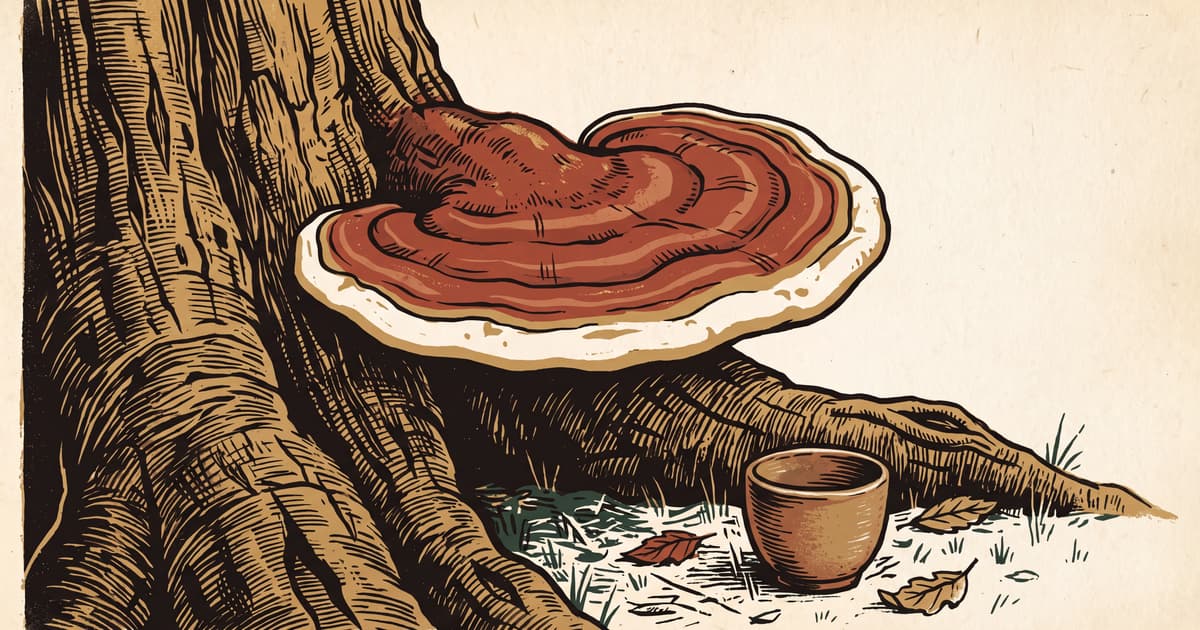
Reishi (in Polish lakownica żółtawa, Latin Ganoderma lucidum) is perhaps the most revered mushroom of Chinese tradition. It was called líng zhī, "the mushroom of immortality," and for millennia was a symbol of longevity and inner calm.
That is cultural symbolism, recorded in old art and poetry. Do not read it as a promise, read it as a story about the place reishi held in everyday life.
A number from our shop
31% of Aloha Fungi baskets between 24 January 2025 and 17 July 2026 contained Reishi, according to 3,180 paid and shipped orders from the shop.
In the Aloha Fungi report of 20 July 2026, Reishi made up 17% of units sold across 8,053 orders from 2022-2026 (WordPress and Shoper, excluding cancelled and returned orders).
In 1,992 Aloha Fungi consultation surveys from November 2022 to June 2026, 64% of people marked a lot of stress. That is a record of what people arrived with, not a promise of an effect.
This is not a market study and not a promise of an effect. It is a record of what actually landed in baskets. The fruiting-body extract is on the product page.
A mushroom of emperors and sages
Reishi appears in Chinese paintings, sculptures and on the robes of emperors. In the TCM tradition it was counted among substances that "tonify the spirit" (shén), in the old understanding supporting calm and balance. Its hard, lacquered surface made it seem an exceptional, almost ornamental mushroom.
Today, lovers of functional mushrooms value reishi for the ritual they build around it: a moment of calm at the end of the day.
Why the fruiting body
At Aloha Fungi we work with the fruiting body of reishi, the hard, visible part of the mushroom that tradition knows. This is where the old texts saw value. The fruiting body can be harder and more expensive to grow than mycelium, but it is the hero of the old stories.
Reishi in the evening
Unlike cordyceps (the hours of activity), reishi was traditionally associated with the evening, a time to wind down and prepare for rest. Mushroom lovers enjoy it as a warm infusion before sleep, or as part of a sleep ritual.
- In the evening · reishi’s classic timing in tradition.
- Unhurried · this is a mushroom of calm, not energy.
- Your ritual · a warm infusion, a capsule, a quiet moment. You choose.
If you take medication (especially blood thinners), are pregnant or breastfeeding, discuss use with your doctor or pharmacist.