Journal
Ashwagandha drops · the only non-mushroom in our range
Ashwagandha (Withania somnifera) is a pillar of Ayurveda, not a mushroom. An educational look at the drop form, root extract and its place in a daily ritual.
TCM therapist · Doctor of Acupuncture (WFAS) · author of a book on functional mushrooms
3 min read
Contents
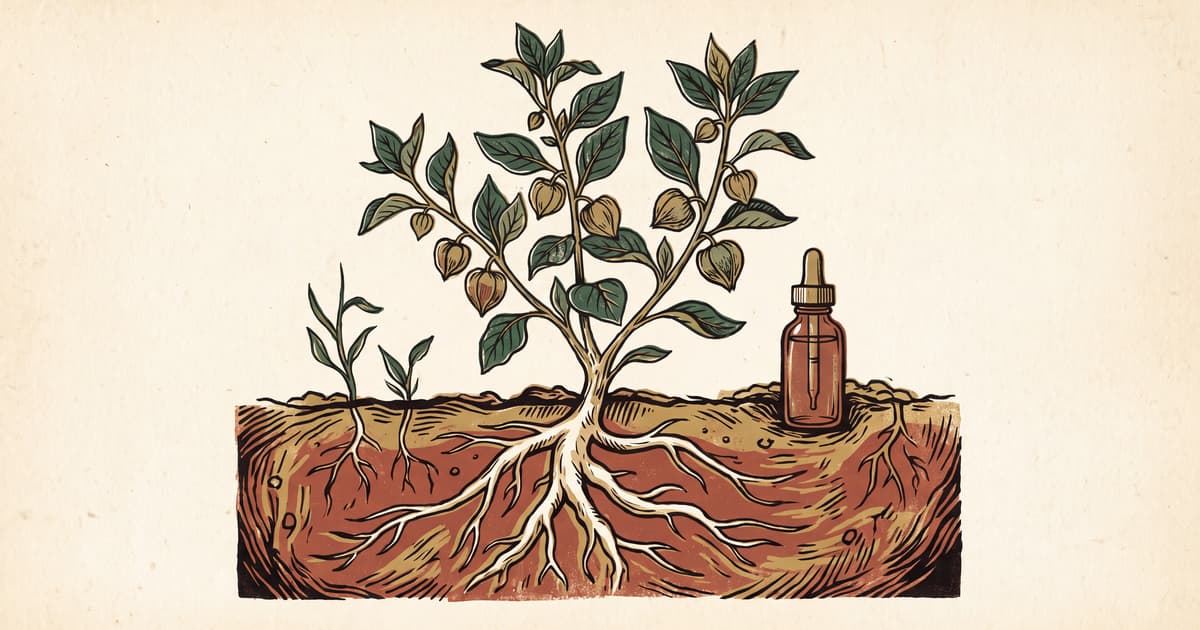
Ashwagandha (Latin Withania somnifera, also known as winter cherry or "Indian ginseng") is the only product in the Aloha Fungi range that is not a mushroom. It is a shrub from the dry regions of India, and its root has held a place in Ayurvedic medicine for millennia. An interesting contrast: the rest of our shelf is fruiting bodies and mycelium from Chinese tradition, while ashwagandha arrives from an entirely different system of herbal medicine.
What is ashwagandha and where does it come from?
Ashwagandha is the root of a shrub from the nightshade family, one of the central herbs of Ayurveda (traditional Indian medicine). Within that system it is classified as a rasayana, an herb from the "rejuvenating" group, traditionally linked to resilience against fatigue and to building inner balance. This is a cultural description, recorded in old Ayurvedic texts, not a modern diagnosis.
Unlike our mushrooms (reishi, cordyceps, lion's mane), which come from Chinese and Japanese tradition, ashwagandha represents a different cultural sphere. Herb lovers value it precisely because it brings a different tradition than fungotherapy into the mix, broadening the range of rituals available to you.
How does the drop form differ from other forms of supplementation?
Drops are a liquid extract of ashwagandha root, unlike capsules or powder. The difference is practical, not "curative": liquid is easier to dose precisely by adding it to water, tea or coffee, and people who dislike swallowing tablets gain a convenient alternative.
Our extract is based on ashwagandha root in a standardized form (10:1), a concentrated extract from the raw material. This is a technical production parameter, not a promise of an effect. Drops are typically applied under the tongue or added to a beverage, following the label instructions.
How can you weave ashwagandha into a daily ritual?
In Ayurvedic tradition, ashwagandha is often associated with the evening hours, as part of winding down before rest, though herbalists also mention daytime use during periods of heavier demands. This is not a prescription, just a fragment of a practice passed down through generations in India.
- In the evening · a few drops in a warm drink, to close the day.
- During the day · for those who want to weave the ritual into their morning coffee or tea.
- Consistency · Ayurvedic tradition speaks of regularity, not a one-off effect.
Ashwagandha (Withania somnifera) versus our mushrooms: what's the difference?
Ashwagandha is a plant from Indian tradition, while our Reishi or Cordyceps are mushrooms from Chinese tradition. They share a place in your daily ritual, but differ in botany and cultural origin, so it is worth treating them as complementary rather than interchangeable parts of your practice.
If you take medication (especially sedatives, sleep aids or thyroid medication), are pregnant or breastfeeding, discuss the use of ashwagandha with your doctor or pharmacist.
See also: the evening ritual step by step · functional mushroom rituals.
This content is for educational purposes only and does not constitute medical advice. A food supplement does not replace a varied diet or a healthy lifestyle. If in doubt, consult your doctor or pharmacist.