Skip to content

🚧 TEST STOREwe're building this shop in the open! For real orders visit www.alohafungi.pl

Tremella (Tremella fuciformis)

Below the products: Tremella guide

Choose your Tremella format

Below you will find every available product for this species. Each tile opens the product page with the selected format and line preselected.

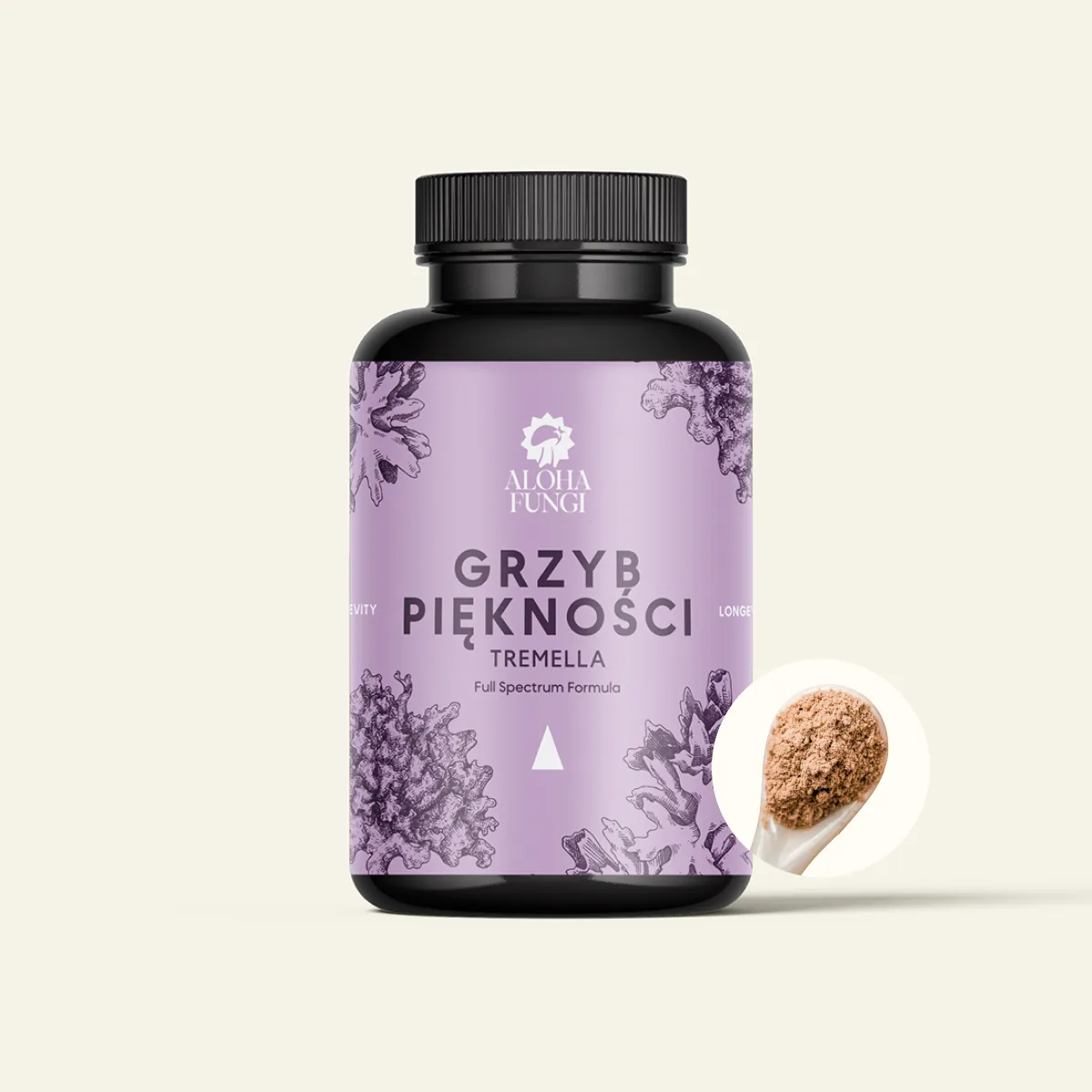
Tremella Powders · LONGEVITY, Aloha Fungi product packaging
MushroomsSubscription −15%

Tremella

Tremella fuciformis

Powders · LONGEVITY

249 zł

View →

Tremella guide

Version 1.0 · Updated: 21 June 2026 · Subject-matter reviewer: Mateusz Rosa, founder of Aloha Fungi, TCM therapist, Doctor of Acupuncture (WFAS), author of books on functional mushroom supplementation.

  • Tremella fuciformis, in Polish trzęsak morszczynowaty, Chinese yin er (银耳, „silver ear"), bai mu er (白木耳, „white tree ear"), xue er (雪耳, „snow ear"), Japanese shiro kikurage. English names: snow fungus, silver ear, white jelly mushroom.
  • Bioactive compounds: TFPS polysaccharides (a glucuronoxylomannan of molecular weight from 5.82×10⁵ to 3.74×10⁶ Da, built from mannose, xylose, fucose and glucuronic acid), β-1,3/1,6-glucans above 30%, uridine, mannitol, ergosterol, provitamin D₂, trace amounts of selenium and zinc.
  • Mechanisms described in the literature: TFPS bind water and act as a humectant (a structure functionally close to hyaluronic acid); Tremella stimulates NGF synthesis by astrocytes and activates the CREB pathway in cholinergic neurons; β-glucans activate Dectin-1 and TLR4 and the insulin PI3K/Akt pathway.
  • Strongest clinical studies: an 8-week RCT (Ban 2018, n=75 with subjective cognitive impairment, 600 and 1200 mg/day); a 12-week RCT (Gitsomboon 2024, n=56 overweight adults, a Tremella β-glucan beverage, metabolic parameters).
  • In TCM it tonifies the Yin of the Lung and Stomach, generates fluids (Jin Ye), moistens dryness and supports Jing. Sweet and bland taste, neutral nature. Meridians: Lung, Stomach, Kidney.
  • Our raw material: a 10:1 T. fuciformis fruiting-body extract, standardised to above 30% polysaccharides (including TFPS and β-glucans, EUROFINS lab), no maltodextrin, tested for heavy metals and pesticides.

What tremella is and where it comes from

Tremella is the common name for the mushroom Tremella fuciformis of the Tremellaceae family. The Polish name trzęsak morszczynowaty refers to the resemblance of the branching lobes of the fruiting body to bladderwrack fronds. Chinese yin er (银耳, „silver ear"), Japanese shiro kikurage, English snow fungus, silver ear and white jelly mushroom describe the same lacy, gelatinous structure.

It is a parasitic mushroom growing mainly in the tropical and subtropical zones. In the wild it does not develop directly on wood but as a parasite of other wood-rotting fungi, most often of the genus Annulohypoxylon. The fruiting body has a characteristic lacy, gelatinous structure, translucent and white to yellowish when fresh, hard and pale yellow when dried.

In controlled cultivation Tremella is grown on deciduous wood together with its host fungus, which gives a repeatable TFPS polysaccharide content and full control of contaminants.

Tradition of use

The first written mentions of yin er appear in Chinese medical texts from the Tang dynasty (618-907 CE). It was traditionally an imperial mushroom reserved for the court, called „plant caviar". The most famous cosmetic consumer of Tremella in Chinese history was the concubine Yang Guifei (719-756 CE) at the court of Emperor Xuanzong, who, according to the records, ate a yin er dessert daily to maintain her beauty.

In the classic work Ben Cao Gang Mu (1578) Li Shizhen described Tremella as a tonic tonifying the Yin of the Lung and Stomach, generating fluids (Jin Ye), indicated for dry cough, dry skin and exhaustion after a long illness.

The modern renaissance of Tremella in the West began in the 1990s, when Japanese and Korean cosmetics manufacturers started using TFPS polysaccharides as a plant alternative to animal-derived hyaluronic acid.

Bioactive composition, what is in the extract

The main bioactive complex is the TFPS polysaccharides. Structurally this is a glucuronoxylomannan, a linear (1→3)-α-D-mannose chain with side branches of β-D-xylose, α-D-fucose and β-D-glucuronic acid. Molecular weight from 5.82×10⁵ to 3.74×10⁶ Da. Standardised in our extract to above 30%.

β-1,3/1,6-glucans, polysaccharides activating Dectin-1 and TLR4 on dendritic cells, present both as part of the TFPS fraction and as a separate component.

Uridine, a nucleoside described as a regulator of glucocorticoid signalling and support for neuronal membrane synthesis. Mannitol (tremellic acid), a natural polyol with osmotic and free-radical-scavenging properties. Ergosterol and provitamin D₂, fungal sterols. In addition exogenous amino acids (lysine, threonine) and trace elements (zinc, selenium, iron).

Chemical analyses have shown that the polysaccharide fraction of T. fuciformis contains up to 87.76% of a structural counterpart of hyaluronic acid with a molecular weight above 2000 kDa. This is not the same compound, however. The similarity concerns the humectant function, not chemical identity.

This is why a fruiting-body extract and mycelium on grain are two different products. The fruiting body delivers a TFPS concentration far higher than mycelium alone. Cheaper supplements are often mycelium on rice or barley, where TFPS may be below 5%. Aloha Fungi works only with the fractionally extracted fruiting body.

How tremella works: three mechanisms

Mechanism 1. Hydration through glucuronoxylomannan polysaccharides

The best-described mechanism of Tremella. TFPS polysaccharides, thanks to the combination of mannose, xylose and glucuronic acid, form a three-dimensional water-absorbing network that binds water molecules through hydrogen bonds. In in vitro studies TFPS of lower molecular weight show deeper skin penetration than conventional high-molecular-weight hyaluronic acid (Wu 2019).

In animal models (mice with D-galactose-induced skin ageing) oral TFPS supplementation reduced the loss of hydroxyproline and hyaluronic acid in the skin and increased the activity of the antioxidant enzymes SOD, CAT and GSH-Px (Wen 2016). In UVA-stimulated skin fibroblasts TFPS increased the production of type I collagen, elastin and endogenous hyaluronic acid through activation of the Nrf2/Keap1 pathway (Hu 2021).

Mechanism 2. Support for cognitive function through NGF and the cholinergic system

In the Park 2007 study a water extract of Tremella (0.01-1 μg/ml) stimulated neurite outgrowth in PC12h cells in a dose-dependent way. In an animal model (Park 2012) oral Tremella (100 or 400 mg/kg for 14 days) reversed scopolamine-induced memory impairment in rats and activated CREB transcription and raised ChAT (choline acetyltransferase) expression in the medial septal nucleus.

The mechanism differs from Lion’s Mane. Tremella does not produce NGF directly (as Lion’s Mane hericenones do), but stimulates astrocytes to synthesise NGF and supports the CREB pathway in cholinergic neurons. The Ban 2018 RCT (n=75 with subjective cognitive impairment) showed that 8 weeks of Tremella at 600 or 1200 mg/day significantly improved scores on a subjective memory-complaint questionnaire and on tests of short-term memory and executive function, and voxel-based morphometry showed grey-matter changes in the Tremella groups versus placebo.

Mechanism 3. Metabolic modulation and immunomodulation through β-glucans

Mechanistically Tremella β-glucans have been studied in the context of the PI3K/Akt pathway of insulin signalling: in laboratory models they regulate adipogenesis genes (PPAR-γ, leptin) and influence the gut microbiota, increasing the production of short-chain fatty acids. This describes a direction of metabolic research, not a declaration of action in disease.

The same β-glucan mechanism acts in parallel on the Dectin-1 and TLR4 receptors of dendritic cells, supporting immunomodulation (Treg regulation, reduction of IL-1β and TNF-α in inflammation models).

What tremella does not do

Tremella does not cure Alzheimer’s disease, dementia or other neurodegenerative diseases. NGF and CREB-pathway support is a physiological mechanism described in studies of the raw material, not a pharmacological intervention in an ongoing pathology. It does not replace antidiabetic medicines. A 0.07 percentage-point drop in HbA1c in an RCT is noticeable in the context of prevention but insufficient as therapy for type 2 diabetes. It does not replace hyaluronic acid cosmetics. Oral and topical action are complementary, not alternative, and Tremella and hyaluronic acid are different chemical compounds with a similar humectant function. It is not an anti-ageing miracle. The humectant mechanism is real, but there are no RCTs with measured skin parameters confirming that Tremella „erases wrinkles" in humans. It acts gently and cumulatively, over weeks and months, not instantly.

How to take tremella: the protocol

Time and serving

Neutral timing. Tremella neither clearly stimulates nor sedates, so it can be taken in the morning or the evening. Traditionally an evening ritual supports Lung Yin in dry seasons (autumn, winter heating).

In the cited RCTs effective doses are 600 and 1200 mg of extract a day (Ban 2018) and a daily serving of Tremella β-glucan over 12 weeks (Gitsomboon 2024). In practice 600-1200 mg of extract a day is used: 2-4 capsules, 15-25 drops once or twice a day, or 1-2 g of powder. Prevention and long-term care: 600 mg/day. Targeted protocols: 1200 mg/day. It can be split into two servings (morning and evening) or taken as one. Do not exceed the recommended daily serving.

With what and for how long

Tremella has a polysaccharide profile, so absorption does not require the presence of fat. The best pairings are warm water, tea (green, white, oolong), cacao, plant milk, a smoothie, soup or oatmeal. Traditional culinary pairings: Tremella with jujube (Da Zao), goji (Gou Qi Zi), lily (Bai He) or lotus (Lian Zi).

The classic rhythm is 5 days on, 2 days off. This gives the immune-system receptors (Dectin-1, TLR4) time to reset their sensitivity. For Tremella the rhythm is less critical than for Reishi or Cordyceps, but it is recommended for protocol consistency. The full cumulative effect is observed after about 3 months of regular use.

What to observe over time

2-4 weeks: first signs of hydration of the skin and mucous membranes (a less dry nose, throat, eyes), a gentler morning skin condition.

4-8 weeks: a noticeable improvement in skin tone and elasticity, a gentler mucosal reaction to dry air, a subjective improvement in the freshness of short-term memory.

8-12 weeks: a full manifestation of the Yin-tonifying effect in TCM terms, cumulative metabolic support.

The first objective effects (visible in the mirror, in photographs, in comments from those around you) usually after 6-8 weeks. It is worth noting subjective indicators: skin condition (dryness, tightness after washing the face), mucous-membrane condition (lips, nose, throat, eyes), the skin’s reaction to dry air (air conditioning, heating, flying), subjective short-term memory and tolerance of the autumn-winter season.

What to combine tremella with: synergy protocols

Tremella + Lion’s Mane: memory and neuroplasticity

The best-documented synergy. Lion’s Mane (Hericium erinaceus) contains hericenones and erinacines that directly stimulate NGF production in neurons. Tremella stimulates NGF synthesis by astrocytes and activates the CREB pathway in cholinergic neurons. These are two different, complementary mechanisms of increasing NGF availability. In practice: Lion’s Mane in the morning (for focus and learning), Tremella in the evening (for consolidation and CNS nourishment). Duration: 12 weeks.

Pair with:Lion’s Mane

Tremella + Reishi: sleep, Yin regeneration, longevity

A classic TCM pairing of two Yin tonics. Reishi tonifies the Yin of the Liver and Heart (calming Shen, cortisol regulation, sleep), Tremella tonifies the Yin of the Lung and Stomach (moistening, generation of Jin Ye). Together they cover the full Yin profile: emotional (Shen) and physical (body fluids). A classic protocol for the chronically overworked, after a long period of stress, during menopause or with signs of internal dryness. Tremella in the evening, Reishi in the evening. Duration: 8-12 weeks.

Pair with:Reishi

Tremella + Cordyceps: Yin and Yang balance

Cordyceps is a classic tonic of Kidney Yang and Jing, Tremella a tonic of the Yin of the Lung, Stomach and Kidney. In TCM a Yin/Yang pairing from the same meridian (Kidney) is one of the strongest models of homeostasis. Cordyceps gives power and drive, Tremella moistens and protects against overheating. Indications: athletes in a phase of intensive training (Cordyceps before training, Tremella in the evening for recovery), people with energetic burnout combined with signs of dryness. Duration: 8-12 weeks.

Pair with:Cordyceps

Tremella + Chaga: antioxidation and seasonal immunity

Chaga (Inonotus obliquus) is an anti-inflammatory and strongly antioxidant mushroom (SOD, melanins, phenolic acids). Tremella adds a hydration layer and support for the mucous membranes. A protocol classically recommended for the autumn-winter season: Chaga in the morning (immunity, antioxidation), Tremella in the evening (hydration after a day in dry air, support for Lung Yin). Duration: 8-12 weeks.

Pair with:Chaga

Tremella + Coriolus: recovery after infection, rebuilding Lung Yin

Coriolus (Trametes versicolor) is the most strongly immunostimulating through its PSK/PSP fraction. After an infection, antibiotic therapy or during convalescence Tremella rebuilds Lung Yin and Jin Ye (dried out by fever and dry cough), while Coriolus restores immune balance. This protocol is classically recommended for post-COVID syndrome with dominant dryness and fatigue and after long antibiotic courses. Duration: 8-12 weeks.

Pair with:Coriolus

Tremella in Traditional Chinese Medicine

Tremella (yin er) in the classical Chinese Materia Medica is an imperial mushroom and one of the most important Yin tonics. It tonifies the Yin of the Lung and Stomach, generates fluids (Jin Ye), moistens dryness and supports Jing. Traditionally indicated for dry cough, dry skin and mucous membranes and exhaustion after a long illness.

This is a frame of cultural observation, not a medical diagnosis. Concepts such as Yin, Jin Ye or meridian do not correspond one to one with Western anatomy or physiology.

Tastesweet, bland (淡 dàn)
Natureneutral (some sources: slightly cooling)
MeridiansLung, Stomach, Kidney
CategoryYin tonic (滋阴药 zī yīn yào)

Contraindications and interactions

Absolute contraindications

Known allergy to mushrooms of the Tremellaceae family or cross-hypersensitivity to other medicinal mushrooms (symptoms: itching, swelling, skin redness, cough, shortness of breath).

Status after organ transplant with active immunosuppression (cyclosporine, tacrolimus, mycophenolate, everolimus). β-glucans activate Dectin-1 and TLR4, which could theoretically weaken the effect of the immunosuppressant.

Children under 18 (no safety studies in this age group).

Requires consultation with a doctor

Anticoagulant and antiplatelet medicines (warfarin, acenocoumarol, NOACs, clopidogrel, acetylsalicylic acid at cardiological doses). Tremella polysaccharides may prolong the partial thromboplastin time. The effect is mild, but alongside anticoagulant treatment it requires INR monitoring.

Antidiabetic medicines (insulin, metformin, sulfonylureas, incretins). Given the influence of β-glucans on metabolism described in the research, caution, glycaemic monitoring and a consultation with a diabetologist are advised alongside such treatment.

Pregnancy and breastfeeding. In TCM Tremella is traditionally considered safe in pregnancy, but there are no RCTs in this population. Caution is advised and use only after consultation.

Planned surgery: given a possible mild anticoagulant effect, stop Tremella at least 14 days before the procedure.

Possible side effects and safe serving

Reported rarely: gastrointestinal complaints (bloating, loose stools, a feeling of fullness) linked to the mucilaginous nature of the polysaccharides, more common in people with weak digestion (solution: halve the serving, take with a warm meal); allergic reactions in people hypersensitive to mushrooms; a mild feeling of coldness in the stomach on an empty stomach in people with a constitutionally cold digestion (solution: take with a warm drink or after a meal).

In the cited RCTs effective doses are 600 and 1200 mg of extract a day (Ban 2018) and a daily β-glucan serving over 12 weeks (Gitsomboon 2024); neither study reported side effects. In long-term practice most often 600-1200 mg/day.

Honest about what is known

We also show what is not proven. This is a dietary supplement, not a medicine.

3

Strong evidence

confirmed composition

4

Preliminary

in vitro and animal studies

3

Not proven

no human studies

Reviewed by

Mateusz Rosa · Doctor of Acupuncture (WFAS)

Version 1.0 · Updated: 21 June 2026 · Subject-matter reviewer: Mateusz Rosa, founder of Aloha Fungi, TCM therapist, Doctor of Acupuncture (WFAS), author of books on functional mushroom supplementation.

Based on 11 verified sources

See sources

Strength of evidence: an honest qualification of claims

ClaimType of evidenceStrength
Reduction in HbA1c and waist circumference in prediabetic subjectsRCT n=56, 12 wks, double-blind, p<0.05 (Gitsomboon 2024)MOCNY
Improvement in subjective memory and executive function in SCIRCT n=75, 8 wks, double-blind, two doses (Ban 2018)MOCNY
TFPS polysaccharides bind water and act as a humectant (mechanism)repeatedly confirmed in vitro, review monographs (Wu 2019, Mendes 2025)MOCNY
Tremella stimulates NGF synthesis by astrocytes and activates CREBin vitro PC12h and animal model (Park 2007, Park 2012), no human RCT measuring NGFWSTĘPNY
Support for synthesis of collagen I, elastin and endogenous HA in skinUVA-stimulated fibroblasts (Hu 2021), animal D-galactose ageing models (Wen 2016)WSTĘPNY
Tremella supports Lung Yin and mucous-membrane moistening in dry coughTCM tradition, small clinical studies, no large RCTsWSTĘPNY
Anti-stress action through HPA-axis modulation (uridine, mannose)animal model (Lee 2025), no human RCTWSTĘPNY
„Tremella erases wrinkles" or rejuvenates skin in humansno RCT with measured skin parametersBRAK
„Cures" Alzheimer’s, dementia or MCInone, claim unsupported and prohibited by regulationBRAK
„Tremella replaces hyaluronic acid in cosmetics"similar humectant mechanism, but different chemical compoundsBRAK

MOCNY = solid evidence · WSTĘPNY = moderate or preliminary · BRAK = unsupported or prohibited by regulation.

Frequently asked questions

Is Tremella really better than hyaluronic acid?
No. They are different compounds with a similar humectant mechanism. Hyaluronic acid (HA) is a glycosaminoglycan, Tremella contains glucuronoxylomannan (TFPS). Both bind water, both can be used orally and topically, but their pharmacokinetics and bioavailability differ. Tremella has a lower molecular weight, which could theoretically allow deeper skin penetration when applied externally, but there are no head-to-head RCTs in humans. The best strategy: hyaluronic acid in an external cosmetic plus Tremella taken orally, complementarily, not interchangeably.
Does Tremella moisturise the skin from within, or do I still need a cream?
You still need a cream. Oral Tremella supplementation acts systemically (through activation of the Nrf2 pathway, regulation of collagen and endogenous HA synthesis), but it does not replace the barrier functions of a cosmetic. The best strategy: Tremella orally every day (care from within) plus a moisturising external cream morning and evening.
What is the optimal Tremella serving?
In the RCTs effective doses are 600 and 1200 mg of extract a day (Ban 2018) and a daily β-glucan serving over 12 weeks (Gitsomboon 2024). In practice 2-4 capsules a day or 1-2 g of powder. For prevention and long-term care 600 mg is enough, for targeted protocols 1200 mg.
After how long will I notice an effect?
The first signs of mucous-membrane hydration (a less dry nose, throat, eyes) usually after 2-4 weeks. A noticeable improvement in skin condition after 6-8 weeks. The full manifestation of the Yin-tonifying effect (complexion, hair, nails, tolerance of the dry season) after about 3 months. Tremella acts gently and cumulatively, so it is not for people expecting an instant effect.
Can I combine Tremella with Reishi, Lion’s Mane, Cordyceps?
Yes, and it is often recommended. The most popular protocols: Tremella + Lion’s Mane (memory and neuroplasticity), Tremella + Reishi (sleep and Yin regeneration), Tremella + Cordyceps (Yin/Yang balance), Tremella + Chaga (seasonal immunity), Tremella + Coriolus (recovery after infection). Individual matching during a free consultation.
What are the main contraindications?
Absolute: mushroom allergy, active immunosuppression after a transplant, children under 18. Requires consultation with a doctor: anticoagulant and antiplatelet medicines (a mild anticoagulant effect), antidiabetic medicines (risk of hypoglycaemia), pregnancy and breastfeeding (no RCTs), planned surgery (stop 14 days before). The full list is in the contraindications section.
Is Tremella safe for people with diabetes?
Tremella is not a product intended to treat diabetes and does not replace antidiabetic medicines. If you take insulin or oral antidiabetic medicines, consult a diabetologist before supplementing and monitor your glycaemia, because β-glucans are described in the research as influencing metabolism, which could theoretically add to the effect of the medicines.
Tremella or Lion’s Mane for memory, which to choose?
Both mushrooms support cognitive function, but by different mechanisms. Lion’s Mane directly stimulates NGF production through hericenones and erinacines (the strongest effect on CNS neurons), Tremella stimulates NGF through astrocytes and activates the CREB pathway in cholinergic neurons (complementary support). In practice: Lion’s Mane for acute focus and learning (morning), Tremella for memory consolidation and long-term CNS nourishment (evening). Best in combination, not as a choice.
Does Tremella affect sleep?
Indirectly. Tremella is not a sleep-active mushroom like Reishi (no GABA-ergic action), but as a Yin tonic it lowers internal fire (Xu Re) and supports Yin regeneration at night. An evening ritual with Tremella is traditionally recommended for people with Yin-type insomnia (falling asleep is fine, but waking before dawn, dryness, sweating). For classic insomnia the first choice remains Reishi.
Why a fruiting-body extract rather than mycelium on grain?
The fruiting body of T. fuciformis (a lacy, gelatinous structure) contains a far higher concentration of TFPS polysaccharides than mycelium alone. Many cheaper supplements are mycelium plus rice or barley, where you are buying mostly starch and TFPS is often below 5%. Standardisation above 30% polysaccharides (including TFPS and β-glucans) is possible only from a fractionally extracted fruiting-body raw material.

Scientific bibliography

  1. Gitsomboon S et al. (2024). Tremella fuciformis beverage improves glycated hemoglobin A1c and waist circumference in overweight/obese prediabetic subjects: a randomized controlled trial. BMC Nutr 10:43. PMID: 38439104.
  2. Ban S et al. (2018). Efficacy and Safety of Tremella fuciformis in Individuals with Subjective Cognitive Impairment: A Randomized Controlled Trial. J Med Food 21(4):400-407. PMID: 29319408.
  3. Wu YJ et al. (2019). Structure, bioactivities and applications of the polysaccharides from Tremella fuciformis mushroom: A review. Int J Biol Macromol 121:1005-1010. PMID: 31030755.
  4. Park KJ et al. (2007). The Neuroprotective and Neurotrophic Effects of Tremella fuciformis in PC12h cells. Mycobiology 35(1):11-15. PMID: 24015063.
  5. Park HJ et al. (2012). Tremella fuciformis enhances the neurite outgrowth of PC12 cells and restores trimethyltin-induced impairment of memory in rats via activation of CREB transcription and cholinergic systems. Behav Brain Res 229(1):82-90. PMID: 22227505.
  6. Hu X et al. (2021). Tremella fuciformis polysaccharides inhibit UVA-induced photodamage of human dermal fibroblast cells by activating up-regulating Nrf2/Keap1 pathways. J Cosmet Dermatol 21(9):4015-4024. PMID: 33686752.
  7. Wen L et al. (2016). Tremella fuciformis-derived polysaccharides protect d-galactose induced skin aging in mice. J Sci Food Agric 96(6):2110-2118.
  8. Shen T et al. (2017). Tremella fuciformis polysaccharide suppresses hydrogen peroxide-triggered injury of human skin fibroblasts via upregulation of SIRT1. Mol Med Rep 16(2):1340-1346. PMID: 28627707.
  9. Mendes M et al. (2025). Non-Animal Hyaluronic Acid from Tremella fuciformis: A New Source with a Structure and Chemical Profile Comparable to Hyaluronic Acid. Foods 14(8):1362.
  10. Lee H et al. (2025). Anti-Stress Effects of Tremella fuciformis Berk. Enzymatic Extracts: A Preclinical Study. Antioxidants 14(2):214.
  11. Khamlue R et al. (2024). Recent advances in polysaccharides from Tremella fuciformis: isolation, structures, bioactivities and application. Front Pharmacol 15:1437534.

The educational content on this page does not replace medical advice. A dietary supplement is not a medicine and should not replace a varied diet or medical consultation. Before starting supplementation, especially with chronic conditions, pregnancy, breastfeeding or when taking medication, consult a doctor. Aloha Fungi does not claim therapeutic efficacy for any product; the mechanisms described are based on the current state of the literature. All products are dietary supplements notified to the Polish Chief Sanitary Inspectorate (GIS).