Journal
Mushroom fruiting body vs mycelium: what is actually in the bag
Fruiting body vs mycelium and mycelium on grain are three distinct materials. See how to read labels, beta-glucan numbers and what to ask producers.
Yi · Aloha Fungi
7 min read
Contents
- What is a mushroom fruiting body?
- What is pure mushroom mycelium?
- What is mycelium grown on grain?
- How do fruiting body, pure mycelium and mycelium on grain compare?
- When is mycelium the right material?
- Why does "full spectrum" not answer the question?
- How does grain change the numbers on a label?
- Which five questions should you ask a supplier or brand?
- What does a transparent 100% fruiting body choice look like?
- FAQ
- Is fruiting body better than mycelium?
- Does mycelium contain beta-glucans?
- What does "fruiting body" mean on a label?
- How can a buyer tell whether a powder contains grain?
The question fruiting body vs mycelium usually arrives as "which is better?". For a buyer, that is the wrong first question, because three different ingredients are sold under one mushroom name: fruiting body, pure fermented mycelium and mycelium grown on grain. This guide is written by Yi, co-founder of Aloha Fungi with 18+ years in the functional mushroom industry.
Adapted directly from Yi's original article "Mushroom fruiting body vs mycelium: what is actually in the bag" on yilovesmushroom.com, it helps anyone exploring functional mushrooms and mushroom extracts see what actually goes into a package before comparing prices or percentages on a label.
What is a mushroom fruiting body?
The fruiting body is the spore-producing structure most people simply call the mushroom: the cap and stem of shiitake, the bracket of reishi and the white spines of lion's mane. Traditional use refers to this part, and beta-glucans are its structural compounds, serving as the usual marker for powders and water extracts.
What is pure mushroom mycelium?
Mycelium is the vegetative network of the fungus, the fine threads that grow through wood or a culture medium before any visible mushroom appears. It is the same organism at a different stage of its life cycle, with a different composition. Grown in liquid fermentation and separated from its medium, it becomes pure mycelium.
What is mycelium grown on grain?
Mycelium can also be grown on a solid medium such as rice or oats, then dried and milled together with that substrate. The finished powder contains mycelium plus some or all of the grain it grew on. On product labels it appears as mycelium, mycelial biomass, myceliated grain or full spectrum.
How do fruiting body, pure mycelium and mycelium on grain compare?
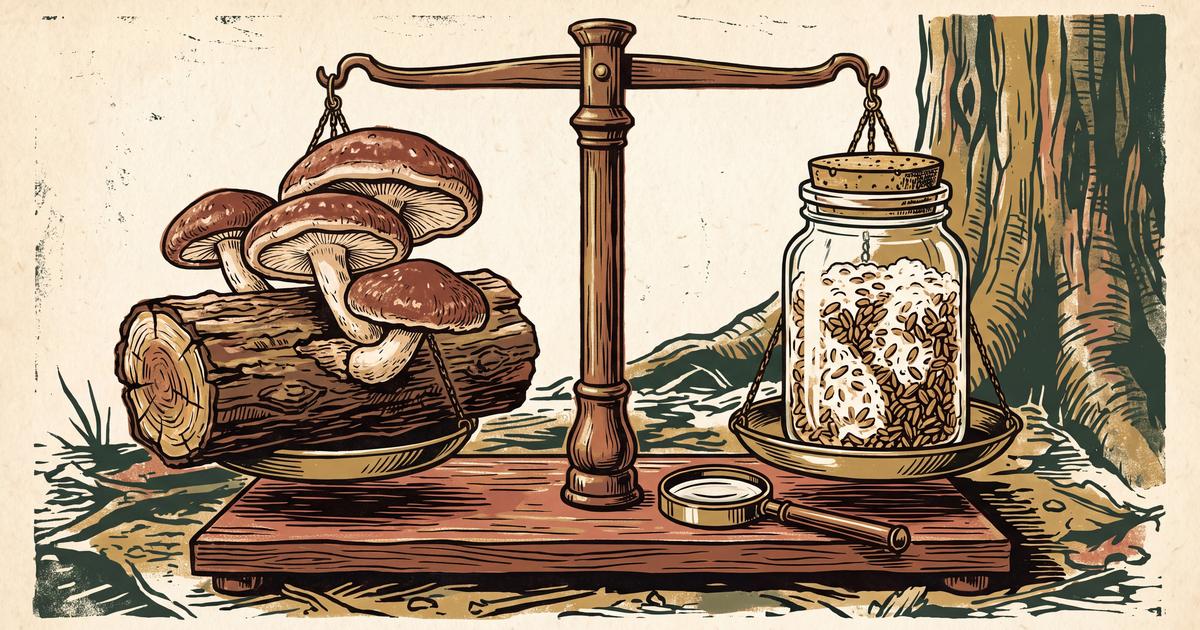
Fruiting body, pure fermented mycelium and mycelium grown on grain differ in how they are produced, their beta-glucan content and the compounds buyers look for. The table below summarises Yi's five comparison points side by side and highlights the first question worth asking about each type of mushroom material on the shelf.
| Criterion | Fruiting body | Pure mycelium | Mycelium on grain |
|---|---|---|---|
| What it is | The mushroom itself | The fungal network, separated from its medium | The fungal network plus the grain it grew on |
| How it is produced | Cultivated, harvested, dried | Liquid fermentation, then separation | Solid cultivation, milled whole |
| Beta-glucans | Structural, the usual marker | Low | Low, with starch from the grain alongside |
| Compounds it is chosen for | Hericenones in lion's mane, ganoderic acids in reishi | Erinacines in lion's mane, adenosine in Cordyceps CS-4 | Depends on how much grain remains |
| First question to ask | Which extraction, which carrier | Which strain, which fermentation | How much substrate is in the finished powder |
Want to see a label that passes all five of Yi's questions? Our Lion's Mane (Hericium erinaceus) is made exclusively from 100% fruiting bodies grown on oak and beech sawdust, with zero mycelium on grain and no fillers. The 10:1 extract is standardised to at least 30% beta-glucans measured with the enzymatic Megazyme method (separating them from starch), with independent EUROFINS lab testing for every batch on our batch testing page. Available as powder, capsules and drops: see Lion's Mane in the Aloha Fungi shop.
When is mycelium the right material?
Mycelium is simply another part of the same fungus, not a lower-grade material, as two practical examples show. Lion's mane carries hericenones in the fruiting body and erinacines in the mycelium. A buyer specifically looking for erinacines needs a properly fermented mycelium ingredient, because a fruiting body extract alone will not supply them.
Keep that distinction in mind when comparing lion's mane fruiting body extract and lion's mane mycelium labels. You can see how five real products and their lab certificates compare in lion's mane extract comparison.
Cordyceps CS-4 is fermented mycelium of a defined strain. It is an established ingredient in its own right and is specified differently from a Cordyceps militaris fruiting body. We compare both species in Cordyceps sinensis vs Cordyceps militaris.
The right choice depends on the species, the target composition, the process, the application and the market. The problem is never mycelium. The problem is material that is not clearly declared.
Why does "full spectrum" not answer the question?
The phrase "full spectrum" on a label can mean two very different things, so the wording alone never tells you what is inside the bag. Sometimes it describes a deliberate design combining fruiting body and pure mycelium. Other times it describes the whole cultivation mass milled together with grain. Always ask what went in.
How does grain change the numbers on a label?
Grain brings starch into the powder, which directly affects simple laboratory numbers. A basic total polysaccharide test counts grain starch alongside mushroom polysaccharides, so a product containing a large share of grain can still report a high polysaccharide figure. Always ask for a beta-glucan measurement method rather than a total polysaccharide figure.
A number is a measurement, not a verdict. Ask for the test method next to every result on a mushroom extract label. We explain the difference between fungal beta-glucans and cereal starch in what are beta-glucans.
Which five questions should you ask a supplier or brand?
Before comparing prices across two jars or relying on front-of-pack claims, ask the producer five direct questions that Yi uses when reviewing raw material specifications. Clear answers immediately show whether you are getting fruiting body, separated fermented mycelium, or a powder that still contains grain substrate and drying carriers in the pack.
- What is the scientific name, and which fungal material is it: fruiting body, pure mycelium or myceliated substrate?
- If it is mycelium, was it separated from the growth medium? If not, how much substrate remains in the finished powder?
- Is it a powder or an extract? For an extract: which solvent, and is a carrier added?
- Which marker is specified, and by which method?
- Does the COA belong to the lot that will ship?
What does a transparent 100% fruiting body choice look like?
If you would rather not guess whether a jar holds mushroom or milled grain, take a look at our Lion's Mane (Hericium erinaceus). We make it exclusively from 100% fruiting bodies grown on oak and beech sawdust, with no fillers and no grain substrate, standardised to at least 30% beta-glucans by Megazyme.
Choose from powder, plant capsules or drops across our LONGEVITY and PRIME lines, with independent EUROFINS lab certificates published openly on our batch testing page. Explore 100% fruiting-body Lion's Mane in our shop. You can read Yi's original sourcing essay on yilovesmushroom.com.
FAQ
Is fruiting body better than mycelium?
Neither is better in general. They are different materials. Fruiting body is the usual choice for beta-glucans and for compounds such as hericenones or ganoderic acids. Mycelium is the source of erinacines in lion's mane and the basis of Cordyceps CS-4.
Does mycelium contain beta-glucans?
Less than the fruiting body. Beta-glucans are a structural compound of the fruiting body, and mycelium carries little of them.
What does "fruiting body" mean on a label?
It should mean the ingredient was made from the mushroom itself, with no mycelium and no growth substrate. Check that the specification says so, not only the front label.
How can a buyer tell whether a powder contains grain?
Ask the supplier to state the fungal material and whether cultivation substrate remains in the finished ingredient. Then check which method stands behind the polysaccharide or beta-glucan figure.