Journal
Frequently asked questions about Reishi
Ganoderma lucidum, Ling zhi, the shining lacquer bracket. We answer the most common questions about origin, naming and safety of the Reishi mushroom.
TCM therapist · Doctor of Acupuncture (WFAS) · author of a book on functional mushrooms
4 min read
Contents
- What is Ganoderma lucidum?
- Are Ganoderma lucidum, Reishi, Ling zhi and the shining lacquer bracket the same mushroom?
- Does Reishi have anything to do with kombucha or "tea mushrooms"?
- Does Ganoderma lucidum grow in Poland?
- What compounds are studied in Reishi?
- Is Reishi safe for typical use?
- Does Reishi cause hallucinations or have psychoactive effects?
- Can Reishi use become habit-forming?
- When should you consult a doctor about Reishi?
- Does Reishi powder work the same as an extract?
- How long does it take to use Reishi before noticing an effect?
Reishi comes up in conversations about functional mushrooms more often than almost any other species, and with it come the same handful of questions. We've gathered the answers in one place, short and checkable, without marketing.
What is Ganoderma lucidum?
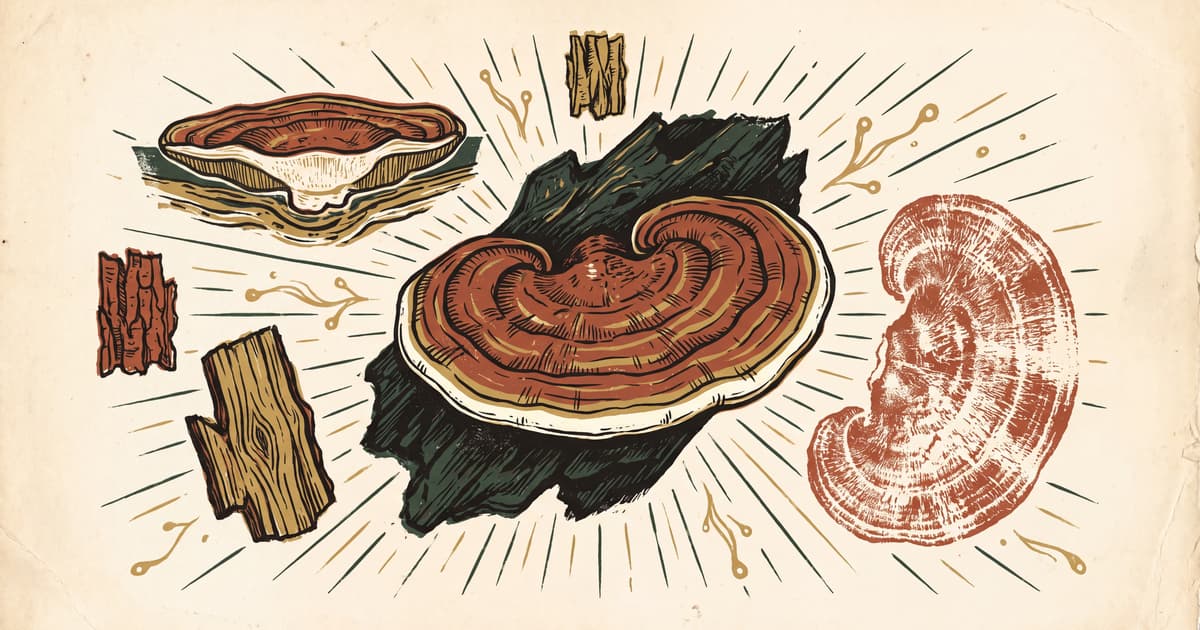
Ganoderma lucidum is a mushroom that grows on dead tree stumps, and sometimes on living trees, mainly deciduous ones. The Latin name breaks into three parts: gan (to shine), derma (skin), and lucidum (shining), referring to the fruiting body's characteristic lacquered surface.
Are Ganoderma lucidum, Reishi, Ling zhi and the shining lacquer bracket the same mushroom?
Yes, it's one species under four names from different languages. Ganoderma lucidum is the Latin (scientific) name, Reishi is the Japanese name, Ling zhi (Lingzhi) is the Chinese name, and the shining lacquer bracket is the English common name. In popular texts these names are used interchangeably.
Does Reishi have anything to do with kombucha or "tea mushrooms"?
No. Reishi is the hard, woody fruiting body of a bracket fungus, biologically and in cultivation terms entirely unrelated to kombucha or other home-fermented cultures. Reishi cannot be grown in a jar on a kitchen counter, it requires specialized cultivation on wood or a wood-based substrate over many months.
Does Ganoderma lucidum grow in Poland?
Yes, though very rarely. Its Polish name is lakownica lśniąca, and the species is under protected status in Poland due to low numbers in the wild. The raw material used in supplements comes from controlled cultivation, not from wild-harvested fruiting bodies.
What compounds are studied in Reishi?
Scientific literature studies Reishi mainly for three groups of compounds: triterpenes (including ganoderic acids), β-glucans and peptidoglycans. We describe their mechanisms in detail, including their role in HPA axis regulation and immunomodulation, in How does Reishi work and What are β-glucans. Traditionally in Chinese medicine, Reishi was classified as a shang yao herb, the highest class of regulators. This is a cultural and traditional description, not a list of confirmed medicinal effects.
Is Reishi safe for typical use?
In the literature, Reishi is described as well tolerated by most people, with rare and usually mild side effects, most commonly gastrointestinal discomfort in the first days of use. It is a biologically active extract, not a neutral tea, so the decision to supplement is worth discussing with a doctor or pharmacist, especially if you have a chronic condition.
Does Reishi cause hallucinations or have psychoactive effects?
No. Reishi does not contain psilocybin or other psychoactive substances, and the literature does not describe hallucinogenic effects related to its consumption. Visual effects associated with certain mushrooms come from entirely different chemical compounds, which Reishi does not contain.
Can Reishi use become habit-forming?
The literature does not describe any addictive potential for Reishi. The mushroom does not act on dopaminergic or opioid receptors in a way linked to the addiction mechanisms known from psychoactive substances.
When should you consult a doctor about Reishi?
Always, if you take medication regularly, especially blood thinners (anticoagulants), immunosuppressants or hypoglycemic medication, if you're pregnant or breastfeeding, have a chronic condition, or have surgery planned in the coming weeks. Some studies show weak anticoagulant and glucose-affecting activity for Reishi, so these situations require individual assessment by a doctor or pharmacist, not a self-made decision. We cover these medication groups in detail in our post on Reishi and medication interactions.
Does Reishi powder work the same as an extract?
Not quite, the difference lies in the concentration of active compounds. Raw fruiting-body powder typically contains 7-15% β-glucans, while a standardized 10:1 fruiting-body extract contains above 30%. This is a real chemical difference, not a marketing distinction, which we cover in more detail in our article on β-glucans.
How long does it take to use Reishi before noticing an effect?
There's no single answer, since every body responds differently, and supplementation is just one of many factors affecting how you feel. Our practical suggestion is to think in terms of at least several weeks of regular use, paying attention to your own body rather than expecting an immediate result. If you're curious how Reishi fits into a daily rhythm, read about the evening ritual with Reishi.
This content is for educational purposes only and does not constitute medical advice. A food supplement does not replace a varied diet or a healthy lifestyle. If in doubt, consult your doctor or pharmacist.