You want a calm, everyday routine
You want calm, everyday supplementation in the rhythm of years, not a one-off shot for a seasonal problem.
© 2026 Aloha Fungi™
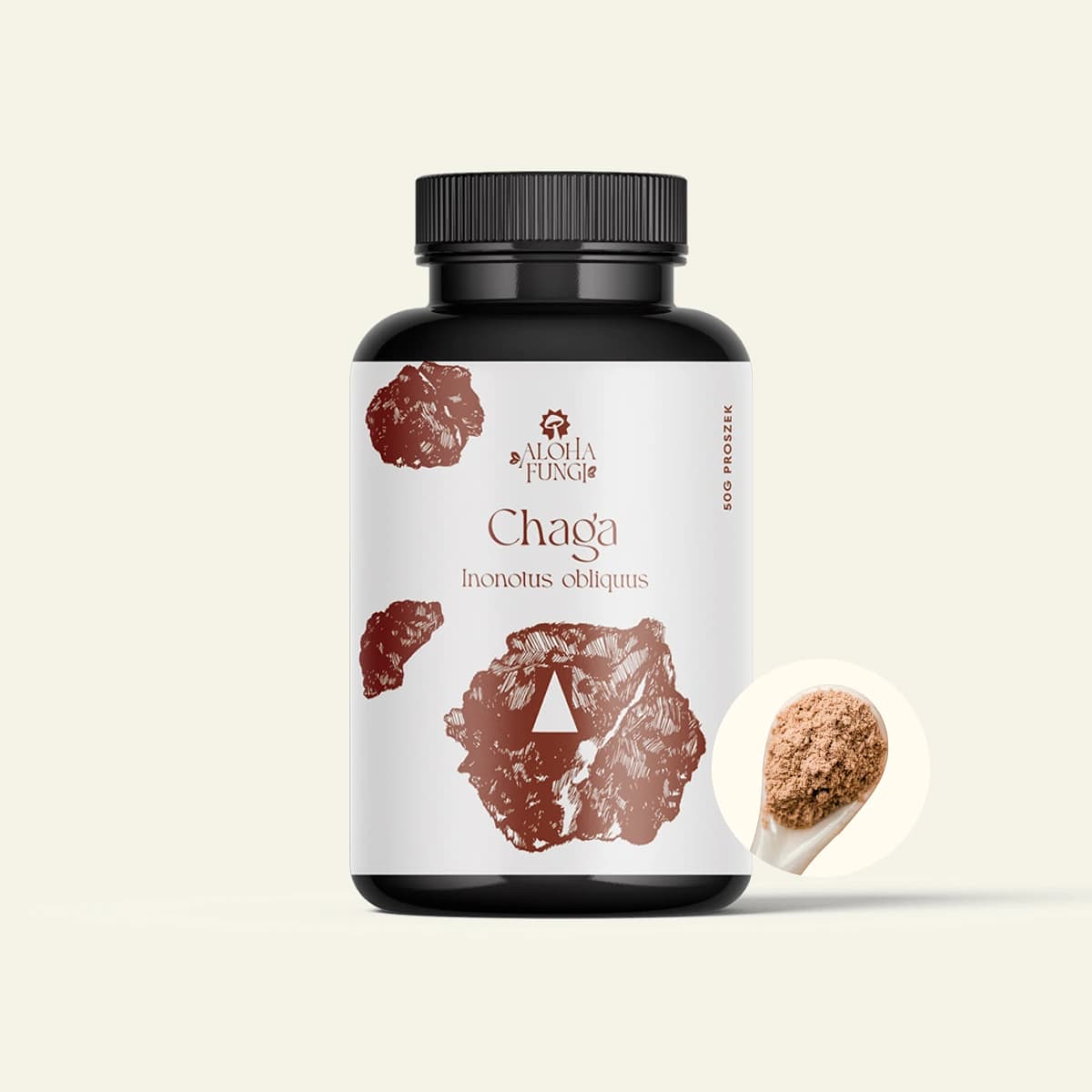
Chagaextract · powder
Chaga is a wealth of antioxidants (no. 1 on the ORAC scale), which is why it comes up in the context of longevity and superfoods.
Chaga's properties work especially well in the morning or during the day, and when you are looking for a natural daily boost instead of another coffee.
50% extract + 50% sclerotium powder
In stock
≈ 3,61 zł per serving180 zł away from free shipping
With a subscription you save 17.85 zł on every delivery
A 30-day ritual. Your pack arrives automatically. Cancel anytime.
2 pcs −4%, 3+ pcs −8%
90 vegan capsules. In each capsule: a water-alcohol extract from the Chaga fruiting body (sclerotium) (Inonotus obliquus, DER 10:1, standardised to a minimum of 30% beta-glucans) and powdered Chaga fruiting body in a half-and-half ratio, around 0.5 g of raw material per capsule in total. Capsule shell: hydroxypropyl methylcellulose (plant-derived). No fillers. No maltodextrin. No magnesium stearate. 100% vegan.
Powder form: dissolve in warm (not boiling) water, coffee, cacao or matcha, or add to a smoothie. Earthy, lightly bitter chaga with a coffee note pairs nicely with cacao and warming spices. In folk tradition Chaga functioned as an everyday daytime drink, including as a coffee substitute, which is why it works well as a warm morning ritual. Consistency matters most: it is an everyday addition, not a one-off “shot”. Do not exceed the recommended daily serving.
Check the label of the relevant pack for the powder serving. Do not exceed the recommended daily serving.
Follow the serving stated on the label for the relevant form. Do not change it on your own or exceed the recommended daily serving.
Recommended daily serving: 2 scoops (1.5 g) daily
| Ingredient | Per serving |
|---|---|
| 10:1 extract from Chaga sclerotium (Inonotus obliquus), standardised for min. 30% beta-glucans (Megazyme method) | 750 mg (including min. 225 mg beta-glucans) |
| Powdered Chaga sclerotium | 750 mg |
See the pack label for details. Do not exceed the recommended daily serving.
In a tightly closed package, in a dry, cool and dark place, preferably at room temperature, away from direct light. Protect from moisture. Keep away from children. Shelf life 24-36 months in the original packaging.
Absolute contraindication: people with active calcium-oxalate kidney stones, a history of such stones or advanced kidney disease should not use Chaga. Chaga contains relatively high levels of oxalates. Consult a doctor before use if you: take anticoagulant or antiplatelet medication (warfarin, NOAC medicines, acetylsalicylic acid), take antidiabetic medication (insulin, metformin, sulfonylurea derivatives), take antihypertensive or immunosuppressive medication, or are planning surgery or a dental procedure (stop the product at least 14 days beforehand). The product is not intended for pregnant or breastfeeding women or people under 18.
10:1 sclerotium extract
Water-alcohol extraction.
≥30% beta-glucans
Megazyme method.
Every batch tested
Heavy metals and oxalates.
Is it for me?
Chaga in the LONGEVITY line was designed for a calm, everyday, long-term rhythm, not a one-off shot.
You want calm, everyday supplementation in the rhythm of years, not a one-off shot for a seasonal problem.
You do not care for the earthy taste of the powder, but want the same extract quality in a convenient capsule.
You complement a varied diet with a functional-mushroom extract and value a transparent, well-described composition.
Species guide: Chaga
Tradition · mechanisms · synergies · evidence
Reviews come from customers with a verified purchase and are moderated by the independent platform TrustMate. We do not publish opinions in exchange for benefits, nor do we alter their content.
formula and dosage
Composition, serving, taste and how to use it change with the form and line you pick. Choose above and the card shows the right variant.
beta-glucans≥30%
measured with the Megazyme method
of extract per serving675–1200 mg
depending on the form and line: LONGEVITY 50%, PRIME 80%
Proszek · LONGEVITY
For coffee, cacao or matcha. Earthy, lightly bitter Chaga with a coffee note.
Traditional Chinese Medicine
The text below describes Chaga in the context of folk tradition and concepts from traditional Chinese medicine. This is not a scientific claim or a promise of any health effect. Concepts such as a meridian or the resources of the Kidneys do not correspond one to one to Western anatomy or physiology. Treat this section as cultural context.
Chaga is not deeply rooted in the classical Chinese materia medica. Its tradition is stronger in Siberia and Eastern Europe, where from the sixteenth century it was drunk as an everyday tea, and in the nineteenth century as a coffee substitute. The first documented use is attributed to the Khanty people of Western Siberia. Modern interpretations of TCM associate Chaga directionally with protection and long regeneration. This is the tradition of functional mushrooms that Mateusz, the founder of Aloha Fungi and a Doctor of Acupuncture (WFAS), works with day to day.
Energetic profile (modern interpretation): taste bitter; nature neutral to slightly cooling; the meridians indicated by modern interpretations are the Kidneys (肾), Liver (肝) and Spleen (脾). The above describes directional interpretations, not a claim about any health effect of the product. We always position Chaga as the folk tradition of Siberia. We draw on this tradition because it is part of chaga’s story, not because it replaces modern knowledge.
Cultural context, not a scientific claim or promise of effect.
First days
You swallow 3 capsules in the morning, with water. Five days a week, with a weekend break. This is the stage where Chaga becomes a fixed part of your morning. The capsules are easy to take, so they are easy to remember.
First weeks
You reach for the capsule on autopilot, like a morning routine. It becomes part of the rhythm of the day, not something to remember. Chaga is a mushroom of the patient. First observations usually come after weeks of regularity, not after hours.
A 90-day cycle
A full ninety days. In Eastern tradition, this is how much time you give yourself to observe any protocol or practice. After the cycle you decide: carry on, take a break, return seasonally, or change the protocol.
Why Aloha?
You can check each of them on the label and in the batch tests.
We work with the fruiting body (sclerotium), which grew on a living birch for over a dozen years, not with mycelium grown on rice or barley. Mycelium on grain does not produce melanin or the full triterpenoid profile.
Raw material from birches over 40 years old, never from Polish forests (Chaga is under partial protection there). We audit the source once a quarter.
The core and the melanin crust are treated so that water draws out the beta-glucans and polysaccharides, and ethanol the melanin, triterpenoids and lipophilic polyphenols.
Beta-glucans are measured with the enzymatic Megazyme method, which tells them apart from starch and does not inflate the result.
Heavy metals, pesticide residues and oxalate content, a parameter important for the safety of Chaga. Every batch has an individual certificate.
We are practitioners of Chinese medicine.
I work every day with the folk tradition this mushroom comes from. Chaga is one of the calmest mushrooms in my practice.

Mateusz Rosa
Doctor of Acupuncture (WFAS), founder of Aloha Fungi
„This is exactly the Chaga I supplement with myself and give to those close to me. Honestly, I cannot give you a better recommendation.”
Chaga is like the everyday tea drunk for centuries in Poland, Russia and the Baltic countries. Not a one-off shot for a seasonal infection, but a presence in the rhythm of life, day after day.
Natural supplementation takes time. For the best results we recommend 90 days of regular supplementation. TCM tradition looks at time differently: it describes change as a process that requires consistency.
A question about the form or the line? Write to me, I answer personally.
Write to meReviews of Aloha Fungi: The rating next to the price covers the whole shop. Reviews of Chaga itself are shown below, verified only.
It is a matter of convenience, not quality. Both versions contain the same sclerotium extract, the same half-and-half ratio and the same standardisation to a minimum of 30% beta-glucans. The capsule is for people who do not care for the earthy taste of Chaga or want convenience on the go. The powder is for those who like to add Chaga to coffee or cacao.
The recommended daily serving is 3 capsules, taken with water, preferably in the first half of the day. Do not exceed the recommended daily serving stated on the label.
In folk tradition Chaga was used as a daytime drink, including as a coffee substitute, so some people choose the morning or the first half of the day. This is traditional context and a matter of routine, not a claim about what the product does.
Chaga should not be used by people with active calcium-oxalate kidney stones, a history of such stones or advanced kidney disease. This is an absolute contraindication, because Chaga contains relatively high levels of oxalates. A consultation with a doctor is also needed with anticoagulant, antidiabetic, antihypertensive and immunosuppressive medication, as well as before a planned procedure (stop at least 14 days beforehand).
Because mycelium grown on grain does not produce melanin or the full triterpenoid profile. Those arise only in the mushroom’s long relationship with a living birch, over 10 to 20 years. The sclerotium, the black growth on the trunk, is precisely the result of that relationship. Mycelium on rice will not recreate it in a few weeks.
Yes. The capsule shell is plant-derived (hydroxypropyl methylcellulose), and inside there is only Chaga extract and powdered fruiting body. No gelatine, no maltodextrin, no magnesium stearate.
There is no single universal duration of use or guaranteed time at which an effect will be felt. A pack of 90 capsules lasts 30 days at a serving of 3 capsules a day. Follow the label, and if you take medication or plan long-term supplementation, discuss it with your doctor.
Products may be combined only while following the serving stated on each label. Combining them is not a promise of an effect. If you take medication or have a contraindication listed for any of the products, discuss the choice with your doctor.
We will not answer. If we did, it would be an illegal health claim. Chaga is a food supplement, not a medicine. If you are considering it as part of support for a specific condition, consult your treating doctor.
From certified, controlled harvesting in the forests of Siberia and Eastern Europe, from living, mature birches over 40 years old. Never from Polish forests, because in Poland Chaga is under partial protection. We audit the source once a quarter.
Yes. We have a B2B offer for own-brand creators, therapists and venues. Details at the producer contact address.
Cheaper Chaga supplements are often mycelium grown on rice or barley. Our extract comes from the sclerotium of living birches in Siberia and Eastern Europe, at a 10:1 ratio, standardised to a minimum of 30% beta-glucans by the Megazyme method. Any laboratory document, including the scope of oxalate measurement, should be matched to the batch number on the packaging. The capsule is vegan, with no maltodextrin or other fillers.
LONGEVITY Chaga suits people who want calm, everyday supplementation in the rhythm of years and prefer a convenient capsule over the earthy taste of the powder. It should not be used by people with active calcium-oxalate kidney stones, a history of such stones or advanced kidney disease, an absolute contraindication, because Chaga contains relatively high levels of oxalates. A doctor’s consultation is also needed with anticoagulant, antidiabetic, antihypertensive and immunosuppressive medication; the product is not intended for pregnant or breastfeeding women or people under 18.
No. The product is not intended for people under 18 or for pregnant or breastfeeding women.
When the recommended serving is followed and there are no contraindications (see calcium-oxalate kidney stones), Chaga is usually well tolerated. People taking anticoagulant, antidiabetic, antihypertensive or immunosuppressive medication should consult a doctor before starting.
The deeper layer
Research, folk tradition and the chemistry of the sclerotium in one place. Open what interests you. The full description of the mushroom, mechanisms from research and the bibliography live on a separate knowledge page.
Chaga: properties, research and safetyThese studies looked at Chaga compounds, not our product. We show them so you know where the reputation of this mushroom comes from.
Chaga heteropolysaccharides are studied for their molecular structure.
A 2017 study structurally characterised bioactive heteropolysaccharides isolated from Inonotus obliquus, including simple-sugar composition and molecular weight.
Wold et al., Carbohydrate Polymers 2017 ↗The properties of Chaga (Inonotus obliquus) are the subject of scientific reviews.
A 2023 review summarises the studied raw material and compounds described in Chaga, including melanin, polyphenols and triterpenoids.
Tee Yon Ern et al., Mycology 2023 ↗Beta-glucan content in mushrooms is measured with a validated enzymatic method.
The method described in 2016 (today the Megazyme standard) distinguishes mushroom beta-glucans from starch and other polysaccharides, giving a repeatable result regardless of the laboratory.
McCleary and Draga, Journal of AOAC International 2016 ↗More than 200 compounds have been described in chaga extract: β-1,3/1,6-glucans, melanin, polyphenols, betulinic acid and styrylpyrones, as well as triterpenoids (inotodiol, lanosterol, ergosterol). The black outer armour is concentrated melanin, produced over a dozen years of exposure to frost and sun.
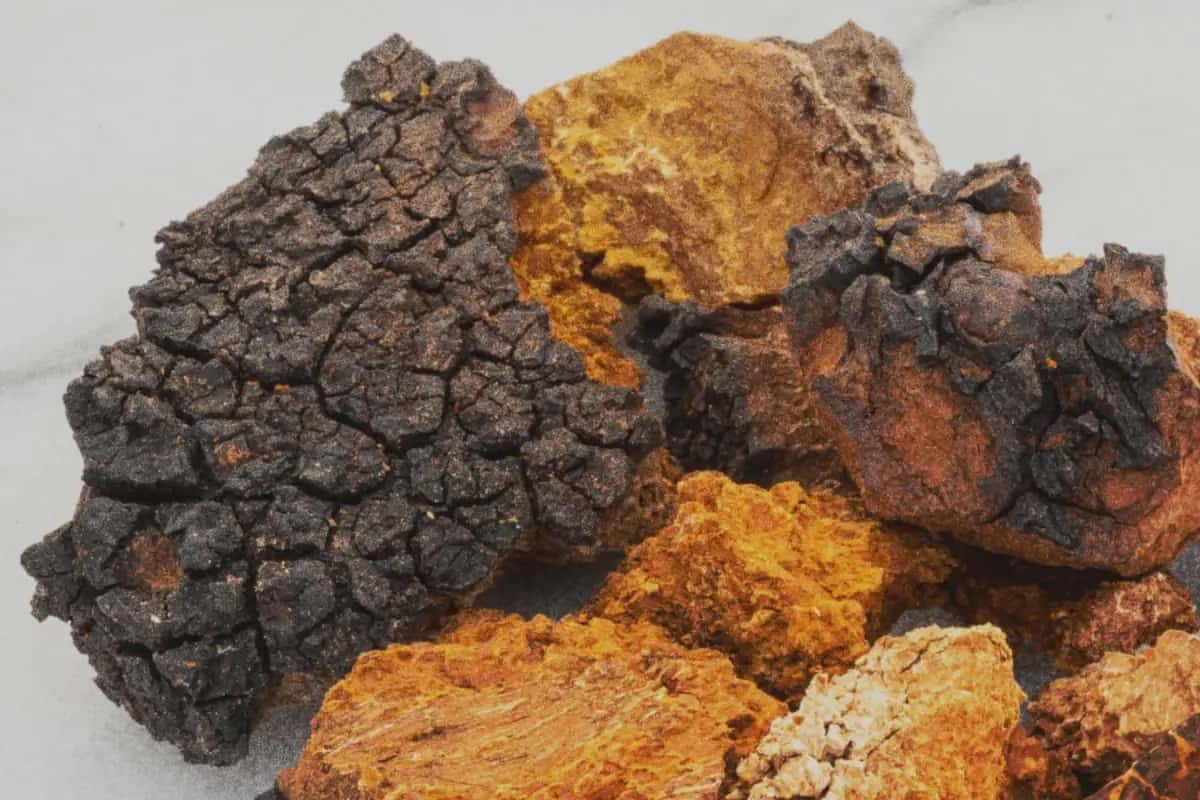
Some compounds, such as betulin and betulinic acid, Chaga draws from the host birch and accumulates over the years. The core beneath the crust is orange-russet and holds the highest concentration of bioactive compounds.
Chaga is one of the more chemically interesting mushrooms.
It grows wild on living birches and takes part of its characteristic make-up from the tree, which is why it is the result of an interaction of mushroom, tree and time that cannot be recreated in a bag of grain.
It has two layers and both matter: the black outer armour is concentrated melanin, the same type of pigment as in human skin, produced over a dozen years of exposure to frost and sun, while the core beneath the crust is orange-russet and holds the highest concentration of bioactive compounds.
More than 200 compounds have been described in chaga extract: β-1,3/1,6-glucans, melanin, polyphenols, betulinic acid and styrylpyrones, as well as triterpenoids (inotodiol, lanosterol, ergosterol).
Some of them, such as betulin and betulinic acid, Chaga draws from the host birch and accumulates over the years.
The polysaccharides draw most of the attention from researchers of the raw material itself.
This group includes the β-glucans and heteropolysaccharides, among them galactoglucans, whose molecular architecture (simple-sugar composition, molecular weight, the way the chains branch) was characterised in a paper published in “Carbohydrate Polymers” (2017).
Let us be honest: these are studies of the raw material and its molecules, most often conducted in the laboratory, not of our supplement. They do not show that chaga is a medicine or that it resolves any health problem on its own; they show what this mushroom is at the chemical level. Characterising the composition is, for us, a reason to care about extract quality, not a basis for health promises. Bibliographic data: PubMed.
The cited papers concern the raw material and its compounds, not our product. They are not claims about treatment.
A food supplement does not replace a varied diet or a healthy lifestyle. This product is not a medicinal product. Do not exceed the recommended daily serving. Not for use during pregnancy, breastfeeding, or by children. If in doubt, consult a doctor or pharmacist.
What was studied, on how many people and with what level of evidence. This overview describes studies, not the effects of a product.
0
human studies
0
placebo-controlled RCTs
2014–2024
years of publication
Kikuchi Y. et al., 2014
Dcase report, safety (chronologically the first of three)
1 patient, 72-year-old woman
The case report documented a link between 6 months of chaga powder intake (4-5 teaspoons daily) by a 72-year-old woman after hepatectomy for liver cancer and worsening kidney function requiring haemodialysis; biopsy showed diffuse tubular atrophy, interstitial fibrosis and oxalate crystals. Chronologically the first of three reported cases (2014, before Lee 2020 and Kwon 2022).
PMID 23149251Lee S. et al., 2020
Dcase report, safety
1 patient, 49-year-old man
The case report documented the development of end-stage renal disease after long-term chaga ingestion in a 49-year-old man. Single case, safety data.
PMID 32419395Kwon O. et al., 2022
Dcase report, safety
1 patient, 69-year-old man
The case report documented oxalate nephropathy after chaga intake, clinically manifesting as nephrotic syndrome in a 69-year-old man. Single case, safety data.
PMID 35451393The presence of a study is not a health claim.
Chaga (Inonotus obliquus) is a black growth on birch in the cold north. An educational look at its origin, appearance and the tradition of brewing it.
DER, standardization, beta-glucans. We break down the mushroom extract label piece by piece, so you know what to look for before you buy.
Information provided in accordance with Regulation (EU) 2023/988 on general product safety (GPSR).