MushroomsSubscription −15%
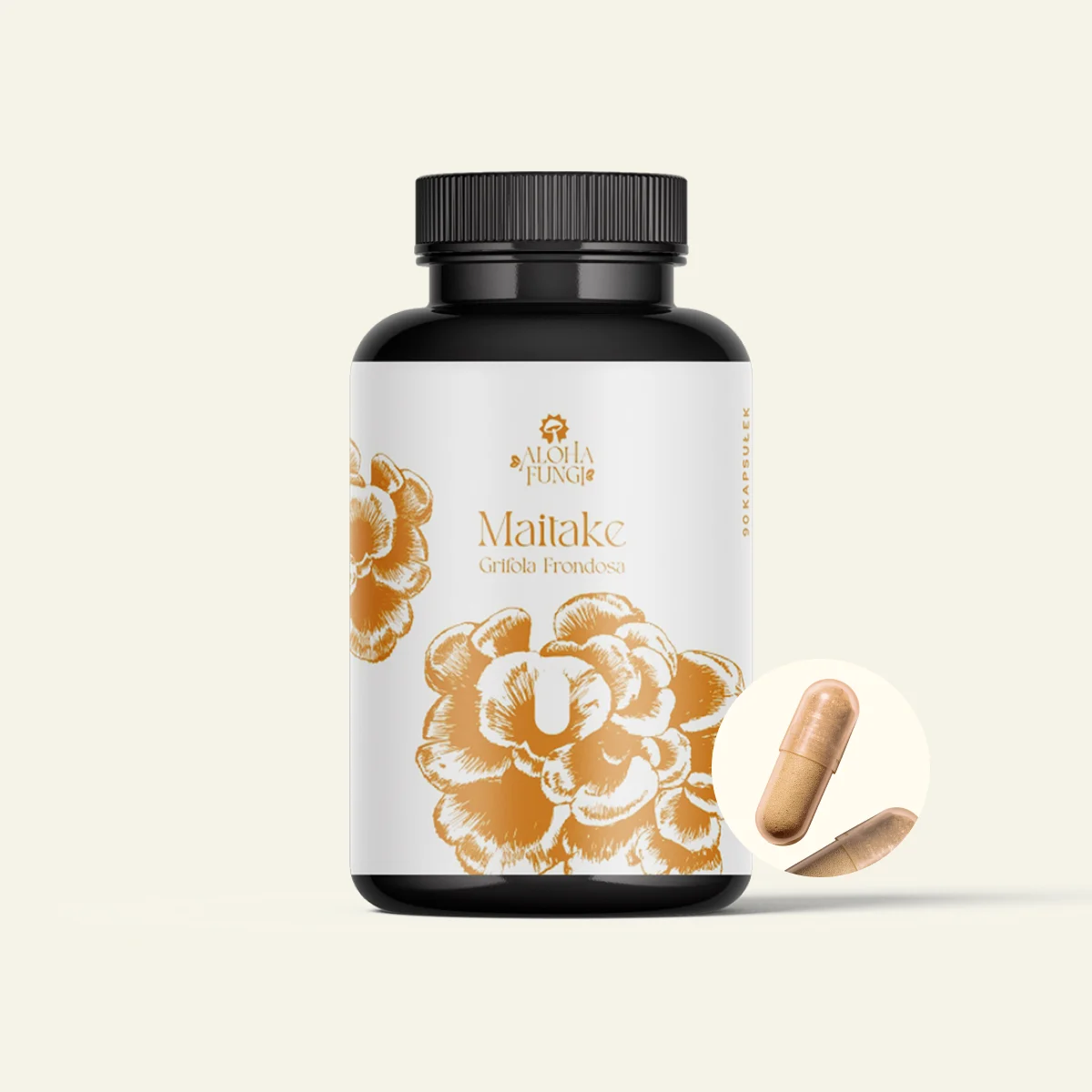
Maitake
Grifola frondosa
Capsules · LONGEVITY129 zł
Below you will find every available product for this species. Each tile opens the product page with the selected format and line preselected.
Version 1.0 · Updated: 21 June 2026 · Subject-matter reviewer: Mateusz Rosa, founder of Aloha Fungi, international TCM therapist.
Maitake in 60 seconds
Maitake is the common name for the mushroom Grifola frondosa of the Grifolaceae family, order Polyporales. In Polish żagwica listkowata, Japanese maitake (舞茸), Chinese hui shu hua (灰树花, „flower of the grey tree"), English „hen of the woods", „ram’s head", „king of mushrooms". The Latin Grifola comes from the Italian grifone, a griffin, a mythical half-lion, half-eagle creature. The Latin frondosa means „leafy", referring to the caps arranged like a rosette of dozens of leaflets on a common stem.
In Poland Grifola frondosa is rare. The first identification was made by Stanisław Domański in 1967. Since 2014 it has been under partial protection, status V (endangered) on the Red List of plants and fungi of Poland. Earlier, in 1983-2014, it was under strict protection. By 2020 only about 130 sites had been recorded in Poland. The practical conclusion: wild maitake in Poland is unavailable for supplementation, so every extract on the market comes from controlled cultivation (Japan, USA, China, some European countries) on substrates of beech or oak sawdust enriched with bran.
The etymology of the Japanese name maitake: mai 舞 means „dance", take 茸 means „mushroom". In ancient Japan, finding a fruiting body of maitake in the forest was such a rare event that people danced with joy. In the Edo period maitake was worth its weight in silver. Gods and samurai prized it as a rare delicacy used to pay tribute.
In Japanese cuisine maitake has for centuries been prized both as a fine food and as a tonic. It was used in decoctions for the elderly, during convalescence, in the climacteric and for „general weakness of Pi-Wei", that is the Spleen and Stomach in the TCM terminology absorbed by Japanese kampo medicine. In China maitake is less present in the classical Materia Medica than Reishi, Cordyceps or Coriolus, but in modern TCM phytotherapy it has taken the place of a „mushroom of metabolic prevention for people in the second half of life".
Modern science on maitake began in the 1980s at Kobe Pharmaceutical University. Professor Hiroaki Nanba of the Department of Microbial Chemistry isolated from the fruiting bodies a β-glucan polysaccharide fraction which he named the D-fraction, and in later works (1986-1993) described its chemical structure and immunomodulatory action in animal models. Nanba and Kodama showed that oral administration of the D-fraction activates innate immunity in mice with tumours, unlike most other fungal polysaccharides (e.g. lentinan from Shiitake), which act only in injected form.
Maitake is one of the chemically best-characterised functional mushrooms. The most important groups of compounds:
The D-fraction (Dr Nanba) and its purified form the MD-fraction, a polysaccharide-peptide of about 1000 kDa. Structurally a β-1,6 glucan with β-1,3 side branches, bound to peptides. This is the main immunoactive fraction.
The SX-fraction (studied since 2001 by S. Konno of New York Medical College), a glycoprotein of about 20 kDa. It affects the insulin signalling pathway in muscle cells.
Grifolan (GRN), a high-molecular-weight β-glucan of 500-800 kDa, the second main immune activator after the D-fraction. The X-fraction, a peptidoglycan studied since 1994 (Kubo) as the first described hypoglycaemic fraction.
β-1,3/1,6-glucans, standardised in our extract to above 30%. In addition ergosterol and provitamin D₂; trehalose, a natural disaccharide that acts as a food source for Bifidobacterium and Lactobacillus (a mild prebiotic effect); glutamic and aspartic amino acids (responsible for the umami taste), trace elements (zinc, copper, phosphorus, magnesium) and B vitamins.
The D-fraction and the SX-fraction are different fractions in maitake with different mechanisms and potentially different protocols of use.
The D-fraction and MD-fraction, as a β-1,6 glucan with β-1,3 side branches, bind as agonists to the Dectin-1 receptor and, secondarily, to TLR2 on dendritic cells, macrophages and monocytes. This triggers a signalling cascade leading to activation of NF-κB, maturation of dendritic cells and antigen presentation to T lymphocytes.
In studies the D-fraction modulated the lymphocyte profile (CD4+CD25+, CD3+CD25+, CD45RA+, CD45RO+) and the activity of NK cells. An important observation from Deng 2009: the dose-response relationship was nonlinear, in the shape of an inverted U. Low doses (0.1-1.5 mg/kg) raised some immunological parameters, high doses (3-5 mg/kg) depressed some.
The second most important mechanism and, from the perspective of modern clinical dietetics, the most relevant. The SX-fraction (a peptidoglycan of about 20 kDa) in in vitro studies on L6 skeletal muscle cells activates the insulin signalling pathway: it improves insulin receptor function, raises the activity of IRS-1 (Insulin Receptor Substrate 1) and Akt (protein kinase B), which leads to GLUT4 translocation and glucose uptake into the cell. This is a mechanism described at the cellular level, and in animal models an influence on carbohydrate metabolism was observed.
Human evidence is limited. The small Konno 2001 pilot (n=6, 2 months) provided only preliminary observations and needs confirmation in larger studies. The open trial Chen 2010 (n=80 women with PCOS) described ovulation induction by the SX-fraction both as monotherapy and in combination with clomiphene. Both studies are preliminary and require larger, controlled replications, but the in vitro mechanism is well described.
The third mechanism is the least consistent in the literature, but often observed in practice. In animal studies the SX-fraction mildly lowered systolic pressure, probably through modulation of the renin-angiotensin-aldosterone system and increased nitric oxide (NO) activity.
Open observations in humans (Manohar 2002, Mayell 2001) described a reduction in LDL cholesterol and triglycerides after 8-12 weeks of supplementation. β-glucans additionally act as a prebiotic, fermenting in the large intestine into short-chain fatty acids, which further influence the lipid profile via the liver.
Maitake does not cure diabetes. A supplement does not replace insulin, metformin, sulfonylurea or other hypoglycaemic medicines. Mild support for glycaemia is not the same as treatment. Maitake also does not cure cancer and does not replace oncological therapy. Maitake also does not replace pharmacology in metabolic syndrome or statins in hypercholesterolaemia. Support yes, replacement no.
Maitake belongs to the mushrooms with a mild, cumulative metabolic action but a strong immunomodulatory profile. In the cited studies doses range from 0.2 mg/kg (Deng 2009 low cohort) to 10 mg/kg (higher research doses of the D-fraction). In practice we use 500-3000 mg of extract per day, according to the goal.
Time: in the morning and/or before noon, ideally 15-30 minutes before the main carbohydrate meal. This matters for the metabolic effect: the SX-fraction starts to act before the carbohydrates reach the blood, so improved muscle glucose uptake occurs at the same time as the physiological postprandial glycaemia rise.
Daily serving: metabolic prevention and seasonal immune support 500-1500 mg/day; an intensive protocol with insulin resistance or metabolic syndrome 1500-3000 mg/day. The literature has also described much higher research doses of the D-fraction (35-100 mg/kg), but these are outside our supplementation range and do not relate to home use. In practice: capsules 2-6 a day, drops 15-30 drops 1-2 times a day, powder 0.5-1.5 g.
Maitake does not require fat for absorption; it is a water-soluble polysaccharide mushroom. The best combinations: warm water or green tea before a meal; broth soup with added powder (the classic Japanese use); a smoothie with ginger and cinnamon for people with insulin resistance. Cinnamon and maitake have complementary mechanisms of influence on insulin sensitivity, so they work well together.
The 5/2 rhythm: 5 days on, 2 days off. For maitake the 5/2 rhythm is a soft recommendation, less strict than for Coriolus, but still useful. Dectin-1 receptors desensitise under continuous stimulation, so a pulsed serving schedule keeps responsiveness. The metabolic effect of the SX-fraction accumulates over weeks, so short breaks do not interrupt it.
1-2 weeks: subtle changes in digestion and stool quality (the prebiotic effect of trehalose), sometimes a mild feeling of satiety after smaller meals.
2-4 weeks: more stable postprandial glycaemia (fewer „energy crashes" after a heavy lunch), better carbohydrate tolerance, sometimes noticeably less of a sweet craving in the afternoon.
8-12 weeks: full manifestation of the metabolic effect, measurable changes in fasting glycaemia (if you measure) and the lipid profile, stabilisation of energy over the day.
3-6 months: long-term support for metabolic syndrome, prevention in people 50+ with a family burden (type 2 diabetes, cardiovascular disease). It is worth noting subjective indicators: stability of energy after meals, sweet cravings, sleep quality, digestion and regularity. When combining maitake with hypoglycaemic medicines, glycaemia monitoring is mandatory, because the effect can add up.
Cordyceps strengthens the mitochondria and ATP, maitake improves insulin sensitivity and glucose uptake into the cell. Together: better energy economy, fewer dips after meals, more available energy for the muscles. A classic protocol for people with metabolic syndrome, abdominal obesity, chronic fatigue on an insulin-resistant background. Cordyceps 1 g in the morning, maitake 1-1.5 g in the morning or before lunch. Duration: 12 weeks.
Insulin resistance and elevated glycaemia often go hand in hand with worse sleep. Reishi regulates the HPA axis and calms Shen in the evening, maitake stabilises glycaemia through the day. Together: a more balanced circadian rhythm, less morning-evening cortisol, better immunity and recovery. Maitake 1-1.5 g in the morning, Reishi 1-2 g in the evening. Duration: 12 weeks.
Coriolus as a prebiotic strengthens Bifidobacterium and Lactobacillus, maitake as a prebiotic through trehalose and β-glucans supports the same flora. Together they act on the gut-metabolic axis, which is today one of the main targets of modern clinical dietetics in insulin resistance. A classic protocol after antibiotic therapy in people with metabolic syndrome. Maitake 1-2 g in the morning, Coriolus 2 g before noon. Duration: 8-12 weeks.
Chaga is the strongest antioxidant among Aloha Fungi mushrooms (SOD, melanins, phenolic acids), maitake regulates metabolism. Together: protection against the oxidative stress accompanying hyperglycaemia and dyslipidaemia. A classic protocol for people with a family burden of type 2 diabetes or cardiovascular disease, as primary prevention. Maitake 1-2 g in the morning, Chaga 1-2 g before noon. Duration: 12 weeks.
Maitake acts on the insulin receptor and peripheral sensitivity (key in PCOS and the perimenopausal period), Tremella tonifies the Yin of the Lung and Stomach, eases dryness, supports Jin Ye. Together they are especially effective in women with PCOS (support for ovulation induction according to Chen 2010) and in women in menopause with dryness and metabolic disturbances at the same time. Maitake 1-1.5 g in the morning, Tremella 1 g in the evening. Duration: 12-16 weeks.
In the classical Materia Medica maitake is less present than Reishi or Cordyceps, but in modern TCM practice it has taken the place of a „mushroom of metabolic prevention for people in the second half of life". It tonifies the Qi of Pi (the Spleen) and Wei (the Stomach), harmonises metabolism, cleanses the body, gently calms Shen and strengthens Wei Qi (immunity).
Classical TCM practice indicates situations requiring caution: active Damp-Heat in the Middle Burner (cleanse first, only then tonify); excess Liver Yang with high pressure on a stress background (cooling mushrooms such as Reishi or Coriolus are better); reactive hypoglycaemia or a deficiency of Pi Qi with weakness and cold extremities (a careful start from a low serving is advised).
This is a frame of cultural observation, not a medical diagnosis. Concepts such as Qi, Shen or meridian do not correspond one to one with Western anatomy or physiology.
| Taste | sweet (甘 gān), slightly bitter (微苦 wēi kǔ) |
| Nature | neutral to slightly warm (平 píng to 微温 wēi wēn) |
| Meridians | Spleen, Stomach, Heart (some sources add the Liver) |
| Category | tonic of Middle Burner Qi and a regulator of metabolism (补气调代) |
Status after organ transplant with active immunosuppression (cyclosporine, tacrolimus, mycophenolate, everolimus, sirolimus). Maitake stimulates innate immunity, which may weaken the medicine and increase the risk of rejection.
Active autoimmune diseases in a flare (systemic lupus, severe rheumatoid arthritis, active ulcerative colitis in the active phase). Activation of Dectin-1 and Th1 may worsen the condition.
Children under 18 (no safety studies in this age group for standardised extracts). Known allergy to mushrooms of the Grifolaceae family (single cases of allergic reactions reported in the Deng 2009 RCT).
Type 1 and type 2 diabetes with pharmacological treatment (insulin, metformin, sulfonylureas, gliptins, GLP-1 agonists). This is the most important group requiring attention. Maitake potentially adds up with hypoglycaemic medicines, so glycaemia monitoring is mandatory and the medicine dose may need adjustment under the supervision of a diabetologist. Do not start on your own.
Reactive hypoglycaemia without diabetes: a careful start from a low serving (500 mg/day), observation of symptoms. Anticoagulant and antiplatelet medicines (warfarin, NOAC, clopidogrel, ASA in cardiological doses): β-glucans may mildly affect platelet aggregation, monitor INR with warfarin.
Antihypertensive medicines (ACE inhibitors, sartans, beta-blockers, diuretics): maitake shows a mild blood-pressure-lowering effect, possible summation, monitor pressure in the first weeks. Oncological treatment in progress (chemotherapy, radiotherapy): do not start supplementation without the knowledge of the treating oncologist, because different treatment regimens may interact.
Pregnancy and breastfeeding: no adequate RCTs in this population; in practice we advise waiting until breastfeeding ends. Planned surgery: stop 14 days before a planned surgical procedure because of the possible mild effect on platelets and glycaemia.
Reported rarely: gastrointestinal disturbances in the first week (bloating, soft stool, nausea in single cases in Deng 2009), usually resolving on their own in 5-7 days; mild allergic reactions (rash, itching) in people hypersensitive to mushrooms (immediate discontinuation); hypoglycaemia episodes in people with pharmacologically treated diabetes without monitoring; mild oedema or joint pain in single cases.
In the cited studies the doses used are 0.1-5 mg/kg (Deng 2009), and the literature has also described much higher research doses of the D-fraction (35-100 mg/kg). In our long-term practice we use 500-3000 mg of extract per day: 500-1500 mg for metabolic prevention, 1500-3000 mg for an intensive protocol in insulin resistance. We do not go above 3000 mg of extract without a clinical indication and supervision.
Evidence verdict
We also show what is not proven. This is a dietary supplement, not a medicine.
2
Strong evidence
confirmed composition
5
Preliminary
in vitro and animal studies
3
Not proven
no human studies
Reviewed by
Mateusz Rosa · Doctor of Acupuncture (WFAS)
Version 1.0 · Updated: 21 June 2026 · Subject-matter reviewer: Mateusz Rosa, founder of Aloha Fungi, international TCM therapist.
Based on 12 verified sources
See sources ↓| Claim | Type of evidence | Strength |
|---|---|---|
| The D-fraction activates Dectin-1 and dendritic cells | in vitro and animal models, repeatedly confirmed (Nanba, Brown & Gordon) | STRONG |
| The SX-fraction improves insulin sensitivity in muscle cells in vitro | in vitro (L6) and animal models, IRS-1 and Akt mechanism described (Konno 2013, 2020) | STRONG |
| Modulation of immunological parameters in women after breast cancer treatment | phase I/II RCT n=34, 3 weeks (Deng 2009) | PRELIMINARY |
| Reduction of glycaemia and HbA1c in patients with type 2 diabetes | Konno 2001 pilot (n=6), single small studies, needs larger RCTs | PRELIMINARY |
| Ovulation induction in women with PCOS by the SX-fraction | open trial Chen 2010 (n=80, 3 clinics), no randomisation or placebo, needs RCTs | PRELIMINARY |
| Activation of NK cells and the immune response by the D-fraction | animal models and in vivo observations (Kodama 2002, 2003), no large human RCTs | PRELIMINARY |
| Mild lowering of blood pressure and improvement of the lipid profile | animal models, open clinical observations, no large RCTs | PRELIMINARY |
| „Cures" type 2 diabetes or replaces hypoglycaemic medicines | none, claim unsupported and prohibited by regulation | NONE |
| „Cures" cancer as monotherapy | none, an adjuvant in Japan, never monotherapy; a supplement does not replace oncology | NONE |
| „Reduces body weight" in obese people without a lifestyle change | no hard RCT evidence, single observations critically assessed | NONE |
STRONG = solid evidence · PRELIMINARY = moderate or preliminary · NONE = unsupported or prohibited by regulation.
Maitake, hen of the woods, is the Japanese "dancing mushroom". Educational notes on its name, legend, the fruiting body under oaks and its place at the table.
Why half of our serving is the whole, ground mushroom, not just the extract
Ergothioneine is a rare amino acid your body cannot make on its own. Where it comes from, what OCTN1 is, and which mushrooms hold the most of it.
β-glucans are polysaccharides found in mushrooms and grains. We explain the Dectin-1 mechanism and how mushroom β-glucans differ from oat ones.
The educational content on this page does not replace medical advice. A dietary supplement is not a medicine and should not replace a varied diet or medical consultation. Before starting supplementation, especially with diabetes (type 1 and 2), insulin resistance under pharmacological treatment, autoimmune diseases, immunosuppression, pregnancy, breastfeeding or when taking medication (especially hypoglycaemic, anticoagulant, antihypertensive or chemotherapeutic), consult your treating doctor. Aloha Fungi does not claim therapeutic efficacy for any product; the mechanisms described are based on the current state of the literature. All products are dietary supplements notified to the Polish Chief Sanitary Inspectorate (GIS).
© 2026 Aloha Fungi™