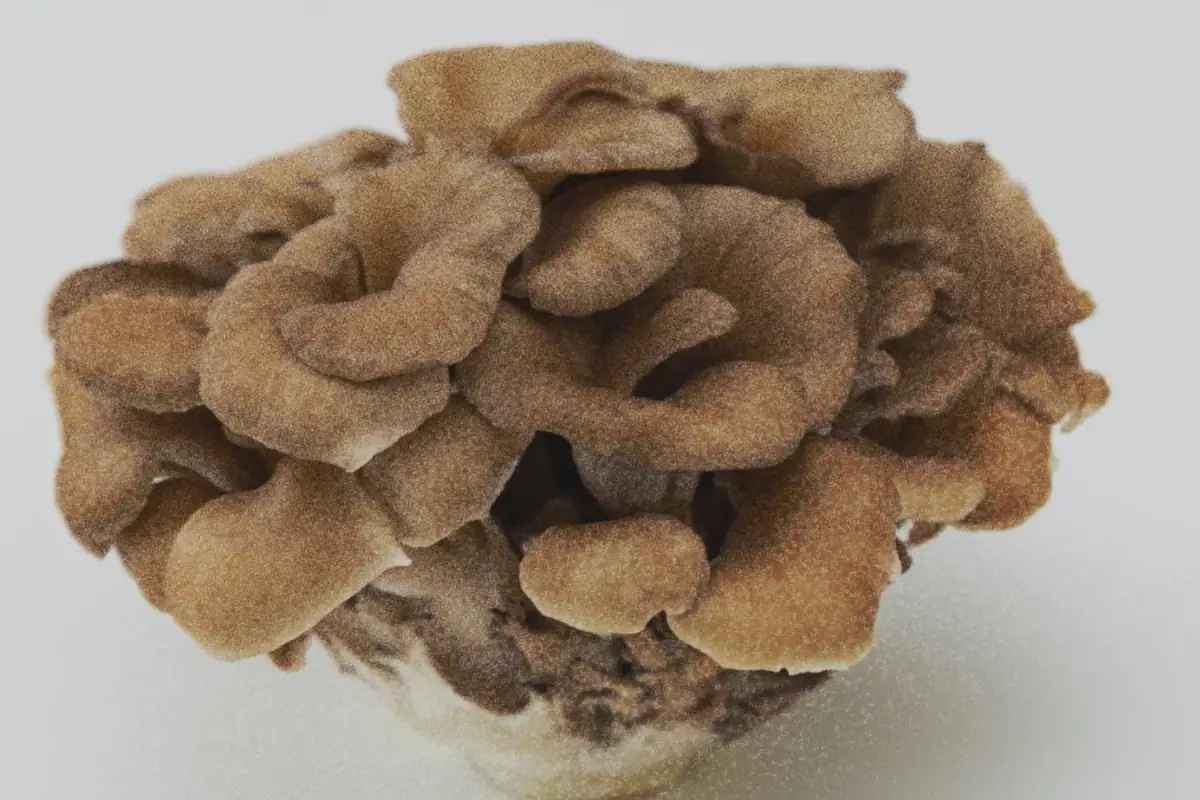
Maitake
The "dancing mushroom" of Japanese cuisine. Beta-glucans and a rich tradition of use.
The Japanese named it the dancing mushroom, supposedly because people danced with joy upon finding it. Among our species, maitake has the beta-glucan fraction best described in Japan · it was simply named fraction D, and a team in Kobe has studied it since the eighties. Maitake is also one of the most delicious mushrooms; in China it fruits only once a year and is locally considered a delicacy. At Aloha Fungi we turned that delicacy into a powdered extract. Maitake is also part of our FLOW blend.

Maitake in scientific research
What was studied, on how many people and with what level of evidence. This overview describes studies, not the effects of a product.
7
human studies
1
placebo-controlled RCTs
1994–2026
years of publication
Ulbricht C. et al., 2009
Bsystematic review
not applicable
The systematic review (Natural Standard methodology) collected available data on the uses and safety of Grifola frondosa.
PMID 19476741Jogi E.M. et al., 2026
CRCT, double-blind, placebo-controlled
47 healthy people aged 60+
The double-blind, placebo-controlled RCT examined the effect of Grifola frondosa on cognitive function in 47 healthy people aged 60+.
PMID 42055721Konno S. et al., 2001
Dpilot, research letter, uncontrolled
6 patients
A brief research letter described glycaemia observations in six type 2 diabetes patients taking the extract. Very small sample, no control group.
PMID 11903406
The presence of a study is not a health claim.
© 2026 Aloha Fungi™