Journal
Ceremonial matcha from Jingshan: where it comes from and how we drink it
First-harvest matcha from Jingshan in the Tianmu mountains. Why not Japan, how to whisk it in water, and how to pair it with Tremella.
TCM therapist · Doctor of Acupuncture (WFAS) · author of a book on functional mushrooms
4 min read
Contents
Ceremonial matcha from Jingshan is a powdered first-harvest tea leaf from the Tianmu mountains. You drink a tested, high-grade matcha in water at 70-80°C. Aloha Matcha is not from Uji. It comes from the centre where powdered ceremonial tea (what we now simply call matcha) began. Few people know that matcha travelled from China to Japan, so if we talk about the cradle of this fashionable green essence, it is Asia, but not the place most people assume.
Jingshan, the Song dynasty, then Japan
Few Polish shops tell this history. Powdered ceremonial tea was already drunk in China under the Song dynasty. Japanese Zen monks carried the custom and shaped chanoyu from it. Jingshan, Yuhang district, on the north-eastern slopes of the Tianmu mountains, is one of the classic centres of that tradition.
That is why Aloha Matcha does not pretend to be Japanese quality. As with our mushrooms, we are proud the raw material comes from China, and we stay close to the process through our technologists. This matcha is single cultivar, first harvest, 50 g of plain matcha with no additives at all. On the historical timeline, Japan is the second chapter, not the first.
Is Chinese better? Over 90% of matcha sold worldwide under a „Japanese" label in fact comes from China. Few people know that, and it is an inconvenient truth, but it is the truth. We do not claim that „Chinese is better". Once you taste ours, you will understand why we quite boldly say this matcha will be one of the best you have ever drunk.
For the kitchen context (cacao, coffee, matcha as a ritual base), there is a separate piece: functional mushrooms in the kitchen.
How to prepare it (water, not milk)
- 1-2 g of matcha (a level teaspoon) in 100 ml of water (we do not recommend drinking this matcha with milk: it is too good for that).
- 70-80°C, not boiling. Boiling water makes the matcha bitter and affects some of the catechins.
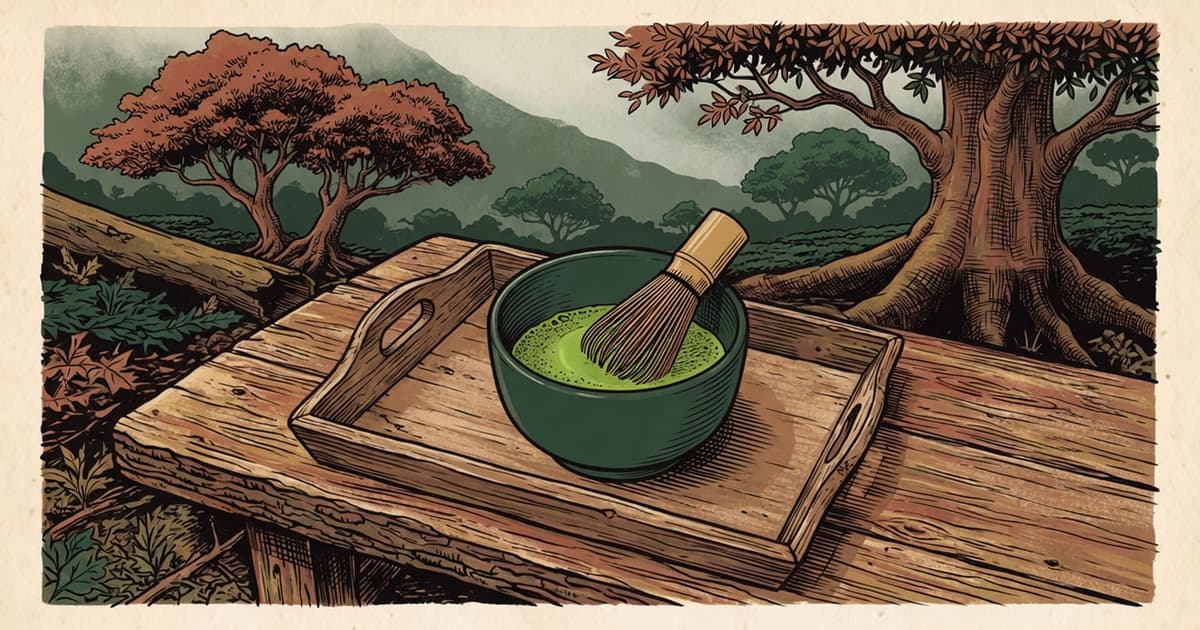
- A bamboo whisk until frothy, or a cold preparation.
How it differs from typical shelf matcha
The usual offer in Poland says: Japan, Uji or Kagoshima, organic, latte. That is an honest category and it has its audience.
Aloha Matcha stands beside that shelf, not even in the middle of it:
- Jingshan, not Uji;
- first harvest, single cultivar;
- drink it with water; do not hide it in milk (you will do as you like, but we ask);
- every batch tested (heavy metals, pesticides, microbiology) on the certificate of analysis;
- there are no mushrooms in the tin. You add them separately; we especially like matcha with Tremella as a beauty ritual.
The price of the 50 g tin is defended by that set, not by the word „premium". If you want market matcha for latte, this is not the address. Matcha of this grade often sells for around 180 zł per 30 g. Here (for now) you get the full 50 g; the current price is on the product page.
The Tremella ritual
Matcha in the morning, Tremella in the evening. Or both in one ritual: whisk the matcha first, then add the extract, following the mushroom label. More on snow fungus: Tremella and the beauty ritual.
Aloha Matcha itself is one hundred percent tea. The Matcha + Tremella set puts together two rituals you would already do separately.
FAQ
Where does Aloha Matcha come from, if not from Japan? Jingshan in the Tianmu mountains. The root of the ceremony is Song-dynasty China. Japan developed the custom later.
Should I drink it with milk? We advise against it. Water at 70-80°C.
Does it contain functional mushrooms? No. You can add an extract after whisking.
How should I store it? Sealed, cool, dark, away from odours and moisture.
If you want to start with one tin: Aloha Matcha. If you want the morning and evening pair: the Matcha + Tremella set.
This content is educational only and is not medical advice. A food product does not replace a varied diet or a healthy lifestyle. Matcha contains natural caffeine. If in doubt, consult a doctor or pharmacist.