Skip to content
Super promo!Reishi−50%59.50 zł119 zł (regular price)
Only 92 left at 59.50 zł, then 71.40 złCheck it →
Free delivery in Poland from 299 zł

Tremella · the silver ear and beauty as a story

Tremella, the "silver ear" snow fungus of Chinese tradition, tied to beauty as cultural lore. An educational look at its symbolism, fruiting body and ritual.

Mateusz Rosa

TCM therapist · Doctor of Acupuncture (WFAS) · author of a book on functional mushrooms

3 min read
Tremella · the silver ear and beauty as a story
Contents

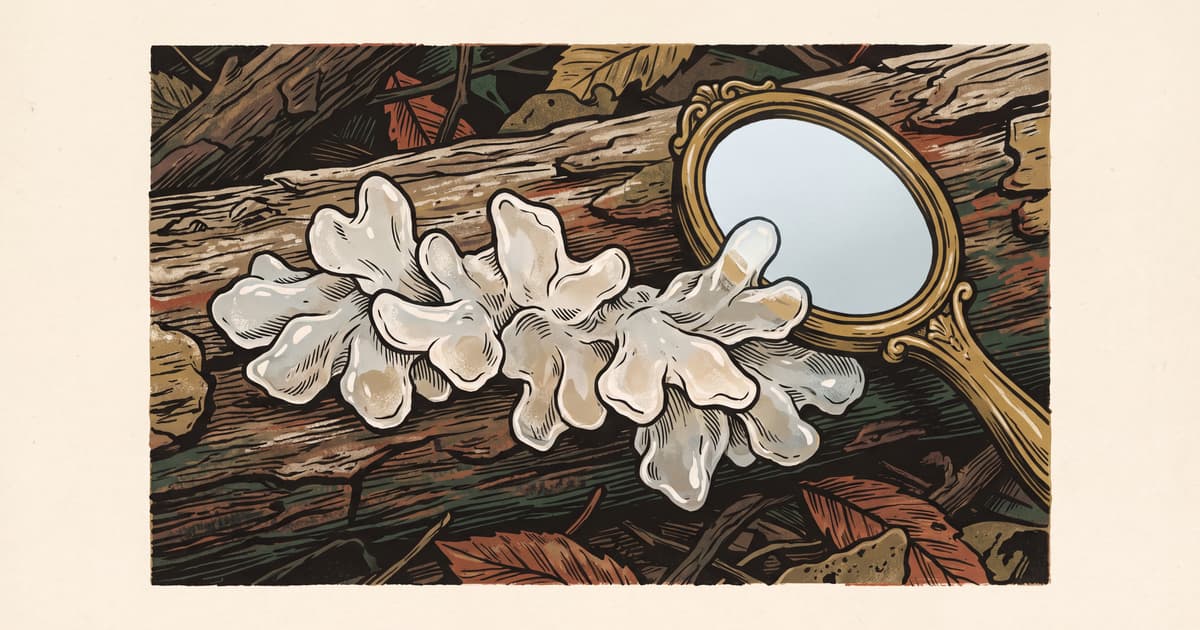
Tremella (in Polish trzęsak, Latin Tremella fuciformis, in English "snow fungus") is one of the most distinctive mushrooms of Chinese tradition. White, gelatinous and translucent, branching like a flower or a sea anemone. In old China it was called yín ěr, the "silver ear", and was prized at the imperial court.

For centuries, tremella has carried a story about beauty. That is cultural symbolism, recorded in court kitchens and legends. Do not read it as a promise. Read it as a story about the place tremella held in everyday life.

A mushroom of the court and legend

In old China, tremella was a delicacy. It was served at the imperial court as a sweet soup, tong sui, simmered for hours until the fruiting body melted into a delicate jelly. Legend ties it to Yang Guifei, the consort of a Tang dynasty emperor, famed for her beauty. This is why, in Chinese culture, tremella still carries an association with self-care and looking after oneself.

That association is cultural, not medical. We tell it as a fragment of tradition, not as a recipe.

A fruiting body like a flower

Tremella does not look like a typical capped mushroom. Its fruiting body is a cluster of thin, ruffled lobes, translucent and soft, resembling a flower or a sea anemone. It grows on hardwood, often alongside other fungi. In cultivation it needs moisture and time, which makes it a mushroom of patience.

Why the fruiting body

At Aloha Fungi we work with the fruiting body of tremella, the visible, flower like part of the mushroom that tradition knows. It was the fruiting body that went into the court soups, not the mycelium hidden in the substrate. Our extract is made from the fruiting body too, where the polysaccharides typical of tremella matter. We state them as a fact of composition, not as a promise of effect.

Tremella in a ritual

Today, lovers of functional mushrooms value tremella for the ritual they build around it, not for a promise. In tradition it was part of slow, careful cooking. Today an extract is easier to reach for.

  • Slowly · in tradition tremella is a mushroom of patient cooking, not haste.
  • Daily · part of a morning or evening self-care ritual.
  • Your way · a warm infusion, a spoon into a smoothie, a capsule. You choose. Or a morning with ceremonial matcha from Jingshan and Tremella in the evening.

If you take medication, are pregnant or breastfeeding, discuss use with your doctor or pharmacist.

Tremella in scientific research

What was studied, on how many people and with what level of evidence. This overview describes studies, not the effects of a product.

2

human studies

2

placebo-controlled RCTs

2007–2025

years of publication

  • Gitsomboon S. et al., 2024

    C

    RCT, double-blind, placebo-controlled

    56 people

    The 12-week trial examined a Tremella beverage versus placebo, measuring HbA1c and waist circumference in overweight/obese adults with prediabetes. Single-centre, small sample, the authors note the need for larger RCTs.

    PMID 38439104
  • Ban S. et al., 2018

    C

    RCT, double-blind, placebo-controlled, 3 arms

    75 people (30/30/15)

    The trial examined 8 weeks of 600 mg or 1200 mg daily capsules versus placebo in people with subjective cognitive impairment: safety, memory complaint questionnaire, memory and executive function tests, and grey matter volume (MRI). Small placebo group (15 people), short duration.

    PMID 29319408
  • Wu Y.J. et al., 2019

    E

    narrative review · preclinical studies (in vitro and rodent)

    not applicable

    The narrative review discussed the chemical structure, bioactivity and applications of Tremella fuciformis polysaccharides, without measuring effects in humans.

    PMID 31030755
  • Park K.J. et al., 2007

    E

    in vitro (PC12h cell line) · preclinical studies (in vitro and rodent)

    not applicable

    The in vitro study (PC12h cell line) examined the neuroprotective and neurotrophic effects of a Tremella fuciformis extract.

    PMID 24015063
  • Park H.J. et al., 2012

    E

    in vitro + animal (rats) · preclinical studies (in vitro and rodent)

    not applicable

    The study combined a cell model (PC12 neurite outgrowth) with an animal model (restoring trimethyltin-impaired memory in rats) after Tremella fuciformis administration.

    PMID 22185695
  • Fu H. et al., 2021

    E

    in vitro (human dermal fibroblasts) · preclinical studies (in vitro and rodent)

    not applicable

    The in vitro study on human dermal fibroblasts examined whether Tremella fuciformis polysaccharides inhibit UVA-induced photodamage.

    PMID 33686752
  • Shen T. et al., 2017

    E

    in vitro (fibroblasts) · preclinical studies (in vitro and rodent)

    not applicable

    The in vitro study on human dermal fibroblasts examined whether a Tremella fuciformis polysaccharide reduces hydrogen peroxide-induced damage by upregulating SIRT1.

    PMID 28627707
  • Galla R. et al., 2025

    E

    chemical analysis of the raw material · preclinical studies (in vitro and rodent)

    not applicable

    The chemical analysis of the raw material examined whether a compound from Tremella fuciformis has a structure and chemical profile comparable to animal-derived hyaluronic acid.

    PMID 40282763
  • Moon G. et al., 2025

    E

    animal (mice) · preclinical studies (in vitro and rodent)

    not applicable

    The preclinical mouse study examined the anti-stress effects of enzymatic Tremella fuciformis extracts.

    PMID 40077789

Evidence levels: A · Cochrane review · B · systematic review · C · placebo RCT · D · pilot RCT · E · preclinical studies

What these studies don't say

  • Samples are usually small, most from a single population.
  • Results describe research interventions, not a dietary supplement.
  • The presence of a study is not a health claim.

Source: Aloha Fungi literature review, 1 September 2026; entries verified via PubMed or by DOI (Crossref). See the research

Discover functional mushrooms

© 2026 Aloha Fungi™