Journal
Coprinus, the shaggy ink cap. A mushroom of two traditions
Coprinus (shaggy mane) links a culinary tradition with a place in TCM mycotherapy. Educational look at its composition, ergothioneine and dual nature.
TCM therapist · Doctor of Acupuncture (WFAS) · author of a book on functional mushrooms
3 min read
Contents
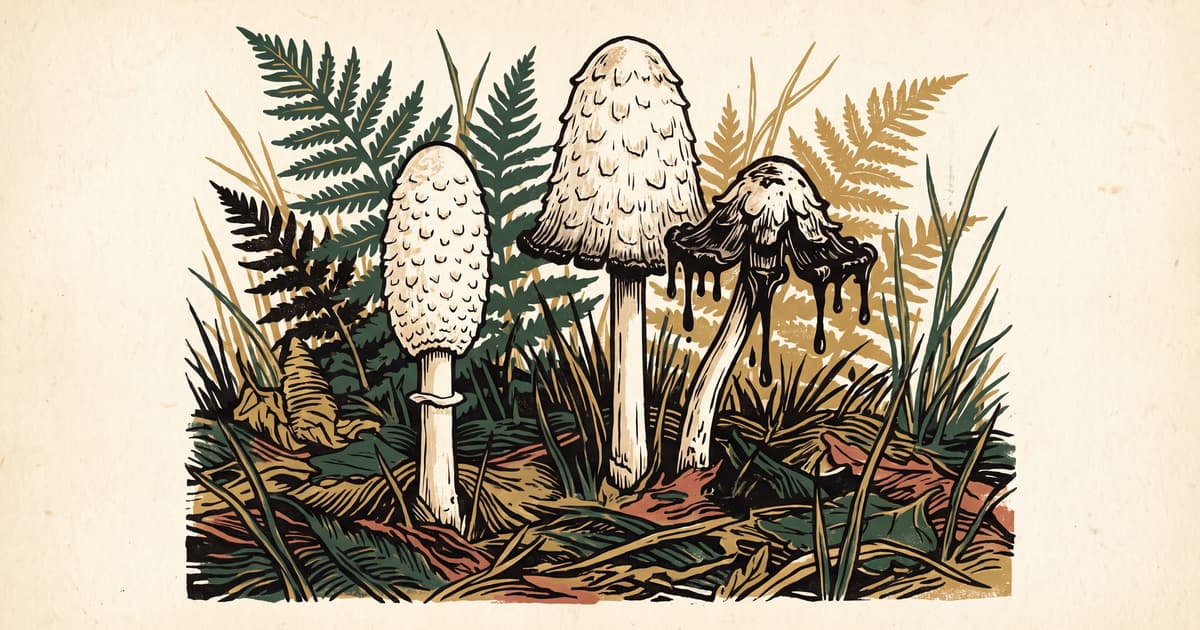
Coprinus (Coprinus comatus), commonly known as the shaggy ink cap or "lawyer's wig" for its distinctive shaggy fringed cap, is one of the few mushrooms that belongs both to Western culinary tradition and to Chinese mycotherapy tradition at once.
What makes Coprinus different from other functional mushrooms?
Coprinus has a dual nature: its young fruiting body is eaten raw or lightly cooked as a delicate culinary treat, while the same species has, for centuries, held a place in Chinese herbal tradition. This double life is rare, most functional mushrooms are known either from the kitchen or from tradition, seldom both.
Worth clarifying: a well-known warning about "ink caps and alcohol" applies to a different species, the common ink cap (Coprinopsis atramentaria), which contains coprine. Coprinus comatus, the species described here, does not contain coprine.
What does Chinese tradition say about the shaggy ink cap?
In traditional Chinese medicine, Coprinus was described as a mushroom of neutral nature and sweet taste, associated with the digestive element. This is a cultural description recorded in old herbal texts, not a modern claim about effect. Read it as part of the story of how the mushroom fit into traditional diets, not as a prescription.
Tradition and modern knowledge of composition are two separate languages. At Aloha Fungi we keep them deliberately apart: symbolism stays where it belongs, in history, while composition is discussed concretely and without promising outcomes.
What composition of Coprinus is worth knowing?
Coprinus stands out for its content of ergothioneine, a naturally occurring compound found in many mushrooms, in this species at notably higher levels than in some other edible fungi. This is a fact about the chemical composition of the fruiting body, confirmed by laboratory analysis, not a statement about health effect.
The shaggy ink cap fruiting body also contains organic vanadium compounds and the standard mushroom set of polysaccharides, including beta-glucans. As with any extract, preparation matters. Read more about extract ratios in how to read an extract label.
Why does Aloha Fungi work with the fruiting body?
As with other functional mushrooms in our range, we source the fruiting body, the part of the mushroom described by tradition and the one you can actually spot on a meadow. It is the same part that has been gathered and eaten for generations.
- Culinary · the young fruiting body is prized for its delicate taste, popular in both Asian and European cuisine.
- Traditional · in TCM classified among mushrooms historically associated with digestion.
- Compositional · a source of ergothioneine, polysaccharides and organic vanadium compounds.
If you take medication, are pregnant or breastfeeding, consult a doctor or pharmacist before adding a new supplement.
This content is for educational purposes only and does not constitute medical advice. A food supplement does not replace a varied diet or a healthy lifestyle. If in doubt, consult your doctor or pharmacist.