Skip to content

Welcome to the new Aloha Fungi shop!Have a question or an idea? Message us on WhatsApp: MattKubaFranek

Lion's mane co to jest po polsku: what it is, in Polish

Lion's mane co to jest po polsku? It's soplowka jezowata, the mushroom Hericium erinaceus. See the names, the look, and its place in East Asian tradition.

Mateusz Rosa

TCM therapist · Doctor of Acupuncture (WFAS) · author of a book on functional mushrooms

3 min read
Lion's mane co to jest po polsku: what it is, in Polish
Contents

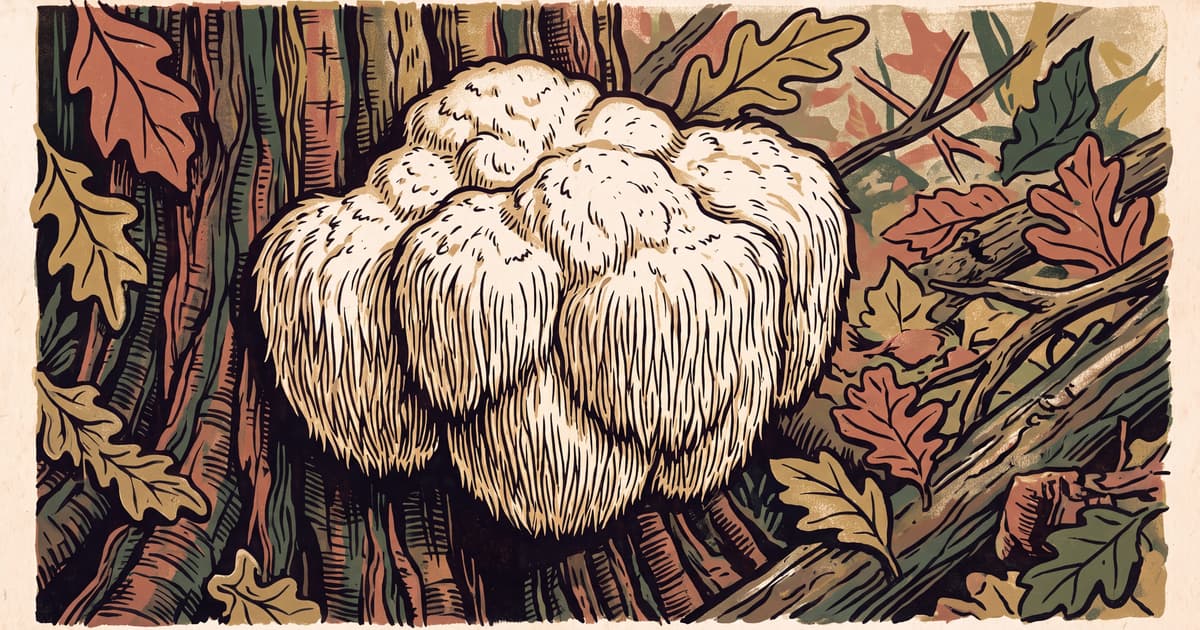
Lion's mane co to jest po polsku, people ask: what is lion's mane called in Polish? It's the English name for a mushroom that's called soplowka jezowata in Polish (Latin: Hericium erinaceus). It's one species under three names: English, Polish, and Latin, which is why search engines and shops use them interchangeably. The name refers to the cascading white fruiting body that resembles an animal's mane.

What is lion's mane called in Polish?

In Polish, this species is called soplowka jezowata; you'll occasionally see the informal translation "lwia grzywa" (literally "lion's mane") too. The Latin name, Hericium erinaceus, is shared across every language and the most precise choice if you want to be sure you and someone else are talking about the same species.

Where does the English name lion's mane come from?

The name "lion's mane" describes the fruiting body's look: dense, white, cascading spines that resemble a lion's mane. It's a descriptive name based on shape, not a claim about what the mushroom does. In Japan the species is called yamabushitake, "mountain priest mushroom", after ascetics who practiced in the mountains. In China it's hou tou gu, "monkey head mushroom".

What does lion's mane look like and where do you find it?

The fruiting body is white or cream, round, covered in hanging spines, without a cap or stem. It grows on deciduous trunks, mainly beech and oak, as a parasite on dead wood. In Poland it's rare, covered in our post on wild lion's mane and the functional mushroom hub.

FAQ

Are lion's mane and soplowka jezowata the same mushroom? Yes, it's exactly the same species, Hericium erinaceus. Lion's mane is the English name, soplowka jezowata is the Polish name.

Why is it called "lion's mane"? The name describes the fruiting body's look: white, dense, hanging spines that resemble a lion's mane. It's a descriptive term, not a claim about what the mushroom does.

What else is lion's mane called around the world? In Japan it's called yamabushitake, in China hou tou gu. The Latin name, Hericium erinaceus, is shared regardless of country.

The full species profile is on the lion's mane page, and the product is on the lion's mane product card.


This content is for educational purposes only and does not constitute medical advice. A food supplement does not replace a varied diet or a healthy lifestyle. If in doubt, consult your doctor or pharmacist.

Lion's mane in scientific research

What was studied, on how many people and with what level of evidence. This overview describes studies, not the effects of a product.

8

human studies

6

placebo-controlled RCTs (incl. 1 pilot)

19912026

years of publication

  • Menon A. et al., 2025

    B

    systematic review

    26 studies, including only 5 RCTs · number of people: not reported

    The review collected studies on the use of Hericium erinaceus as a supplement in the context of cognitive function and reported adverse effects. The authors noted that adverse effects are usually not reported in the literature.

    PMID 40959699
  • Mori K. et al., 2009

    C

    RCT, double-blind, placebo-controlled

    30 people, 50 to 80 years, Japan

    The study examined the effect of taking Hericium erinaceus on a cognitive function scale score in a group of 30 Japanese people aged 50 to 80 with mild cognitive impairment. Very small sample from a single population, the differences faded within 4 weeks after discontinuation.

    PMID 18844328
  • Nagano M. et al., 2010

    C

    RCT, double-blind, placebo-controlled

    30 women

    The study examined the effect of 4 weeks of Hericium erinaceus intake on questionnaire scores for mood, perimenopausal symptoms and sleep quality in a group of 30 women. Very small sample, women only.

    PMID 20834180
  • Saitsu Y. et al., 2019

    C

    RCT, double-blind, placebo-controlled

    not reported

    The study examined the effect of 12 weeks of taking a Hericium erinaceus fruiting-body supplement on cognitive function test results in a group of adult participants. The authors noted that evidence regarding human health remains uncertain.

    PMID 31413233
  • Li I.C. et al., 2020

    D

    pilot RCT, placebo-controlled

    49 randomised, 41 completed

    The study examined the effect of 49 weeks of taking erinacine A-enriched Hericium erinaceus mycelia on cognitive test results and safety parameters in patients with mild Alzheimer's disease. Small, pilot sample size, larger studies needed.

    PMID 32581767
  • Docherty S. et al., 2023

    D

    pilot RCT

    41 healthy adults

    The study examined the effect of a single dose and 28 days of Hericium erinaceus supplementation on cognitive test results, perceived stress and mood in a group of 41 healthy adults. Small sample, null results alongside positive ones, replication needed.

    PMID 38004235
  • Surendran G. et al., 2025

    C

    crossover RCT, placebo-controlled, single dose

    18 healthy adults

    The study examined the effect of a single dose of a standardised Hericium erinaceus fruiting-body extract on cognitive test results and mood measured 90 minutes after administration in a group of 18 healthy young adults. Very small sample requiring replication.

    PMID 40276537
  • Spangenberg E.T. et al., 2025

    E

    systematic review of preclinical studies · preclinical studies (in vitro and rodent)

    not applicable, 23 studies

    The review collected preclinical studies (in vitro and in rodents) on the role of erinacines in neuroprotection models. No standardisation of erinacine measurement, inconsistent reporting of strains and extraction methods.

    PMID 40626304
  • Kawagishi H. et al., 1991

    E

    compound isolation + in vitro test · preclinical studies (in vitro and rodent)

    not applicable

    The study examined, through compound isolation from the fruiting body and an in vitro test, which substances (hericenones C, D, E) stimulate nerve growth factor (NGF) synthesis. Historical chemistry paper (1991).

    DOI 10.1016/0040-4039(91)80039-9
  • Friedman M., 2015

    E

    narrative review · preclinical studies (in vitro and rodent)

    not applicable

    The narrative review collected data on the chemical composition, nutritional value and reported health properties of lion's mane. The author emphasises that many properties come from preclinical studies.

    PMID 26244378
  • Lai P.L. et al., 2013

    E

    in vitro · preclinical studies (in vitro and rodent)

    not applicable

    The study examined the effect of an aqueous extract on nerve fibre outgrowth in an in vitro cell culture, alone and combined with NGF. The preparation did not protect cells from oxidative damage despite its neurotrophic effect.

    PMID 24266378
  • Nakatsugawa M. et al., 2003

    D

    case report, safety

    1 patient, 63-year-old man

    The case report documented acute respiratory failure (pneumonitis) in a 63-year-old man after taking a lion's mane extract 4 months earlier. Single case, safety data, not an efficacy study.

    PMID 14714963
  • Daoust J. et al., 2026

    C

    RCT, double-blind, placebo-controlled (preprint, not peer-reviewed)

    109 people (57+52), 40-75 years, 8 weeks

    The study (preprint, not peer-reviewed) examined the effect of 8 weeks of 2 g daily fruiting-body and mycelium biomass supplementation on visual attention, working memory, sleep quality and mood tests in 109 adults aged 40-75 with reported cognitive difficulties. The authors themselves describe the results as "modest". Preprint status means no scientific peer review.

    DOI 10.64898/2026.04.13.26350781
  • Cornford N., Charnley M., 2025

    E

    narrative review · preclinical studies (in vitro and rodent)

    not applicable (3 human studies + 13 animal studies discussed in the review)

    The narrative review analysed 3 human clinical studies and 13 animal studies on the prevention and delayed progression of Alzheimer's disease. The authors point to the need for additional human clinical studies.

    DOI 10.1017/S0954422425000058

Evidence levels: A · Cochrane review · B · systematic review · C · placebo RCT · D · pilot RCT · E · preclinical studies

What these studies don't say

  • Samples are usually small, most from a single population.
  • Results describe research interventions, not a dietary supplement.
  • The presence of a study is not a health claim.
  • 1 entry/entries are case reports about safety, not efficacy studies.

Source: Aloha Fungi literature review, 1 September 2026; entries verified via PubMed or by DOI (Crossref). See the research

Discover functional mushrooms

© 2026 Aloha Fungi™

🍄 Our mushrooms eat cookies

Essential cookies keep the shop alive (cart, login) · always on. Analytics and marketing cookies help the mycelium grow: they show us what to improve and which stories reach you. We only turn them on with your consent, and you can change it anytime. Cookie policy