
Metabolism
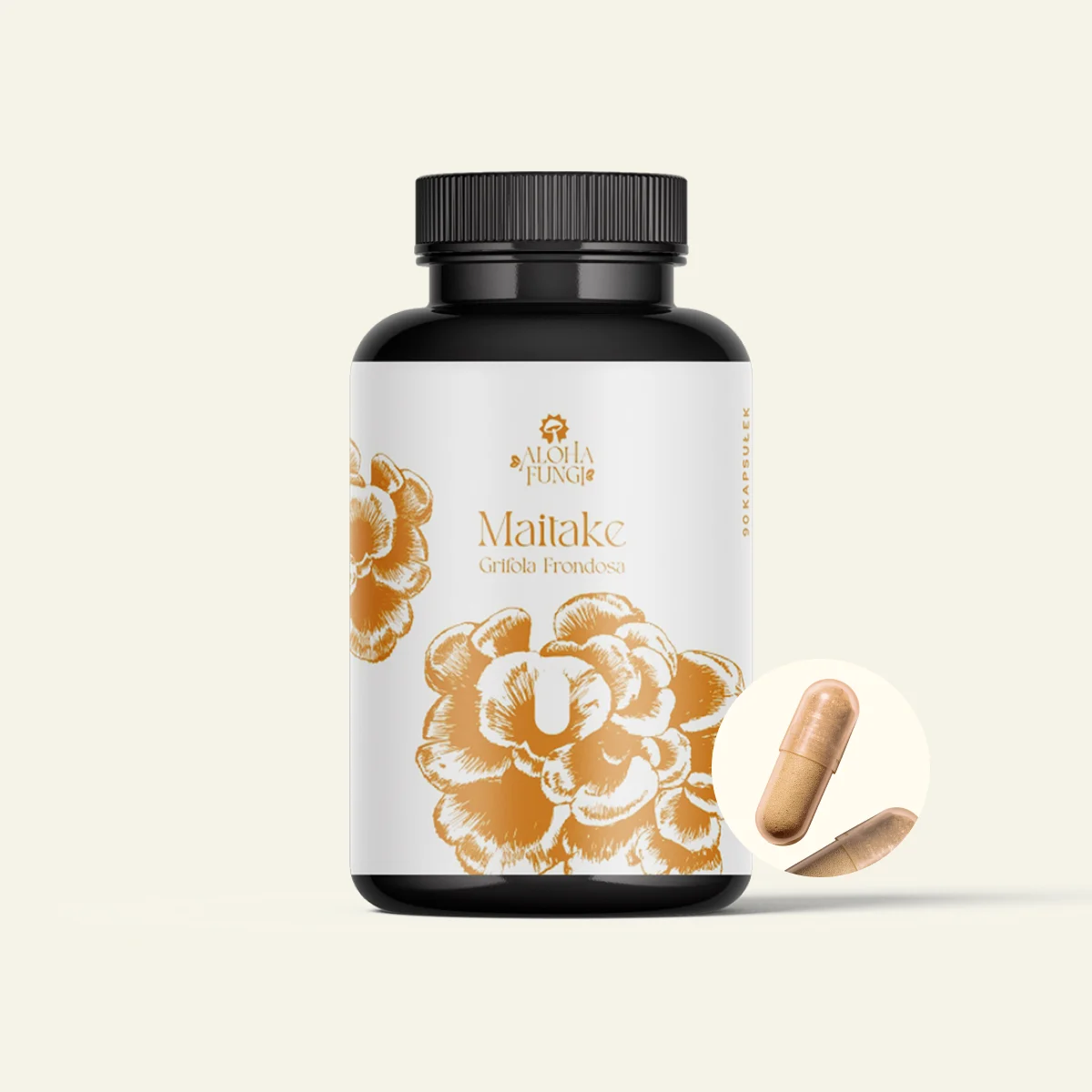
Maitake(Hen of the Woods)
Your metabolism likes this... The D and MD fractions.
from 129 zł
from 110 zł · −15%
© 2026 Aloha Fungi™
Line LONGEVITY · ritual Lightness
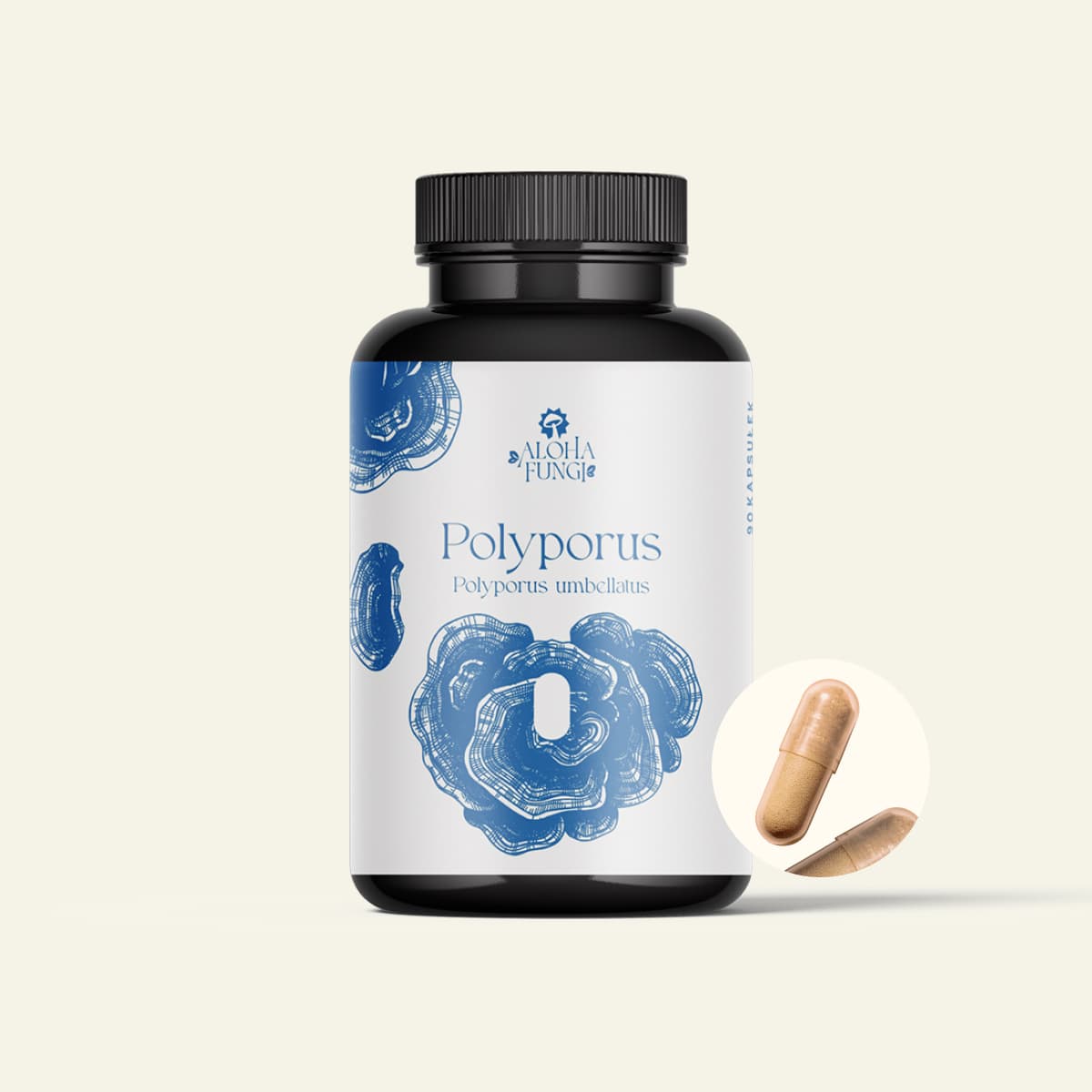
Polyporus · extract · capsules
Żagiew Wielogłowa · Zhu Ling
A ritual for an active morning: take 3 capsules with water. The raw material is sclerotium, an underground structure, not a fruiting body or grain-grown mycelium, every batch tested.
A ritual for an active morning: take 3 capsules with water. The raw material is sclerotium, an underground structure, not a fruiting body or grain-grown mycelium, every batch tested.
In stock
170 zł away from free shipping
With a subscription you save 19.35 zł on every delivery
A 30-day ritual. Your pack arrives automatically. Cancel anytime.
2 pcs −4%, 3+ pcs −8%
100% fruiting body · 10:1 extract · Every batch lab-tested
A hard, dark mass with a rough surface and a sweetish, slightly bland taste. It grows underground, by the roots of hardwood trees, in symbiosis with honey fungus, in the non-industrial regions of East Asia. It matures over eighteen to twenty-four months, building a hard, dormant structure.
Serving recommended for consumption during the day: 3 capsules, washed down with water, in the morning or before noon. Do not take it in the evening. Each capsule contains 0.35 g of Polyporus extract at a 10:1 concentration.
Polyporus is a mushroom of short courses, usually four to eight weeks, two or three times a year, most often as part of a set, not everyday supplementation for years. After each course it is worth taking a break and assessing whether and when to return. The timing, course length and set are best set during a consultation, especially if you take blood-pressure or diuretic medicines.
For prevention, 1-2 capsules a day, 3-4 times a week, is usually enough. In Eastern medicine there is the law of 90 days: the lasting effect of any protocol or practice is assessed only after ninety days, which is why consistency and patience matter most, not a one-off “shot”.
Store the capsules in a dry, cool place away from light, and do not exceed the recommended daily serving. A food supplement is not a substitute for a varied diet or a healthy lifestyle.
A few hundred reviews, five stars, and we have only been collecting them for a few months. Ask why customers come back. The answer is simple and impossible to fake: what is inside the package is real. It has spirit. Most of the market sells the name on the label. We sell what truly stands behind that name.
We do not take the easy road most of the world takes: give people just anything, wrap it nicely, cash in. We are a family and a family business, and everything starts with who we are as people. We cannot lie. We would not sleep knowing we sold someone a lie hidden in clever words. We want to feed others only with what we choose for ourselves, the way a loving mum or grandma feeds you: with the best ingredient, with heart and attention, never with a lie. A large part of the market wants to profit at the customer's expense. We stand on the other side of that line. We do not want money that is not clean.
Nature creates to nourish us. It knows what it creates and why. In the intelligence of life there are no mistakes. The mistake appears only where man steps in, and there the road splits in two. You can put in heart and patience to draw out the essence of a plant or a mushroom. Or you can modify, disturb, dilute and lie, so it is cheaper and faster.
That is why the first question is not "which mushroom is this", but: who is selling it to you. Who stands behind the company, and with what intention. We show our face. Our intention is what we wrote above, and for us a greater cost than losing margin would be betraying life and disturbing its intelligence for profit. We want to work in harmony with life, respect its wisdom and let it lead. We want to be honest, humble and never stop learning.
We grow as a company, and out of respect for tradition we bring in technology, never the other way round. Our Chinese friends are family to us. At times we live with them, we listen, we learn. For Yi, mushrooms are the love of a lifetime. Yi has money, plenty of it, and sees no value in having more. The value lies elsewhere: in doing good and never ceasing to become better. We walk the same road. We develop technology guided by the heart, always with respect for the intelligence of nature.
We know that a meal from mum or grandma can nourish more deeply than fast food made of the same ingredients. We know it because the difference is love, quality and truth. Something that lies deeper than a product name.
We do not force anything out of the mushroom, convinced that we know better. The mushroom is an intelligence in itself. We listen to what it has to say, and we keep learning. That is why our motto is the technology of nature. We use the best extraction methods and develop them in a bow before the wisdom of nature, to which we keep saying: show us how to do this better.
You pay less and what you mostly get is filler: maltodextrin and mycelium grown on rice or oats that has never seen a tree root.
Many of our customers tell their story with functional mushrooms in two chapters: the extracts before us, and the ones they reach for now. People rarely go back to the former. Our extract is made from the mature sclerotium of Polyporus from controlled cultivation, not from mycelium on grain. A 10:1 extract, dual water and alcohol extraction, blended half and half with powdered sclerotium. Short courses, in the morning or before noon, most often as part of a set.
We work exclusively with the sclerotium, never the mycelium, of Polyporus umbellatus from controlled cultivation in non-industrial regions of East Asia, maturing in symbiosis with Armillaria over eighteen to twenty-four months. The dual extraction has its own order: water draws out the water-soluble PPS, ethanol the lipophilic polyporusterones and ergone. Standardised to a minimum of 30% beta-glucans in the extract. In line with applicable food law, we do not publish information about effects or health benefits. What remains is what we take full responsibility for: a carefully selected, tested extract that people come back to.
This is where competitors usually list what Polyporus "does" to water and weight. We leave that space empty, and not because we have nothing to say. The law does not allow it, and we respect the law. If you want to know Polyporus as Chinese tradition saw it, you will find it further down this page. The rest will be written by your course, the way we suggest to truly get to know this mushroom.
A number on the label can impress, but along the way the mushroom stops being a mushroom. What remains is an isolate, a molecule torn out of context. Our rule is different. Four things must be right before an extract goes into the package.
Sclerotium from controlled cultivation, not mycelium on grain
Many cheap "mushroom" products are in fact mycelium grown on rice or oats, with a high content of starch from the substrate. We work with the sclerotium, a hard, underground structure maturing over eighteen to twenty-four months in symbiosis with Armillaria.
10:1 extract from the sclerotium
Ten kilograms of raw material yield one kilogram of extract. Standardised to a minimum of 30% beta-glucans in the extract.
Dual water and alcohol extraction
Water for the water-soluble PPS, ethanol for the lipophilic polyporusterones and ergone. A single medium would miss part of the profile.
Every batch tested at EUROFINS
An independent laboratory. Purity: heavy metals (lead, cadmium, mercury, arsenic) and pesticides (a multi-residue panel). Every batch has an individual certificate, published without retouching in the "Tests" section.
Polyporus LONGEVITY is half and half: 10:1 extract and powdered sclerotium from the same source. What the laboratory cannot measure, the body still recognises. That is why we do not choose between precision and fullness. We take both.
More about the difference between the LONGEVITY and PRIME lines in the category description.
Polyporus is a targeted, course-based mushroom in a convenient capsule form, taken in the morning or before noon, most often as part of a set. It is most often chosen by people who:
want to work with a classic of the Chinese pharmacopoeia, traditionally used in short courses, mindfully and with context;
prefer a measured capsule to a powder, with no weighing, no mixing and no pronounced taste;
value raw material with confirmed species identity and a transparent, short composition without fillers;
prefer to choose the set and course during a consultation rather than reach for a single capsule without context.
Honestly: every body is different and no honest producer will tell you what you will notice and when. The law forbids it, and we would not want to do it anyway. So instead of a promise we give you two things. A few hundred reviews from people who stayed with us after their first package. And a fair starting point: 90 days of daily regularity, because that is how you truly get to know functional mushrooms, not from a single cup. Your experience belongs to you. We answer for what is in the package.
Not a cap, not mycelium. A hard, underground lump that grows on the roots of trees in symbiosis with Armillaria, maturing over a year and a half to two years. Polyporus (Polyporus umbellatus), in Chinese Zhu Ling (猪苓), the pig mushroom, named for its resemblance to pig skin. One of the most targeted mushrooms in the Chinese pharmacopoeia.
Let us be clear from the start, because the internet is full of shortcuts: polyporus is a targeted mushroom, traditionally used in short courses, not a means of rapid water loss. It is not a natural equivalent of diuretic medicines, not a way to shed water before a weigh-in, and not a slimming agent. It is also a mushroom you take differently from Reishi or Lion's Mane: in short courses, in the morning or before noon, most often as part of a set.
The raw material is the sclerotium, not the fruiting body. Dual extraction, every batch tested at EUROFINS. For us it comes as vegan capsules holding a 10:1 extract. We promise no effects; we give you a clean raw material and the context to decide for yourself how to use it.
From Mateusz's clinic
Mateusz Rosa
Doctor of Acupuncture (WFAS), founder of Aloha Fungi
Have a question? Message me.
In the clinic I use polyporus differently from Reishi or Lion’s Mane: not daily for years, but in short courses, in the morning or before noon, most often as part of a set.
The raw material is the sclerotium, a hard, underground structure, not the fruiting body; the taste is sweetish and slightly bland, which is why we enclosed it in a vegan, measured capsule. If you take blood-pressure or diuretic medicines, do not start without talking to your doctor; this is not an exaggeration, it is common sense.
50% dual water-alcohol 10:1 extract from the Polyporus sclerotium (Polyporus umbellatus), 50% powdered sclerotium from the same source. Standardised to a minimum of 30% beta-glucans in the extract. Each capsule contains 0.35 g of extract. Capsule shell is plant-based (hydroxypropyl methylcellulose, HPMC). No maltodextrin or other carriers. Gluten-free, soy-free, 100% vegan. Pack: 90 capsules.
Most functional mushrooms are harvested as the fruiting body, the part that grows above ground. Polyporus is different. The raw material is the sclerotium, a hard, underground survival structure that grows on the roots of trees in symbiosis with Armillaria. It is precisely in the sclerotium that the compounds characteristic of this species concentrate, and what draws most of the attention from researchers of the raw material is a handful of molecular families.
The first and most extensive is the polysaccharides, the polysaccharides that build the mushroom’s cell wall, described through their simple-sugar composition, molecular weight and the way the chains branch.
The second characteristic family is the sterol compounds, including ergosterol, together with the triterpenoids, among them the polyporusic acids and ergone-type derivatives, and it is these molecules that give the raw material part of its chemical identity.
The most important immunomodulator described in this species is PPS, a polysaccharide-peptide with a mass of thirty to one hundred kilodaltons, described in the literature as activating the TLR4 receptor on immune cells. This is a different receptor from Dectin-1, which dominates in the case of Reishi and Chaga.
To this are added the polyporusterones, sterols specific to the species, and ergone, a steroid that laboratory studies have linked to an anti-aldosterone mechanism, that is, action through the renin-angiotensin-aldosterone system rather than through direct excretion of electrolytes by the kidneys.
Polyporus also contains an unusually high concentration of biotin for a mushroom and was historically one of the first mushrooms in which it was detected.
The literature also describes an interesting mechanistic difference. In an animal model (Zhang et al. 2010) a Polyporus extract affected the expression of aquaporins in the kidney medulla, and the observed drainage effect occurred without the loss of potassium and sodium typical of loop diuretics. This is a description of a mechanism studied in animals, not a promise of an effect in humans and not a suggestion that the product replaces medicines.
A review published in “Phytomedicine” (2022) gathered and organised the main compounds described so far in Polyporus umbellatus, assigning them clearly defined molecular structures, from polysaccharides, through sterols, to small-molecule fatty acids and phenols.
One thing is interesting to us here: the paper shows how chemically varied this mushroom is, and how precisely the architecture of its molecules has been described. This is knowledge about the raw material itself, about what polyporus is made of at the molecular level, and not about what it might “do” once taken.
Let us be honest: these are studies of the raw material and its molecules, most often conducted in the laboratory, not of our supplement. They do not show that polyporus is a medicine or that it resolves any health problem on its own; they show what this mushroom is at the chemical level. Characterising the composition is, for us, a reason to care about extract quality, not a basis for health promises. Bibliographic data: PubMed.
We work with the sclerotium (not the fruiting body and not mycelium on grain) of Polyporus umbellatus from controlled cultivation, maturing in symbiosis with Armillaria over eighteen to twenty-four months in non-industrial regions of East Asia. Dual 10:1 extract, standardised to a minimum of 30% beta-glucans. We confirm species identity by DNA barcoding (ITS1/ITS2), and test every batch at the EUROFINS laboratory for heavy metals (lead, cadmium, mercury, arsenic) and pesticide residues; we publish the certificates without retouching.
In a tightly closed package, in a dry, cool and dark place, preferably below 20 degrees Celsius. Protect from moisture. Keep away from children. After opening, use by the date on the package.
The product is contraindicated in pregnancy, during breastfeeding, in kidney failure, in heart failure with oedema, and for people under 18. People taking diuretic medicines must consult a doctor before starting use, because of the risk of excessive diuresis, drops in blood pressure on standing, and electrolyte disturbances. A doctor’s consultation is also necessary in kidney disease, cardiovascular disease and low blood pressure. Stop use at least 14 days before a planned surgical procedure. Take in the morning or before noon, not in the evening.
Traditional Chinese Medicine
Polyporus is a classic of Chinese materia medica, described in the Shen Nong Ben Cao Jing two thousand years ago. In Chinese medicine it is called Zhu Ling (猪苓), the pig mushroom, named for the resemblance of its sclerotium to pig skin. In Chinese tradition Zhu Ling is a pharmacopoeia classic directed at the drainage of Dampness. It appears in classical formulas such as Zhu Ling Tang and Wu Ling San, where it works together with Pornatka (Wolfiporia). It is a strongly targeted mushroom, understood as a tool for a specific task, not a broad everyday tonic.
In the Chinese understanding, Dampness is not simply water in the body but a wider cultural concept that should not be translated one to one into Western medical categories. In TCM classification it was assigned a sweet, slightly bland taste, a neutral nature, and the Kidney and Bladder meridians. The mushroom itself grows in an unusual way, as a hard, dark sclerotium on the roots of broad-leaved trees, in symbiosis with Armillaria, and it is precisely this discreet, “underground” nature that gave it the LEKKOŚĆ signature in our line. This is the tradition that Mateusz, the founder of Aloha Fungi and a Doctor of Acupuncture (WFAS), works with day to day.
The description above is a portrait of Polyporus within the conceptual system of traditional Chinese medicine, developed over more than two millennia. Treat this purely as cultural context, not as a scientific claim or a promise of any effect. Concepts such as Dampness or water metabolism in TCM do not correspond one to one to Western anatomy or physiology; they imply no effect of the product on any organ or bodily function. TCM is a system of thought from millennia ago, not modern pharmacology. We draw on this tradition because it is part of polyporus’s story, not because it replaces modern knowledge.
Cultural context, not a scientific claim or promise of effect.
90-day ritual
First days
You take 3 capsules in the morning or before noon, washed down with water; never in the evening. Polyporus settles into the first half of the day as part of a deliberate, short course.
First weeks
You reach for the capsules on autopilot, with your morning rhythm. Polyporus is run as a short course, usually four to eight weeks, not as everyday supplementation for years.
90-day cycle
In Eastern tradition, this is how much time you give yourself to observe any protocol or practice. Zhu Ling rarely stands alone; it is most often part of a set chosen for a specific goal.
Reviews come from customers with a verified purchase and are moderated by the independent platform TrustMate. We do not publish opinions in exchange for benefits, nor do we alter their content.
We do not communicate Polyporus this way and will not call it a slimming agent or a way to quickly shed water. Those would be promises a food supplement may not make. In Chinese tradition Zhu Ling is a mushroom of draining Dampness, targeted and course-based, not a quick effect before a weigh-in.
No. Diuretics are prescription medicines and Polyporus does not replace them. If you take diuretic or blood-pressure medicines, you must consult a doctor before starting use, because combining them can lead to excessive diuresis and electrolyte disturbances.
Because of its targeted character it is better taken in the morning or before noon, so as not to disturb your night-time rest. That is why it does not fit an evening ritual the way Reishi does.
It is a strongly targeted mushroom, used in Chinese tradition in short courses of four to eight weeks, usually two or three times a year, most often as part of a set. That sets it apart from Reishi, Lion's Mane or Shiitake, which work well in a long, everyday routine.
A sclerotium is a hard, underground survival structure of the mushroom, different from the fruiting body that grows above ground. In the case of Polyporus it is precisely in the sclerotium that the characteristic compounds concentrate, which is why it is the raw material. In our portfolio only Polyporus and Pornatka have this kind of raw material.
PPS is a polysaccharide-peptide described in the literature as activating the TLR4 receptor, whereas the beta-glucans of Reishi and Chaga were described mainly in the context of the Dectin-1 receptor. These are different receptors. It is worth knowing that PPS in injectable form is a separate medicine in China, while our oral supplement is a different category of product.
Yes, and in Chinese tradition this is most often how it is used, as part of a set. With Polyporus in particular it is worth choosing the set during a free consultation, taking into account your medicines and your goal.
No. In Poland Polyporus umbellatus has been under strict species protection since 2014, the most stringent status in our portfolio. Wild harvesting from Polish forests is absolutely prohibited. Our raw material comes exclusively from controlled cultivation.
LONGEVITY is the everyday, value line: a gentle entry into functional mushrooms, meant as a steady part of your diet. PRIME is a stronger, more concentrated variant for those who want a more intensive extract within a deliberate protocol. Both are built on the same raw material and the same care for quality; they differ in concentration and positioning. If you are just starting, choose LONGEVITY.
Cheap Polyporus products are often raw material of uncertain origin and identity, sometimes mycelium grown on grain. We work with the sclerotium, a hard, underground structure maturing eighteen to twenty-four months in symbiosis with Armillaria, not the fruiting body and not mycelium grown on grain. A dual 10:1 extract, water-and-alcohol extraction, standardised to a minimum of 30% beta-glucans. We confirm species identity by DNA barcoding, and every batch is tested at EUROFINS for heavy metals and pesticide residues.
Polyporus is a targeted, course-based mushroom, suited to people who want to work with a classic of the Chinese pharmacopoeia mindfully, in short courses in the morning or before noon, most often as part of a set. The product is contraindicated in pregnancy, during breastfeeding, in kidney failure, in heart failure with oedema, and for people under 18. If you take diuretic medicines, you must consult a doctor before starting use.
A food supplement does not replace a varied diet or a healthy lifestyle. This product is not a medicinal product. Do not exceed the recommended daily serving. Not for use during pregnancy, breastfeeding, or by children. If in doubt, consult a doctor or pharmacist.
What was studied, on how many people and with what level of evidence. This overview describes studies, not the effects of a product.
0
human studies
0
placebo-controlled RCTs
1992–2025
years of publication
Gao W. et al., 2025
Bsystematic review of chemistry and preclinical bioactivity (qualified)
156 and 28 hepatitis B patients (the PUP pharmaceutical drug, 1990s, no randomisation or blinding)
The review collected over 50 years of research on the extraction, structure and bioactivity of Polyporus polysaccharides, with one reference to two historical, open-label studies of the Chinese PUP drug in hepatitis B patients. These are NOT RCTs or dietary-supplement studies; the review is systematic regarding chemistry, not clinical efficacy, hence a qualified level B.
PMID 39885918Ohsawa T. et al., 1992
Estructural chemistry + in vitro (L1210 line)
not applicable
The chemistry study isolated seven new compounds (polyporusterones A-G) from the fruiting body and tested cytotoxicity in vitro.
PMID 1576664Brown G.D., Gordon S., 2003
Enarrative review of beta-glucans in general (not specifically about Polyporus)
not applicable
The narrative review discussed fungal beta-glucans and mammalian immunity in general; does not specifically concern Polyporus, a source shared across multiple species hubs.
PMID 14499107The presence of a study is not a health claim.
Information provided in accordance with Regulation (EU) 2023/988 on general product safety (GPSR).