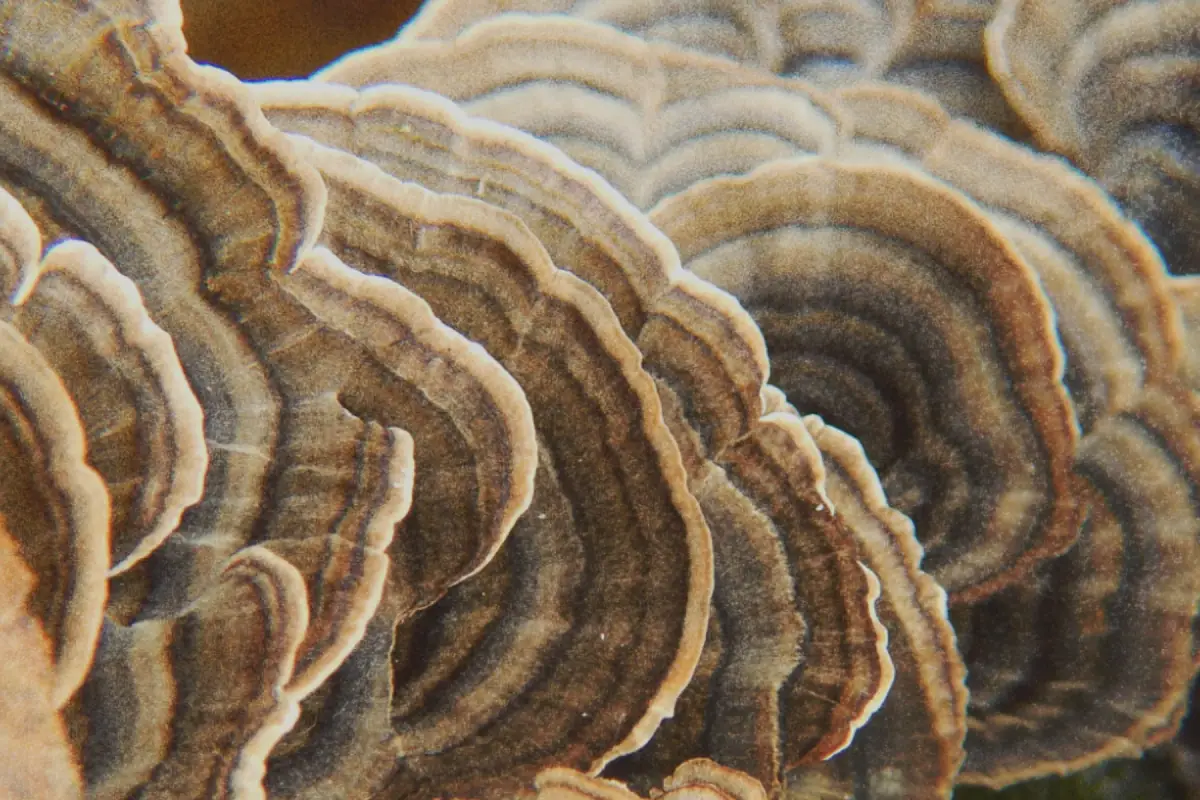
Turkey Tail
Turkey tail. PSK and PSP polysaccharides in the scientific literature.
Coriolus, our Polish turkey tail, has the longest research history of all our species. In 1971 the Japanese company Kureha isolated its PSK fraction, named krestin, and the Chinese school described the twin fraction PSP. Both are beta-glucans with an attached peptide, and our extract stands above 35% beta-glucans. And yet in a Polish forest everyone walks past it, not knowing they are looking at one of the most researched mushrooms in the world. I take it in the morning or before noon.

Turkey tail (Coriolus) in scientific research
What was studied, on how many people and with what level of evidence. This overview describes studies, not the effects of a product.
10
human studies
2
placebo-controlled RCTs
2003–2026
years of publication
Oba K. et al., 2006
Ameta-analysis of RCTs (PSK, drug)
8 RCTs, 8009 patients
The meta-analysis of RCTs collected 8 studies (8009 patients) on PSK (a drug) as adjunct therapy in gastric cancer.
PMID 17106715Pilkington K. et al., 2022
ACochrane review with meta-analysis (PSK, drug)
7 RCTs, 1569 people
The Cochrane systematic review with meta-analysis collected 7 RCTs (1569 people) on the effect of PSK (a pharmaceutical drug, not a supplement) on adverse effects of chemotherapy/radiotherapy in colorectal cancer.
PMID 36445793Wong E.L.Y. et al., 2012
Bsystematic review with meta-analysis (PSK, drug)
13 clinical studies
The meta-analysis examined the effect of PSK (a drug) preparations added to standard treatment on survival of cancer patients, based on 13 clinical studies.
PMID 22185453
The presence of a study is not a health claim.
© 2026 Aloha Fungi™