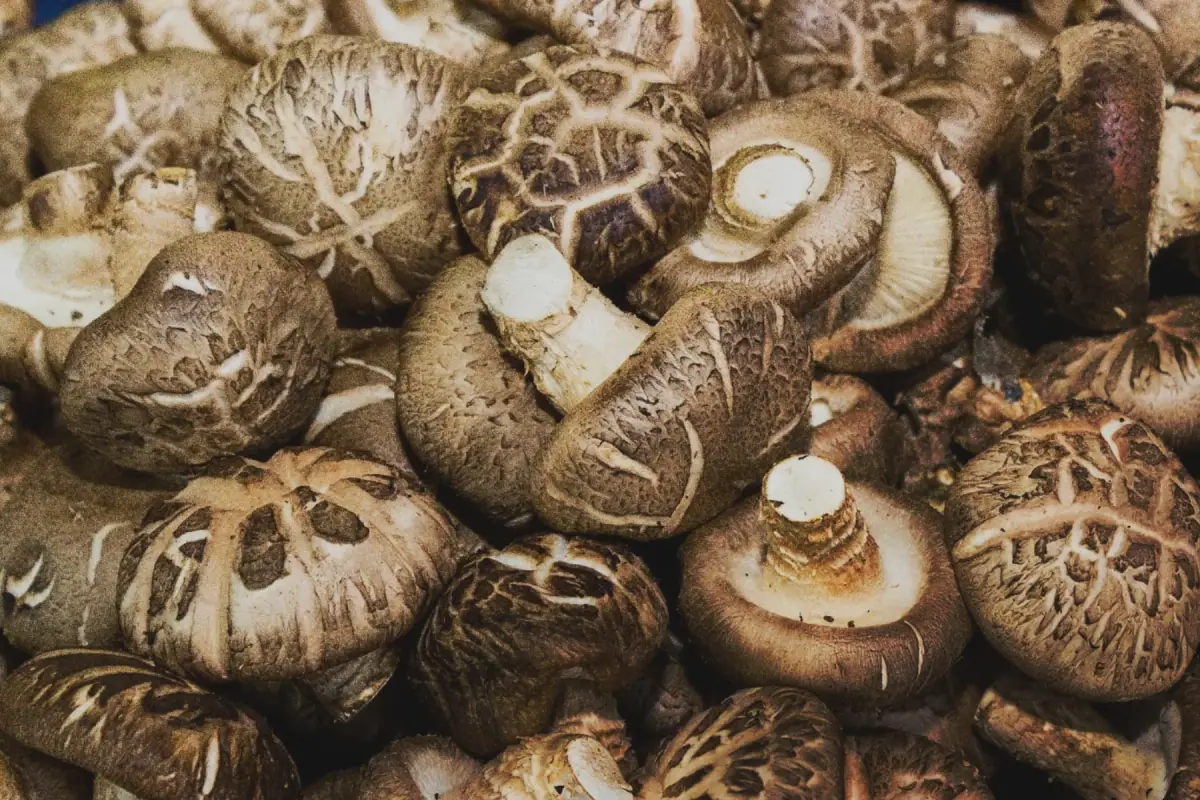
Shiitake
A culinary classic of Asia. Lentinan and beta-glucans at the centre of scientific research.
Shiitake has been in my kitchen longer than in my practice. Before I started working with extracts, I simply ate it. I consider it a good entry point for someone starting from zero who does not trust supplements. In Chinese medicine it is described as a tonic of the middle burner, associated with digestion and the transformation of phlegm.

Shiitake in scientific research
What was studied, on how many people and with what level of evidence. This overview describes studies, not the effects of a product.
2
human studies
0
placebo-controlled RCTs
1969–2023
years of publication
Wang H., Yin X. et al., 2015
Bmeta-analysis of 12 clinical studies (injectable lentinan + chemotherapy, drug)
950 people (492 lentinan / 458 control)
The meta-analysis collected 12 clinical studies of intravenous lentinan added to NSCLC chemotherapy (efficacy, toxicity), data from 2 databases (PubMed, CNKI). An intravenous pharmaceutical preparation, clearly different from an oral fruiting-body supplement, analogous to PSK/PSP for Coriolus.
PMID 26548936Dai X. et al., 2015
Cparallel RCT, 2 doses, no placebo
52 people (21-41 years old, healthy)
The trial examined 4 weeks of eating 5 g or 10 g dried Shiitake daily in healthy adults, measuring ex vivo proliferation and activation of γδ-T and NK-T cells, salivary sIgA, CRP and cytokine profile. No placebo group, only a young healthy population, short duration; the authors themselves note the shortage of human intervention studies.
PMID 25866155Chihara G. et al., 1969
Eanimal, isolated polysaccharide fraction (lentinan)
not applicable
The mouse study measured inhibition of sarcoma S-180 by an isolated polysaccharide fraction from Lentinus edodes (the founding paper for the lentinan drug, not a supplement).
PMID 5768289
The presence of a study is not a health claim.
© 2026 Aloha Fungi™