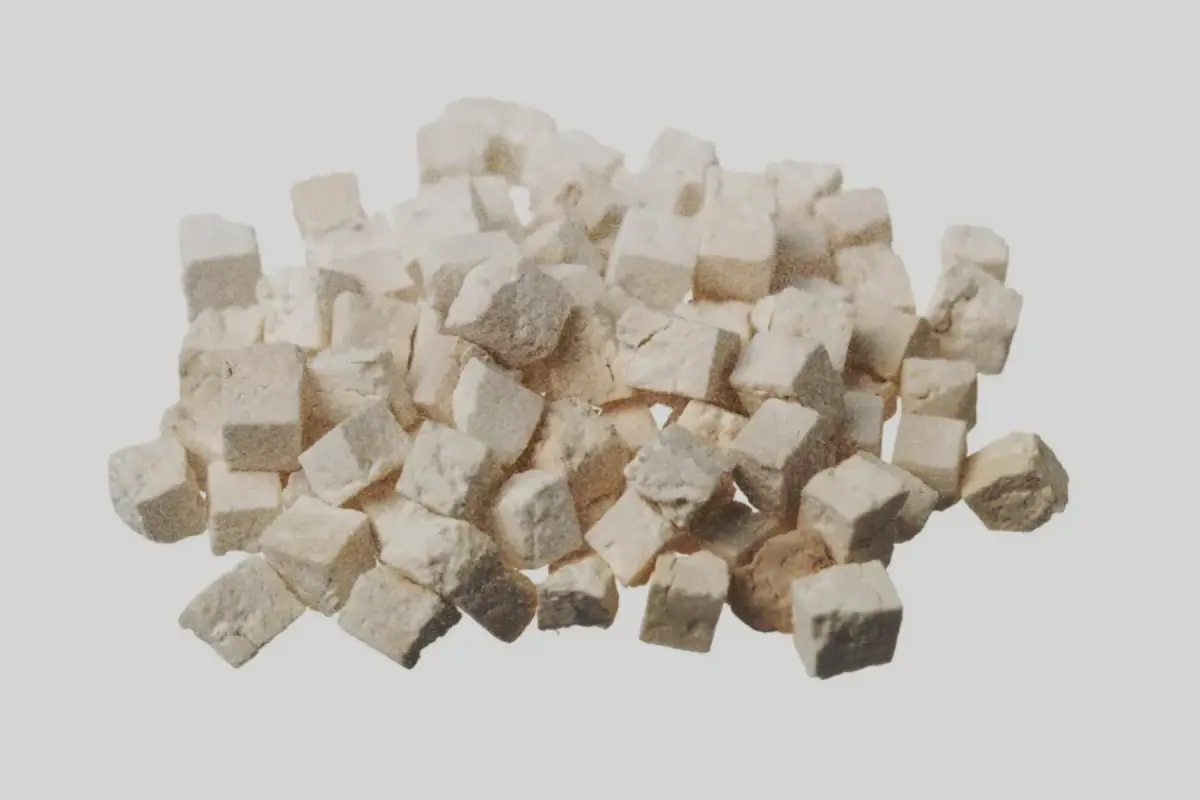
Poria
Poria (Fu Ling). One of the pillars of traditional Chinese medicine formulas.
Fu Ling appears in so many classical formulas that in a Chinese pharmacy it is as obvious as salt in a kitchen. It is an underground mushroom, dug from beneath pine roots rather than picked from a trunk. Its marker is pachymic acid, one of more than forty lanostane triterpenes, alongside pachyman, its beta-glucan. In Europe almost nobody has heard of it, and that is one of the things I wanted this brand to change. I take it in the evening, two to three hours before sleep.

Poria in scientific research
What was studied, on how many people and with what level of evidence. This overview describes studies, not the effects of a product.
2
human studies
1
placebo-controlled RCTs
2003–2025
years of publication
Hao Y., Song W., Qu L., 2024
CRCT, double-blind, placebo-controlled (3-ingredient combination)
70 people, 4 weeks
The study examined 4 weeks of a Poria cocos + Ziziphus spinosa + GABA combination on PSQI questionnaire scores, total sleep time and skin parameters in 70 people with sleep complaints. Three ingredients at once; the effect cannot be attributed to poria alone.
PMID 38873452Kim H. et al., 2023
Dmonotherapy clinical study (no mention of randomisation/placebo in the abstract)
21 people, 800 mg in the evening
The study examined the effect of the extract (800 mg in the evening) on sleep parameters measured by questionnaire and polysomnography in 21 people with insomnia (mean age approx. 55). The abstract does not specify randomisation or a placebo group; very small sample.
PMID 37836526Brown G.D., Gordon S., 2003
Enarrative review of beta-glucans in general (not specifically about poria)
not applicable
The narrative review discussed fungal beta-glucans and mammalian immunity in general; does not specifically concern poria, a source shared across multiple species hubs.
PMID 14499107
The presence of a study is not a health claim.
© 2026 Aloha Fungi™