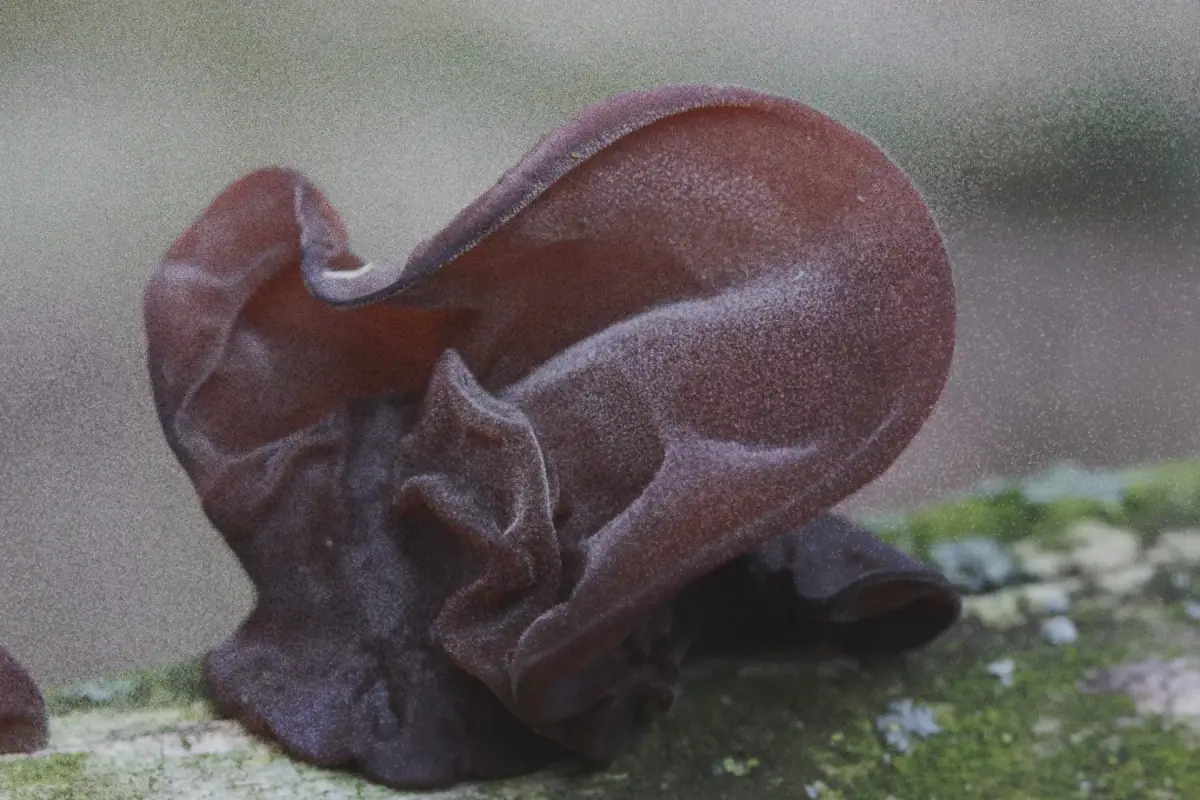
Wood Ear
Wood ear, the "mun" mushroom. A staple of Asian cuisine, rich in polysaccharides.
In China, wood ear is so obvious that nobody calls it a supplement. It is simply there in the bowl, next to ginger and vinegar. For me it is a reference point for how much of this industry is fashion and how much is plain food. And there is more in it than that ordinariness suggests: polysaccharides and beta-glucans, fibre, and melanin, the same pigment that gives it its black colour and has research papers of its own. In my ritual I place it on an empty stomach or half an hour before a meal.

Wood ear (Auricularia) in scientific research
What was studied, on how many people and with what level of evidence. This overview describes studies, not the effects of a product.
1
human studies
0
placebo-controlled RCTs
1998–2025
years of publication
Son E.H. et al., 2025
Dopen-label RCT (no blinding), maltodextrin control · the first human study found for wood ear
50 people (24/26)
The study examined 8 weeks of consuming a functional food with wood ear powder twice daily versus a control, measuring body composition, waist circumference, lipid profile, fibre intake, constipation scales (CAS, ROME II) and gut microbiota in Korean middle-aged adults. Open-label study (formally randomised but unblinded). The authors noted a small sample, no long-term data, and no dose-dependence assessment.
PMID 39968271Yuan Z. et al., 1998
Eanimal study (KK-Ay mice)
not applicable
The study in genetically diabetic KK-Ay mice examined the hypoglycaemic effect of a water-soluble polysaccharide from wood ear.
PMID 9836425Yoon S.J. et al., 2003
Ein vitro
not applicable
The in vitro study examined the antithrombin-mediated anticoagulant activity of a polysaccharide from Auricularia auricula.
PMID 14967412
The presence of a study is not a health claim.
© 2026 Aloha Fungi™