Journal
Shiitake, the oak mushroom of East Asian kitchen and lore
Shiitake, the oak mushroom of East Asian kitchens. An educational look at umami, wood cultivation, TCM tradition and its place in a kitchen and brew ritual.
TCM therapist · Doctor of Acupuncture (WFAS) · author of a book on functional mushrooms
4 min read
Contents
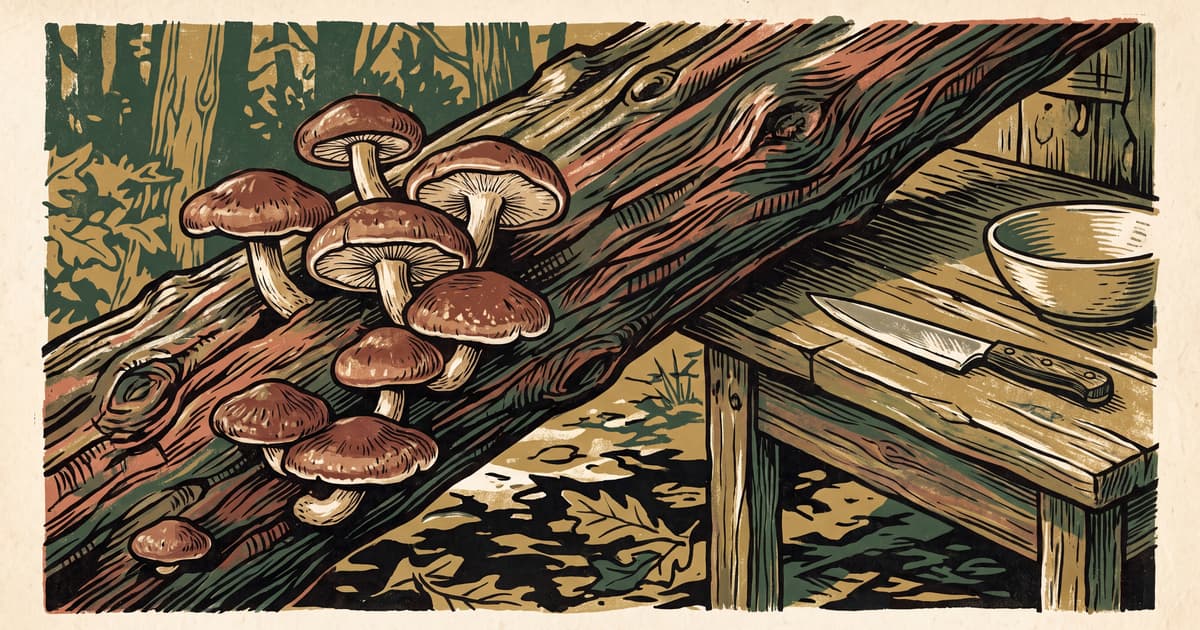
Shiitake is a mushroom that almost every East Asian kitchen knows. The oak mushroom (Lentinula edodes) grew for centuries on logs of hardwood, and its Japanese name joins "shii" (a tree from the beech family) and "take" (mushroom). For some it is an ingredient in broth and a wok dish, for others a piece of tradition reaching back to Chinese and Japanese texts from centuries ago.
Two threads run through this story: taste and tradition. Read it as a piece of culture, not as a promise.
The mushroom of hard wood
In the wild and in classic cultivation this mushroom grows on hardwood, most often on logs of oak, beech or chestnut. It is a patient crop, counted in months rather than days. The Polish name "twardziak" points straight to that hard-wood habit.
The fruiting body, the part you harvest from the log, has a brown cap and a pale stem. In many East Asian farms it is dried right after picking. Drying is not only a way to store it, but also a step that deepens the aroma.
Umami, the taste it is loved for
Shiitake is prized above all for its taste. It is one of the classic carriers of umami, the "fifth taste" described in Japan more than a century ago. The dried mushroom develops it most fully.
In the kitchen the oak mushroom finds many places:
- Stocks and broths · it lends depth to a vegetarian dashi.
- Wok and braised dishes · it adds a meaty texture and aroma.
- A brew from the dried caps · the soaking water is often prized more than the caps themselves.
Shiitake in the TCM tradition
In traditional Chinese medicine (TCM) shiitake was counted among "tonifying" substances, valued in the old understanding for supporting everyday vitality. It was written down in herbal texts alongside other functional mushrooms.
This is a cultural description from an old tradition, not a modern claim about effects. Read it as a fragment of kitchen and herbal history, not a prescription.
From fruiting body to extract
In the kitchen you reach for the whole fruiting body: fresh or dried. Today, lovers of functional mushrooms sometimes also reach for an extract, for example at a 10:1 strength, standardised for β-glucans, the components naturally present in the cell walls of the mushroom.
The difference is simple. Dried caps are the mushroom in its culinary form, while an extract is a concentrated version of the same fruiting body, easy to weave into a ritual next to the kitchen.
Shiitake in a daily ritual
The oak mushroom has two natural moments. The first is the kitchen: broth, wok, stew. The second is a quiet brew from the dried caps, which you can treat as a small home ritual.
- In the kitchen · add dried caps to a stock or a one-pot dish.
- As a brew · pour hot water over the dried caps and let the aroma open up.
- Your choice · pick the form and the moment that fit your day.
If you take medication, are pregnant or breastfeeding, discuss use with your doctor or pharmacist.
See also: Maitake, dance of the forest · mushroom atlas.
FAQ: frequently asked questions
What are the properties of shiitake mushrooms?
Shiitake is, above all, a culinary mushroom with a long history in Asian cuisine, prized for its deep umami flavor. It contains beta-glucans and lentinan, which the scientific literature has studied for years: our registry in the Research Atlas gathers 12 pieces of literature on shiitake. Most of them are preclinical and observational work, which we note at every entry. Day to day, shiitake works best where it started: in the pot.
This content is for educational purposes only and does not constitute medical advice. A food supplement does not replace a varied diet or a healthy lifestyle. If in doubt, consult your doctor or pharmacist.